Israel’s reported elimination of Hezbollah’s top parliamentary boss in Beirut shows how fast Iran’s proxy network can unravel when its leadership is put on notice.
Story Snapshot
- Saudi and regional outlets reported Hezbollah parliamentary bloc chief Muhammad Ra’ad was killed in Israeli strikes on Beirut’s Dahiyeh and southern Lebanon, but confirmation remained limited as of March 2, 2026.
- Israel said it struck “senior terrorists” after Hezbollah fired rockets and drones toward northern Israel overnight, ending a long lull in major exchanges.
- Reports tied Hezbollah’s barrage to retaliation for the Feb. 28 killing of Iran’s Supreme Leader Ali Khamenei during U.S.-Israeli strikes in Iran.
- Lebanon’s Health Ministry reported significant casualties and injuries, underscoring how quickly civilians get caught in militia-driven escalation.
Reports of Ra’ad’s Death Highlight a New Target Set: Hezbollah’s Political Command
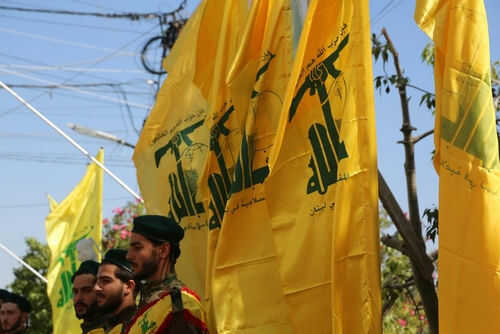
Regional reporting early March 2 said Muhammad Ra’ad—longtime head of Hezbollah’s “Loyalty to the Resistance” parliamentary bloc—was killed in Israeli airstrikes hitting Beirut’s Dahiyeh district and locations in southern Lebanon. Multiple outlets described the strike as aimed at Hezbollah leadership, but Israel’s military statements referenced “senior terrorists” without publicly naming Ra’ad. That gap matters: until Hezbollah or Lebanese authorities confirm, the most dramatic claim remains sourced primarily to media reports.
Ra’ad’s significance goes beyond battlefield symbolism. He led Hezbollah’s parliamentary faction since 2000 and served as one of the group’s best-known political faces inside Lebanon’s institutions, repeatedly rejecting calls for disarmament. Targeting a political chief, rather than only operational commanders, signals a strategy designed to disrupt Hezbollah’s ability to convert Iranian backing and militia power into formal political leverage. The evidence base, however, remains uneven because official corroboration was still developing.
What Triggered the Strikes: Rockets, Drones, and a Regional Shockwave from Iran
The reported sequence began with Hezbollah firing rockets and drones toward northern Israel overnight March 1–2, described by several outlets as retaliation tied to the killing of Iran’s Supreme Leader Ali Khamenei on Feb. 28 during U.S.-Israeli strikes in Iran. Israel then launched airstrikes at dawn against Hezbollah targets in Beirut’s Dahiyeh—widely known as a Hezbollah stronghold—and southern Lebanon. Israel’s Northern Command publicly warned Hezbollah would pay a “heavy price.”
Casualty counts varied widely across early reports, a common feature of fast-moving conflict coverage. Some reports cited 10 or more killed, while others cited totals in the 20–31 range across Lebanon. Lebanon’s Health Ministry was cited as reporting 31 killed and 149 wounded in the strikes. Those numbers, while not uniformly verified across all sources, point to the same reality: when armed groups embed in dense urban zones, civilians and infrastructure become immediate collateral damage, regardless of the declared target.
Verification Reality Check: What’s Confirmed, What’s Claimed, and Why It Matters
Several outlets aligned on the broad facts—Israeli strikes hit Dahiyeh and southern Lebanon after Hezbollah launched an overnight barrage—but differed on whether Ra’ad’s death is confirmed. Israel acknowledged striking senior figures but did not release names. Hezbollah, Lebanese authorities, and international monitors had not provided definitive public confirmation in the referenced reporting window. That does not disprove the claim; it simply means readers should separate “reported killed” from “verified killed” until documentation is clear.
The uncertainty also intersects with information warfare. Saudi-linked outlets were repeatedly cited as first reporting Ra’ad’s death, while Israeli and other media amplified the report with caveats. In conflicts involving Iran-backed proxies, competing narratives move almost as fast as missiles, and early reports can be both directionally accurate and incomplete on specifics. The most responsible conclusion is that a high-level strike occurred, with Ra’ad’s reported death plausible but not yet universally confirmed.
Strategic Implications for Lebanon and the Region: Deterrence, Escalation Risk, and Sovereignty
If Ra’ad is confirmed dead, the impact on Hezbollah’s political apparatus could be serious. Hezbollah has already absorbed prior leadership losses in earlier phases of the conflict, and Ra’ad represented continuity inside Lebanon’s parliament. Removing a figure who bridged militia identity and institutional politics would further stress Hezbollah’s internal command and its ability to project legitimacy. For Lebanon, already fragile, the larger issue is sovereignty: decisions made by an Iran-aligned militia can pull the country into war regardless of public consent.
The escalation also lands in a broader context many Americans recognize: proxy networks and transnational ideology thrive when deterrence is weak and accountability is avoided. Hezbollah justified its attack as retaliation linked to Iran’s leadership loss, underscoring where its priorities sit. For constitutional conservatives watching from home, the lesson is less about taking sides in foreign parliaments and more about seeing how quickly radicals exploit power vacuums—and how costly it is when armed groups, not citizens, drive national policy.
Sources:
Hezbollah’s Top Leader Mohammad Raad Reportedly Killed In Israeli Strikes In Lebanon
Mohammad Raad, Head Of Hezbollah’s Political Wing, Killed In Israeli Strikes: Report
Head of Hezbollah parliamentary bloc said killed in IDF strike on Beirut
Israeli airstrikes kill senior Hezbollah leader; 20 reported dead across Lebanon
Ynetnews coverage of Israeli strike reports and Hezbollah-Israel escalation
Is Hezbollah parliamentary head Mohammad Raad among dead in Lebanon’s Dahiyeh strikes by Israel?