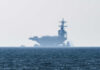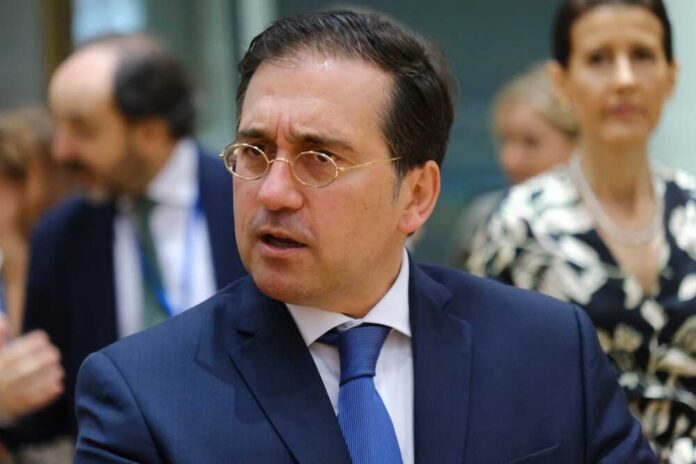
Spain just forced the United States military to pack up fifteen refueling planes and leave, shattering a decades-old defense partnership in the middle of a shooting war with Iran.
Story Snapshot
- At least 15 US KC-135 Stratotanker refueling aircraft departed Spanish bases in Morón and Rota after Spain blocked their use for Iran strikes
- Spanish Foreign Minister José Manuel Albares and Defense Minister Margarita Robles publicly refused to support US-Israel military operations against Iran, citing UN Charter obligations
- Iranian Ambassador Reza Zabib warned that Iran could target US military bases across Europe if provoked
- Spain’s position isolated it from France, Germany, and the UK, which jointly supported proportionate defensive action against Iran
- Flight tracking data confirmed aircraft relocations to Germany’s Ramstein Air Base and French facilities beginning Sunday, March 1
When Allies Say No: Spain Pulls the Plug on US Operations
The weekend of February 28 turned into a logistical nightmare for American military planners. As US and Israeli forces launched coordinated strikes against Iranian targets, KC-135 Stratotankers staged at Morón de la Frontera in Sevilla and Rota Naval Station in Cádiz suddenly found themselves persona non grata. By Sunday noon, Flightradar24 tracking showed a steady stream of at least twelve to fifteen tankers heading north toward Germany and France. Spain’s left-leaning government under Prime Minister Pedro Sánchez had drawn a red line, and the Pentagon had no choice but to respect it.
The move represents more than just aircraft changing parking spots. These bases have hosted between 3,000 and 5,000 American personnel under bilateral agreements dating to 1988, providing critical logistics and refueling capabilities for US operations across the Mediterranean and Middle East. The tankers are the unsung workhorses of modern air power, extending the reach of fighters and bombers thousands of miles beyond their normal range. Without them positioned close to the action, every mission becomes harder, longer, and more expensive.
The Diplomatic Earthquake Behind the Departure
Defense Minister Margarita Robles made Spain’s position crystal clear: the bases could support humanitarian operations, nothing more. Foreign Minister José Manuel Albares went further, declaring that Europe must defend international law and pursue de-escalation rather than join unilateral military actions lacking UN Security Council authorization. This stance directly contradicted France, Germany, and the United Kingdom, which issued a joint statement supporting proportionate defensive measures against Iranian aggression. Spain suddenly found itself the odd man out in European security policy.
The contrast could not be starker. While Spanish officials invoked the UN Charter and called for negotiation, their European counterparts backed kinetic action. This is not the first time Spain has charted its own course. The country restricted US base access during Yemen operations in 2019 and 2020, maintained neutrality during the 2023 Gaza conflict, and famously opposed the 2003 Iraq War under previous leadership, only to face years of domestic political fallout when it briefly supported the American invasion.
Iran Raises the Stakes With European Threats
Iranian Ambassador to Spain Reza Zabib seized the moment during a Madrid press conference on March 2, warning that Iran could target US military installations across Europe if necessary for defensive purposes. The threat adds a chilling dimension to an already volatile situation. While analysts question Iran’s technical capability to strike European targets with ballistic missiles, the regime certainly possesses drones and proxy networks capable of causing mayhem. The ambassador’s statement was clearly designed to exploit divisions within NATO and the European Union.
Spain’s concern for its 30,000 nationals scattered across the Middle East drove part of the calculation. The government activated crisis response units to assist stranded Spanish citizens as the Iran conflict escalated. Protecting those civilians while avoiding entanglement in a widening war makes political sense domestically, even if it frustrates American military planners who now face longer flight times and reduced operational flexibility. Meanwhile, US Navy destroyers USS Roosevelt and USS Bulkeley, also based at Rota, continued their missions in the Eastern Mediterranean unaffected since warships operate at sea beyond Spanish territorial restrictions.
The Cost of Neutrality in a Dangerous World
Spain’s decision carries consequences that extend far beyond immediate military logistics. Local economies around Morón and Rota depend partly on the American presence, and the temporary loss of tanker operations means fewer personnel, less spending, and reduced activity. More significantly, the episode exposes the fragility of alliance structures when host nations exercise their sovereign right to refuse support for operations they deem outside international law. France and Germany now shoulder increased burdens as Ramstein Air Base absorbs the displaced tankers, straining infrastructure and personnel.
The bigger question looms over long-term US-Spain defense relations. Will Washington reassess the reliability of Spanish bases for future contingencies? Will Madrid face pressure from other NATO members who view its neutrality as undermining collective security? Spain’s government can claim the moral high ground by adhering to UN principles, but principles do not refuel fighter jets or deter Iranian aggression. The country’s stance may resonate with its domestic left-wing coalition, yet it risks isolation from security partners facing a genuine threat from an emboldened Tehran regime willing to launch missiles and threaten European targets.
Common sense suggests that sovereign nations possess every right to control how their territory is used, especially for offensive military operations lacking clear international legal authority. Spain’s insistence on UN backing before supporting strikes reflects a principled position rooted in post-World War II international order. However, that same order depends on credible deterrence against rogue actors like Iran, which respects neither UN resolutions nor the safety of civilians when pursuing its regional ambitions. Balancing legal principle with security reality remains the eternal challenge, and Spain just chose principle at a moment when American and Israeli pilots needed all the support they could get.
Sources:
Spain Refuses to Provide Military Support for the US-Israel Operation Against Iran – IPN