China’s massive missile arsenal now threatens every U.S. base in the Pacific, exposing vulnerabilities that could drag America into another endless foreign war despite Trump’s promises to keep us out.
Story Snapshot
- China’s PLARF has built the world’s largest theater missile force, targeting U.S. airfields, ports, and installations across Pacific island chains to block Taiwan intervention.
- U.S. defenses fall short against this mobile, overwhelming threat, with munitions depleting in about a week of conflict.
- Trump’s administration deploys systems like Typhon in allies’ territories, but experts warn bases remain liabilities without major redesign.
- MAGA base grows wary of Pacific entanglements, echoing frustrations with high defense costs and regime-change risks far from American shores.
China’s Missile Buildup Targets U.S. Pacific Presence
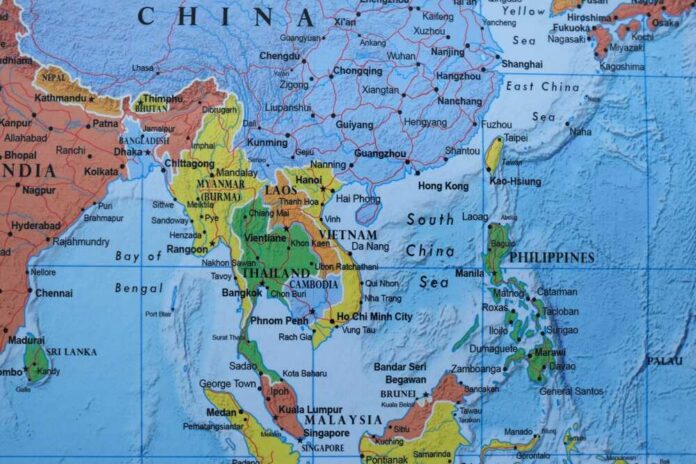
China’s People’s Liberation Army Rocket Force developed thousands of short-, medium-, and long-range missiles since the 1990s to counter U.S. air superiority in a Taiwan scenario. This anti-access/area-denial strategy focuses on the first island chain, including Japan, Taiwan, and the Philippines, where bases like Guam face early strikes on runways, fuel depots, and logistics. Mobile launchers and underground facilities enable shoot-and-scoot tactics, saturating defenses across the Western Pacific.
U.S. Bases at Risk in Simulated Conflicts
U.S. war games reveal severe vulnerabilities: Guam fighters go offline for two days, Japan runways close for 12 days under missile barrages. China’s dense surveillance networks guide precise hits, crippling power projection. The PLARF’s inventory, described as the world’s largest, overwhelms current defenses, forcing reliance on qualitative edges like submarines and stealth. This buildup accelerated post-2010s amid U.S. counterterrorism distractions.
Trump Administration’s Countermeasures Deploy
In March 2026, U.S. Army Typhon systems deployed to Luzon in the Philippines and Iwakuni in Japan, capable of launching Tomahawks, SM-6, and PrSM missiles up to 1,200 miles to deter Chinese naval assets. Pentagon ramps hypersonics like Dark Eagle with 1,700-mile range and plans 15,000 anti-ship missiles by 2035. Air Force shifts to agile basing under Edge/Pulsed/Core designs from Hudson Institute recommendations, reducing fixed-site dependence.
Expert Warnings and Chinese Pushback
CSIS expert Seth Jones states U.S. munitions exhaust in one week of intense fighting, urging production surges. MIT’s Eric Heginbotham notes China’s ground-based workaround to air power gaps demands expanded defenses. China warned on March 27, 2026, against U.S. ammo facilities in Asia-Pacific, claiming risks of war chaos, and opposed ATACMS-like transfers near its coast in February. Beijing fields intercontinental anti-ship missiles reaching the second island chain and U.S. West Coast.
America First Implications for MAGA Supporters
These developments strain budgets with defense booms for Lockheed Typhons and B-21s, while allies like Japan and Philippines host U.S. assets facing direct threats. Pacific civilians risk collateral damage amid escalating tensions. For Trump voters tired of globalist overspending and foreign wars, this Pacific missile race questions commitments abroad when America needs focus on borders, energy independence, and constitutional priorities at home. Force redesigns offer hope, but the window narrows.
Sources:
China’s missile surge puts every US base in the Pacific at risk: Window to respond closing
China’s missile reach forcing US Pacific air power reset
Incoming Chinese Conventional Intercontinental Ballistic Missiles: A War Game After Action Report
US Deploying 1700 Mile Range Hypersonic Missiles
China Warns of Annihilation if US Deploys ATACMS Within 10km of Coast
China’s diesel-powered submarines