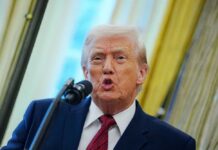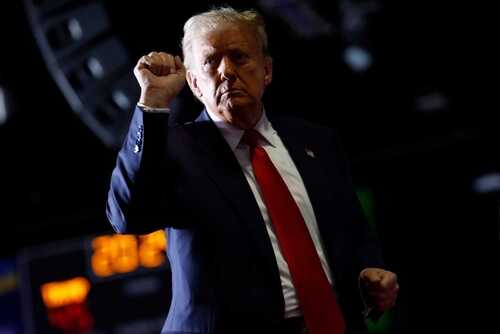
President Trump unveiled his new “Board of Peace” at the World Economic Forum in Davos, expanding its mission from Gaza reconstruction to global conflict resolution. However, the initiative immediately faces controversy due to its composition and funding. The inclusion of Kazakhstan, a nation that facilitated Russia’s 2022 assault on Ukraine, and other pro-Russia members, is raising red flags among Western allies and the Ukrainian government. The board’s credibility is further strained by Russian President Vladimir Putin’s controversial offer of $1 billion from sanctioned, frozen assets to join, a move Ukrainian President Volodymyr Zelenskyy strongly opposes given the ongoing hostilities.
Story Snapshot
- Trump unveiled the Board of Peace at Davos on January 22, 2026, expanding its mission from Gaza reconstruction to global conflict resolution
- Kazakhstan, which served as a staging ground for Russian troops prior to the 2022 Ukraine invasion, joined as a founding member
- Putin offered $1 billion from frozen Russian assets as a “sign-up fee” but claims he is still studying membership, contradicting Trump’s assertion
- Ukraine’s Zelenskyy strongly objects to including Russia or Belarus, calling their participation difficult to imagine
- The board bypasses traditional UN structures, with only US leadership and no other UN Security Council permanent members participating
Trump Bypasses UN With New Peace Initiative
President Trump formally launched the Board of Peace at the World Economic Forum in Davos, Switzerland, on January 22, 2026. The initiative originated in 2025 as part of Trump’s Gaza peace plan tied to UN Security Council Resolution 2803 for post-war reconstruction. Trump expanded the board’s scope at the Davos ceremony to address global conflicts, including the ongoing Ukraine war that escalated in 2022. The US-chaired body represents a departure from traditional UN-focused diplomatic efforts, inviting 22 nations while excluding other permanent Security Council members like China, France, and the United Kingdom.
🇰🇿 President Kassym-Jomart Tokayev has signed the Charter of the Board of Peace, initiated by 🇺🇸 U.S. President Donald Trump (@realDonaldTrump).
Alongside the President of Kazakhstan, leaders and representatives from 18 countries also took part in the signing ceremony. pic.twitter.com/UzsGNqhaSr
— Press Office of the President of Kazakhstan (@aqorda_press) January 22, 2026
Kazakhstan’s Troubling Role Raises Red Flags
The inclusion of Kazakhstan as a founding board member presents a significant irony given the country’s role in facilitating Putin’s 2022 Ukraine invasion. Kazakhstan served as a staging ground for Russian military forces before they launched the full-scale assault on Ukraine. Uzbekistan and Hungary also joined the board, with Hungary maintaining notably pro-Russia positions throughout the conflict. This composition undermines the board’s credibility as an impartial peacekeeping body, particularly when addressing conflicts involving Russian aggression. The selection of these nations signals a willingness to prioritize participation over accountability for past actions that enabled warfare.
Putin’s Frozen Assets Gambit Creates Controversy
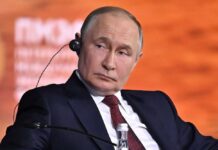
Putin proposed contributing $1 billion from frozen Russian assets as his entry fee to the Board of Peace during a January 22 meeting with Palestinian Authority President Mahmoud Abbas in Moscow. Russia faces approximately $300 billion in frozen assets abroad following the 2022 invasion. Trump endorsed the idea, stating “If he’s using his money, that’s great,” suggesting openness to unlocking these sanctioned funds. However, Putin later contradicted Trump’s claim that Russia had “accepted” the invitation, stating through Kremlin officials that Russia is “studying” membership and consulting with “strategic partners.” This represents a troubling precedent where sanctioned funds could be redirected without addressing the underlying aggression that triggered sanctions.
Ukraine Demands Security Guarantees Amid Russia’s Inclusion
Ukrainian President Volodymyr Zelenskyy expressed strong opposition to Russian or Belarusian participation in the peace board, stating it is “difficult to imagine Russia in one council” given ongoing hostilities. Zelenskyy met with Trump at Davos on January 22 in what both described as a “productive” discussion, though fundamental disagreements remain. Ukraine seeks US-backed security guarantees and potential UK and French force deployment as conditions for any peace agreement. The territorial question remains central, with Russia occupying approximately 20 percent of Ukrainian territory since 2014 and demanding recognition of annexed lands. A trilateral meeting between Ukraine, Russia, and the US in Abu Dhabi was scheduled for January 23 or later that week to address these contentious issues.
Western Allies Express Skepticism Over Trump’s Approach
British Foreign Minister David Cooper called Putin’s involvement in peace efforts “problematic,” noting no evidence of genuine Russian commitment to ending the conflict. NATO Secretary General Mark Rutte emphasized that member nations cannot legally recognize Russian territorial seizures obtained through force. Trump’s envoys—Steve Witkoff, Jared Kushner, and Josh Gruenbaum—conducted late-night talks with Putin in Moscow that extended past 3 a.m. local time on January 23, described by the Kremlin as “frank and constructive.” Kremlin aide Yuri Ushakov stated any settlement requires resolving the “territorial issue,” effectively demanding Ukraine cede occupied lands. This approach risks normalizing territorial conquest and weakening NATO unity while potentially legitimizing Russian annexations that violate international law and Ukrainian sovereignty.
Trump’s ‘Board of Peace’ Includes Country That Putin Used to Stage Invasion of Ukraine https://t.co/eFF6shTspB
— Mediaite (@Mediaite) January 23, 2026
Trump’s optimism for achieving peace “very soon” contrasts sharply with European and Ukrainian concerns that the Board of Peace structure could undermine established international frameworks. The initiative’s long-term implications include potentially bypassing UN authority, setting dangerous precedents for force-based border changes, and eroding Western alliance cohesion. While Trump seeks quick diplomatic victories on Ukraine and Gaza through this non-UN body, the inclusion of nations complicit in Russian aggression and the potential unfreezing of sanctioned assets without accountability raises serious questions about whether this approach serves American interests or merely provides Putin diplomatic cover while rewarding territorial conquest.
Watch the report: HISTORIC CEREMONY: Trump Launches Gaza Peace of Board With 19 Countries Including Pakistan | AC1G
Sources:
Trump Launches Board Of Peace, Putin Seeks To Use Frozen Assets For Sign-Up Fee
Kazakhstan joins Donald Trump’s Board of Peace as one of 19 founding countries | Euronews
Putin meets with Trump’s envoys as Kremlin says Ukraine settlement hinges on territorial issue
Trump unveils Board of Peace, “New Gaza” plans at Davos