Sen. Mark Kelly’s “random group off the street” jab at President Trump’s Iran operation is the latest flashpoint in a bigger fight over war powers, clarity of mission, and whether Washington can act decisively without sliding into another open-ended conflict.
Quick Take
- Sen. Mark Kelly criticized the Trump administration’s Iran operation as “flailing,” arguing the mission lacks a clear goal, timeline, and post-strike plan.
- U.S.-Israel strikes reportedly targeted Iran’s defenses, nuclear sites, and leadership elements, as the Pentagon prepared to brief the public on March 4, 2026.
- Kelly tied foreign-policy escalation to domestic affordability, warning about higher energy costs and strained munitions stockpiles as the operation continues.
- The debate is also constitutional: Kelly urged the Senate to return for oversight as questions grow about objectives and congressional war powers.
Kelly’s “Random Group” Line Ignites a New Round of Oversight Pressure
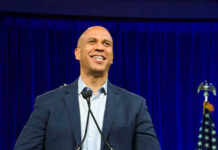
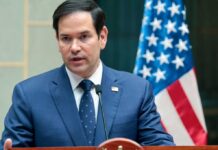
Sen. Mark Kelly (D-AZ), a Navy combat veteran and former astronaut, went on MSNBC’s Morning Joe on March 4, 2026, and delivered the quote that lit up the debate: he said a “random group of people off the street” could do a better job on Iran than the Trump administration. Kelly argued the administration has cycled through shifting rationales—nuclear concerns, “imminent threats,” and preemption—without spelling out a concrete end state.
Kelly’s critique emphasized process and planning more than ideology. He contrasted the current posture with historical examples of clearly defined military objectives, pointing to Operation Desert Storm as a model for limited aims and coherent execution. He also called for the Senate to return to session for oversight, framing the moment as more than a cable-news argument and more like a real test of Congress’s role when military action expands quickly.
What We Know About the Operation: Strikes, Claimed Gains, and Real Costs
Reporting around the weekend strikes described a U.S.-Israel operation aimed at Iranian air defenses, nuclear-related facilities, and leadership targets. Public discussion also included claims of significant tactical successes—such as asserted air dominance and high-profile engagements—while acknowledging that Iran’s leadership remained intact as operations continued. As of March 4, 2026, reports cited the loss of six U.S. service members, a fact that immediately raised the stakes for families and for policymakers weighing escalation.
Kelly argued that the mission’s moving justifications make it harder to judge proportionality and success. He also warned about practical constraints, including munitions stockpiles, and about the possibility that energy prices could rise as markets price in regional instability. Those concerns are not abstract for voters still recovering from years of inflation and economic anxiety. The point of contention is whether the administration has communicated a strategy that fits both the military realities and the public’s patience.
Constitutional Fault Lines: War Powers, Transparency, and “No Goal, No Timeline”
Kelly’s central charge—“no goal, no timeline”—goes directly to accountability. When objectives are unclear, oversight becomes harder and mission creep becomes easier, regardless of which party holds the White House. Kelly’s push for a Senate return underscores that the argument is partly about constitutional balance, with Congress expected to scrutinize and debate major military commitments. The public briefing expected from the Pentagon the same day showed the administration knew it had to answer basic questions.
At the same time, the available public information leaves limits on what outside observers can verify in real time, especially on sensitive targeting and intelligence claims. That uncertainty is precisely why clear statements of purpose and measurable benchmarks matter. If leaders cannot explain what success looks like, Americans are left to interpret events through partisan filters, and that is a recipe for distrust—especially after decades of Washington asking for faith first and details later.
Political Crosscurrents: Democrats Attack, Republicans Praise, Voters Watch Prices
Democrats framed Kelly’s comments as a warning against repeating the Iraq-era pattern of expansive claims and vague endpoints. Supporters of the operation, including Rep. Mike Kelly (R-PA), praised the action as decisive and necessary for security. Another layer is political reality: analysis in the conservative press has noted that many voters prioritize daily costs over foreign policy, meaning any sustained economic shock—particularly fuel and energy—could shape public support as much as battlefield updates.
Sen. Mark Kelly Says ‘Random Group Of People Off The Street’ Could Do A Better Job on Iran Than Trump Administration https://t.co/AmhEAco1mx
— Mediaite (@Mediaite) March 5, 2026
The administration’s challenge is to keep the mission narrowly defined, explain why it protects Americans, and show that it will not turn into an open-ended commitment. Kelly’s attack line was designed to sting, but the underlying dispute is serious: Americans want strength abroad without blank checks at home. With casualties reported and markets watching the region, pressure will only grow for clear objectives, lawful oversight, and an exit plan the public can actually understand.
Sources:
Kelly statement on military operation against Iran
Mark Kelly says Trump is “flailing,” ignores affordability amid Iran operation
Rep. Mike Kelly statement on U.S. military operations in Iran