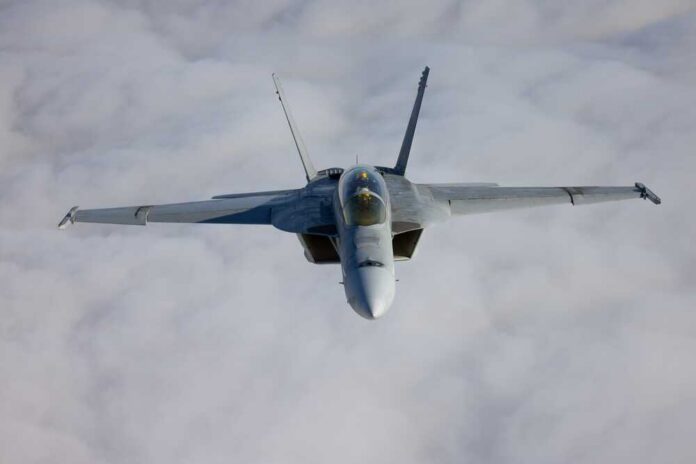
A catastrophic friendly fire incident during Operation Epic Fury against Iran has exposed dangerous vulnerabilities in coalition warfare, as a Kuwaiti fighter jet mistakenly shot down three American F-15E Strike Eagles in a single engagement that nearly killed six U.S. servicemembers.
Story Snapshot
- Three U.S. F-15E Strike Eagles were downed by a single Kuwaiti F/A-18 Hornet on March 1, 2026, during combat operations over Kuwait
- All six American crew members survived the shootdown but faced life-threatening situations as their aircraft were hit from behind by air-to-air missiles
- The incident occurred hours after an Iranian drone strike killed six Americans at a Kuwaiti base, creating chaos in contested airspace
- Combined aircraft losses exceed $240 million, exposing critical identification failures in drone-heavy combat environments
Friendly Fire Disaster Unfolds During Iran Operations
USCENTCOM confirmed on March 2, 2026, that three F-15E Strike Eagles were mistakenly engaged by Kuwaiti air defenses at 11:03 p.m. ET on March 1 during Operation Epic Fury. The incident resulted from a catastrophic misidentification as U.S. forces launched over 1,000 sorties against Iranian targets from carrier groups and bases throughout Kuwait. All six American crew members successfully ejected and were recovered safely, though the loss represents a significant blow to operational capacity. Kuwait acknowledged the mishap and cooperated with recovery efforts, but the incident raises serious questions about coalition coordination under combat stress.
Single Kuwaiti Hornet Responsible for Triple Shootdown
Reports from The War Zone, citing Wall Street Journal sources, identify a single Kuwaiti F/A-18 Hornet as responsible for firing three missiles that downed all three American jets. The missiles, likely a combination of AIM-120 and AIM-9 variants, struck the F-15Es from tail aspects, explaining why crews received little to no warning before impact. Damage patterns visible in recovered footage show missing tails and engine fires consistent with air-to-air missile strikes rather than surface-to-air engagement. The tail-aspect shots, while devastating to the aircraft, paradoxically allowed pilots sufficient time to eject safely before catastrophic failure.
Iranian Drone Attacks Created Deadly Confusion
The shootdown occurred in airspace saturated with Iranian drones and missiles during retaliatory strikes against U.S. operations. Earlier on March 1, an Iranian drone penetrated base defenses, killing six Americans and heightening alert levels across the region. This chaotic environment, with drones mimicking fast-moving aircraft signatures, created conditions ripe for misidentification under existing rules of engagement. Military analysts note that coalition forces operating in contested airspace face unprecedented challenges distinguishing friend from foe when dozens of aircraft and unmanned systems operate simultaneously. The incident underscores how adversaries like Iran exploit confusion to maximize casualties and operational disruption.
Coalition Warfare Risks Exposed by Identification Failures
The loss of three F-15Es, each valued at approximately $80 million, highlights critical gaps in identification-friend-or-foe systems and coalition coordination protocols. Retired military analysts speaking to CNN described the incident as an inevitable “consequence of war” during complex operations involving allied forces with varying capabilities and communication systems. However, this explanation offers little comfort to Americans who expect superior technology and training to prevent such catastrophic errors. The incident parallels historical friendly fire events in the region, suggesting systemic issues remain unresolved despite decades of coalition operations and technological advances meant to prevent exactly these scenarios.
Long-term implications extend beyond immediate aircraft losses to fundamental questions about coalition reliability in high-intensity conflict. The Trump administration faces pressure to ensure American forces receive protection from allies, not additional threats. Enhanced IFF systems, improved radar deconfliction protocols, and stricter engagement criteria may emerge from ongoing investigations, but such measures cannot restore the three lost aircraft or erase the reality that our servicemembers narrowly escaped death at allied hands. As Operation Epic Fury continues without operational pause, the incident serves as a stark reminder that modern warfare’s complexity creates dangers beyond enemy action, demanding accountability and systematic improvements to protect American lives in coalition operations.
Sources:
Three US F-15s Involved in Friendly Fire Incident in Kuwait; Pilots Safe – CENTCOM