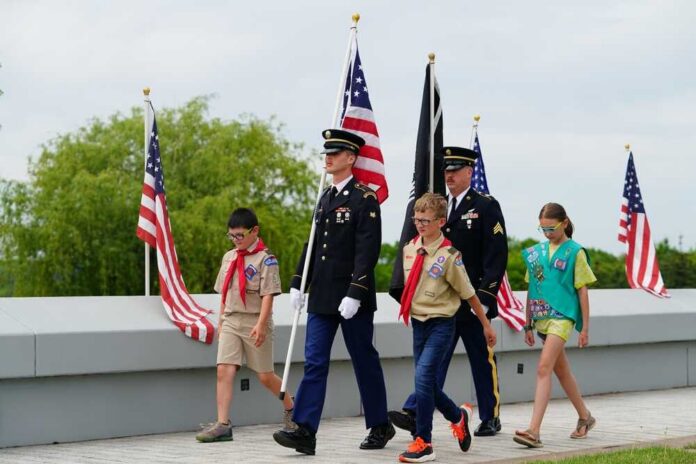
The Pentagon’s ultimatum to Scouting America is reviving a cultural fight many conservative families thought they’d already settled: youth programs shouldn’t be forced into political ideology to earn federal support.
Quick Take
- Secretary of War Pete Hegseth says Department of War support for Scouting America will continue only if the organization follows through on a formal commitment to drop DEI initiatives.
- The agreement is tied to Executive Order 14173 and is structured as conditional support with monitoring and a six-month evaluation window.
- Scouting America says it welcomes a “renewed partnership,” including policy changes and added relief for military families such as fee waivers.
- Critics warn that the federal pressure campaign could weaken recruiting and military-family community ties if the relationship collapses.
Pentagon leverage forces a reset on DEI
Secretary of War Pete Hegseth announced that the Department of War will keep supporting Scouting America only after the organization agreed to reforms that include dropping diversity, equity, and inclusion initiatives. The department’s leverage is practical: access to bases, facilities, personnel support, and logistical help tied to major events like Jamborees. The new arrangement is framed as compliance with Executive Order 14173, with the Pentagon retaining termination power if promised changes don’t stick.
Department officials have described the review as ongoing and “rigorous,” and the resulting agreement is not open-ended. The department is using a memorandum of understanding and a defined evaluation timeline to measure progress, signaling that Scouting America is effectively on probation. That structure matters because it turns what used to be a longstanding relationship into a conditional partnership—one that can be tightened or cut based on whether the organization’s internal policies align with federal directives.
What Scouting America agreed to—and what remains unclear
Hegseth’s February 27 update described “five changes,” including the removal of DEI efforts and a waiver of fees for children in active duty, Guard, and Reserve families. Multiple reports reference the same list, but public details on every item are incomplete across sources, making it difficult to verify the full package beyond the most-cited points. Scouting America’s leadership, however, issued a statement supporting the renewed partnership after months of dialogue with the department.
That combination—publicly announced reforms plus partial specificity—leaves families with a basic takeaway: the most visible DEI element is being dropped, while the remaining changes appear aimed at emphasizing merit, character, and service. If Scouting America’s internal policy documents and program materials are updated consistently, the changes could be easy to confirm on the ground. If they are implemented unevenly, the Pentagon’s monitoring framework creates an incentive for further disputes and repeated compliance showdowns.
Why this fight is about more than scouting badges
The dispute lands in a familiar place for conservatives who’ve watched “institutional capture” spread through schools, corporations, and nonprofits. Scouting America’s long arc includes major policy shifts since the 2010s—changes involving sexuality rules, transgender inclusion, admitting girls, and rebranding—amid a steep membership drop that Hegseth highlighted as part of his case for a return to “foundational ideals.” The Pentagon’s pressure is therefore about culture, but also about trust: whether classic civic institutions still teach duty, discipline, and country.
For constitutional-minded readers, the most important policy question is precedent. Executive Order-driven standards and federal contracting rules can become a backdoor way for Washington to shape private organizations’ internal hiring, training, and programming—even when those groups are not government agencies. Supporters of the Pentagon’s stance argue it’s ending discriminatory DEI structures and restoring merit. Critics respond that the same mechanism can be used by any future administration to impose the opposite agenda.
Military readiness arguments collide with war-weariness at home
A retired rear admiral writing for a defense policy outlet warned that severing ties with Scouting America could damage recruiting and harm military families, urging Congress to pay attention. That critique doesn’t deny cultural problems inside major institutions; it focuses on the practical value of a youth pipeline that develops skills and community ties around bases. The department’s current approach tries to avoid a full break by using conditional support rather than immediate termination, keeping the relationship alive while demanding change.
The politics of this moment are also shaped by broader conservative frustration in 2026. Many Trump voters backed a promise to avoid new wars, and the ongoing conflict with Iran has split parts of the MAGA coalition—especially as families feel squeezed by higher energy costs and the lingering habit of Washington solving problems overseas while neglecting issues at home. That backdrop helps explain why the Pentagon is highlighting “merit” and “readiness” domestically: leaders are under pressure to show they can restore order without fueling a never-ending set of national commitments.
Sources:
Hegseth Says Scouting America Support to Continue Upon Org’s Commitment to Drop DEI Initiatives
Scouting America agrees to 5 changes under Pentagon pressure
Scouting America agrees 5 changes under Pentagon pressure
Scouting America, DoD military support
Scouting America Is Vital to the Pentagon’s Warfighting Potential
Scouting America statement concerning Department of War announcement