
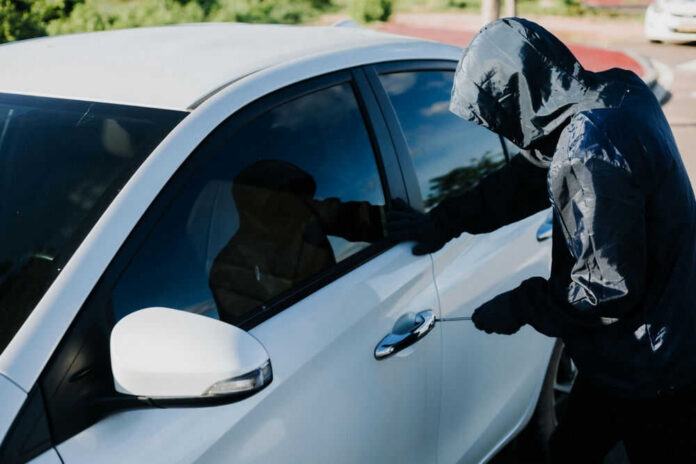
Minneapolis auto thefts have exploded by 35 percent in early 2026 under the watch of Governor Tim Walz and Mayor Jacob Frey, reaching over five times the rate of neighboring St. Paul—a stunning disparity that exposes the consequences of inadequate policing and soft-on-crime policies.
Story Snapshot
- Minneapolis recorded 1,308 auto thefts by mid-March 2026, a 35% year-over-year surge reversing years of decline
- St. Paul reported only 195 thefts in the same period, achieving a 61% reduction over three years through dedicated task forces
- MPD Chief attributes the spike to officer shortages, federal ICE operations diverting resources, and emerging key-programming theft techniques
- Critics point to Minneapolis’ lack of dedicated anti-theft units and lenient prosecution policies compared to St. Paul’s proactive approach
Tale of Two Cities: Minneapolis Lags Behind St. Paul
Minneapolis logged 1,308 auto thefts from January through mid-March 2026, dwarfing St. Paul’s 195 thefts despite both cities sharing the Twin Cities metro area. This five-fold disparity highlights a critical failure in Minneapolis under Mayor Jacob Frey’s leadership. While Minneapolis saw a 35% year-over-year increase, St. Paul’s dedicated Car Theft (CAT) task force continued a three-year trend of success, driving thefts down 61% since 2021. The contrast exposes how focused law enforcement strategies produce results, while Minneapolis flounders under staffing shortages and policy distractions that empower repeat offenders.
Staffing Shortages and Federal Operations Divert Resources
Minneapolis Police Chief Brian O’Hara cited significant staffing gaps and the diversion of officers to support Operation Metro Surge, a federal ICE initiative, as key factors behind the theft surge. Officers pulled from routine patrols left neighborhoods vulnerable, allowing prolific offenders to operate unchecked. Meanwhile, St. Paul’s CAT task force—funded by a 2021 state grant under Governor Tim Walz—collaborated seamlessly with local law enforcement to target career criminals responsible for 80-85% of thefts. Ramsey County Undersheriff Mike Martin noted that criminals know stealing in Ramsey County carries consequences, a deterrent absent in Minneapolis where lax prosecution and absent dedicated units create a soft target for thieves.
Emerging Theft Techniques Threaten Broader Vehicle Models
The surge extends beyond the notorious Kia and Hyundai vulnerabilities exploited by the “Kia Boys” since 2020. Non-Kia/Hyundai thefts jumped 59% year-over-year in Minneapolis, with vehicles left running or with keys inside rising 10-18%. Chief O’Hara warned of emerging key-programming technology enabling thieves to electronically access newer models, a trend spreading nationally. This evolving threat demands proactive task forces like St. Paul’s, which recovered 169 vehicles and arrested 48 suspects by early 2026. Minneapolis, by contrast, lacks a dedicated anti-theft unit, relying instead on reactive measures and pilot forensic programs that have yet to demonstrate effectiveness against organized theft rings.
Political Accountability and Public Safety Erosion
Ramsey County Sheriff Bob Fletcher publicly criticized the Minneapolis surge, stating it “didn’t happen by accident” and underscoring the five-fold gap between the cities. His remarks amplify frustration among residents who see policy failures under Walz and Frey enabling criminal activity. Victims like Minneapolis resident Tia Nahl described feeling violated, echoing broader fears as thefts impose economic burdens—averaging $8,886 per stolen vehicle nationally—through insurance hikes and recovery costs. The political fallout is mounting, with conservative critics highlighting how Minneapolis’ refusal to adopt St. Paul’s “focused deterrence” model prioritizes progressive ideology over public safety, leaving law-abiding citizens to bear the consequences of weak governance.
UNDER FIRE: Gov. Walz and Mayor Frey face mounting pressure as Minneapolis auto thefts spike 34% year-over-year. Retired trooper says city leaders are not making enforcement a priority. https://t.co/9i2CerMLxo
— Fox News Politics (@foxnewspolitics) March 17, 2026
While recent arrests temporarily lowered weekly theft numbers to 84, Minneapolis remains 300 thefts ahead of 2025 totals, and Chief O’Hara anticipates further challenges as key-programming techniques spread. The city’s reliance on understaffed patrols and fragmented inter-agency efforts contrasts sharply with St. Paul’s coordinated success, proving that dedicated resources and accountability deliver safer communities. For Minneapolis residents enduring this preventable crisis, the lesson is clear: soft-on-crime leadership under Walz and Frey has abandoned their security in favor of policies that fail the basic duty to protect citizens and property.
Sources:
Minneapolis vehicle theft vs. St. Paul data – CBS News
Minneapolis car thefts spike in 2026, St. Paul sees continued decline – KSTP
Map shows glaring scope of auto theft increase in Frey, Walz’s Minneapolis – Fox News
Auto Theft Research – AutoInsurance.com