Big Tech allies swarm Supreme Court steps, protesting conservative laws designed to end online censorship of American voices.
Story Snapshot
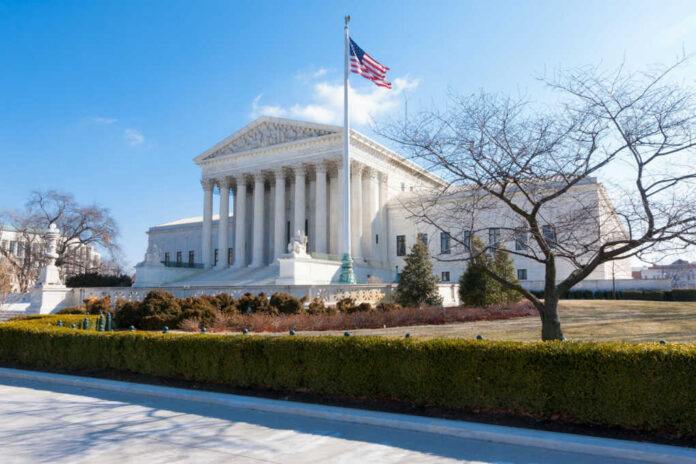
- Hundreds of protesters gathered outside the Supreme Court on April 1, 2026, during oral arguments in NetChoice v. Paxton, a case challenging Texas and Florida laws against Big Tech censorship.
- Texas AG Ken Paxton fights to stop platforms from silencing conservatives, aligning with Trump-era promises to protect free speech.
- 15 arrests made after clashes with Capitol Police; protests dispersed without disrupting arguments.
- Decision expected by June 2026 could reshape social media regulation nationwide, impacting millions of users.
Protests Erupt During High-Stakes Oral Arguments
Hundreds of demonstrators assembled on the U.S. Supreme Court steps starting at 9 AM ET on April 1, 2026. Chants and signs targeted state laws restricting social media content moderation. Crowds swelled mid-morning as oral arguments began inside on NetChoice v. Paxton, consolidated with Moody v. NetChoice. U.S. Capitol Police reported minor skirmishes. Protesters, linked to progressive groups and Free Speech Coalition, opposed laws from Texas and Florida. These measures aim to prevent platforms from censoring conservative viewpoints. The event coincided precisely with Justices hearing arguments on First Amendment implications for online speech.
Case Background: Fighting Big Tech Censorship
NetChoice, representing Meta and Google, challenges Texas HB 20 and Florida laws upheld by the 5th Circuit Court. The 11th Circuit struck down similar restrictions, prompting Supreme Court review. Certiorari granted in October 2024 set arguments for April 1, 2026. Texas AG Ken Paxton enforces HB 20 to combat what he calls platform censorship of conservatives. Paxton stated on X at noon ET: “Big Tech can’t silence conservatives anymore.” This case arises amid 2026 midterm tensions, where Republicans prioritize anti-censorship measures against Democrat-favored moderation. Historical precedents include Roe v. Wade protests and post-Bruen rallies, but none matched this scale on argument day.
Stakeholders Clash Over Free Speech Control
NetChoice defends platforms’ First Amendment right to moderate content, backed by over $10 million in Big Tech lobbying and amicus briefs. Paxton represents red-state interests, allied with GOP governors pushing back against perceived liberal bias. Protesters align with tech giants, fearing “forced speech” would amplify misinformation. The Biden Administration’s Solicitor General supports platforms in a February 2026 brief. Justices, with a 6-3 conservative majority, fielded questions from Kavanaugh and Barrett on moderation precedents. Capitol Police maintained order under post-January 6 protocols, arresting 15 for unlawful assembly by 1 PM ET.
Arguments concluded without inside disruption. Protests shifted to Capitol Hill after dispersal. NetChoice tweeted at 3 PM ET: “Today’s ruling will define free speech online.” Police affirmed peaceful protests tolerated but enforced violations.
Potential Impacts on Conservatives and Economy
A Supreme Court ruling could establish a nationwide standard, potentially invalidating over 10 state statutes affecting 100 million users. Conservatives stand to gain amplified voices if platforms lose moderation power, fulfilling promises to end censorship. Tech firms face revenue risks from forced hosting of unwanted content; Forbes estimates billion-dollar market swings for Meta and Google. Short-term, D.C. security costs hit $500,000 amid media coverage. Long-term, the decision reshapes Section 230 debates and fuels midterm “censorship” issues. Platforms paused moderation changes pending June 2026 outcome.
Expert Views Highlight Conservative Hopes
Heritage Foundation’s Sarah Field called a win “victory for viewpoint diversity” in a Daily Wire op-ed. Stanford’s Daphne Keller predicts 5th Circuit reversal with 70% odds, citing precedents like 303 Creative. EFF’s David Greene warns of gutted platform autonomy. Volokh Conspiracy forecasts 6-3 for NetChoice. Progressives like ACLU back platforms for hate speech control; conservatives at Cato oppose regulation overall. Crowd size varied slightly in reports from 200-500, with Paxton’s “thousands” claim exaggerated per video evidence. Case now under deliberation.
Sources:
SCOTUS.gov: Docket Nos. 24-555, 24-556
WaPo (April 1): “Hundreds protest at SCOTUS on tech case”
Reuters: Arrest tally, statements
C-SPAN: Argument transcript/audio
Politico/NYT: Background, briefs