
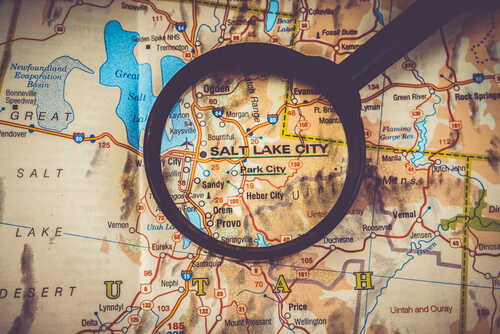
Washington’s grip on America’s forests is loosening as the Trump administration orders the U.S. Forest Service to pack up its D.C. headquarters and move west—raising big questions about accountability, disruption, and whether this finally cuts bureaucracy where it hurts.
Story Snapshot
- The USDA announced the U.S. Forest Service will relocate its headquarters from Washington, D.C., to Salt Lake City, Utah, with a full move targeted by summer 2027.
- The restructuring eliminates all nine regional offices and replaces them with a state-based model led by 15 state directors across the country.
- About two-thirds of D.C.-based positions are expected to relocate, while some staff remain in Washington; the exact Salt Lake City site is still to be determined.
- USDA says frontline wildfire response will not change, with fire operations continuing through established interagency systems.
Why the Trump White House is moving an agency built in D.C.
USDA Secretary Brooke Rollins announced March 31 that the Forest Service will shift its headquarters to Salt Lake City as part of a broader restructuring intended to decentralize authority and reduce the federal footprint in Washington. Administration officials argue the agency’s leadership should sit closer to the lands it manages, since roughly 90% of Forest Service lands are west of the Mississippi River. The plan rolls out over the next year, with completion expected by summer 2027.
The move fits a Trump second-term priority conservatives have long demanded: shrinking D.C.’s permanent bureaucracy and forcing federal agencies to operate nearer the communities that live with the consequences of federal decisions. Utah Gov. Spencer Cox, a Republican, framed the decision as a “big win” for Utah and the West, pointing to the state’s significant share of Forest Service-managed land and its growing role in public-lands coordination.
What changes inside the Forest Service: regional offices out, state directors in
The restructuring is not just a zip-code change. USDA’s plan shutters all nine regional offices and replaces that structure with 15 state directors in a state-based model that more closely resembles other western-focused land agencies. Early outlines describe state director assignments across the West, including combinations for certain states and designated locations such as Boise, Helena, and Cheyenne. The intent is to cut management layers, standardize decision-making, and push authority closer to field operations.
Supporters say the redesign could reduce bottlenecks that frustrate rural communities, timber interests, and wildfire-prone counties when decisions are delayed by multiple layers of oversight. Critics and regional observers caution that reorganizations can create confusion over jurisdiction—especially in states with complex, multi-region footprints—and that losing established regional offices may weaken institutional memory. Several reports also note that exact reporting lines, staffing levels, and final office locations are still being developed.
Workforce disruption, recruitment claims, and the question taxpayers care about
Staffing is one of the most immediate pressure points. Reporting indicates roughly 390 D.C.-based positions are affected, with about 260 expected to relocate and about 130 remaining in Washington. USDA has not confirmed layoffs as part of the announcement, but employees are expected to receive relocation details as planning advances. For conservatives who want a leaner government, the key test will be whether this reduces overhead without simply shifting costs into relocation packages, new leases, and repeated reorganizations.
Rollins and agency leadership also argue the move improves recruitment and retention by placing leadership in regions where forestry careers are more common and where agency work is physically closer to mission needs. That rationale will resonate with voters tired of Washington insiders managing distant communities, but it also puts pressure on USDA to show measurable improvements. The available reporting does not provide a detailed public cost estimate, leaving taxpayers to wait for clearer accounting as implementation proceeds.
Wildfire operations and research consolidation: what’s promised, what’s uncertain
USDA and Forest Service leaders have emphasized that frontline firefighting will not be cut or disrupted by the headquarters move, with fire operations continuing through established structures including the National Interagency Fire Center in Boise. That assurance matters as the West faces recurring, high-cost fire seasons and residents demand faster fuel reduction and smarter forest management. The administration’s credibility will hinge on whether the reorganization speeds decisions rather than complicating incident command coordination.
Research operations are another flashpoint. Multiple reports describe consolidating Forest Service research functions in Fort Collins, Colorado, and concerns that research sites in many states could be shuttered or reduced. If research capacity is narrowed too aggressively, it could undercut long-term forest health and fire science that states rely on, even as conservatives support cutting waste. The current public details outline consolidation goals but do not fully specify which locations will close, leaving open questions for Congress and affected states.
Bottom line: the Trump administration is betting that moving power out of Washington and closer to the forests will deliver better management and lower overhead. Conservatives will likely welcome a smaller D.C. footprint, but they will also demand proof—clear costs, clear performance benchmarks, and real improvements in wildfire readiness—rather than another expensive federal reshuffle that looks good on paper and disappoints in practice.
Sources:
Trump admin moves Forest Service HQ to Utah in latest DC relocation push
A big win: US to move Forest Service headquarters to Salt Lake City
Forest Service plans to move D.C. headquarters to Salt Lake City
Trump plans to move Forest Service headquarters to Utah and shutter research sites
Forest Service D.C.-to-Utah headquarters move: What it means for the Yates Building
USDA to move Forest Service HQ from DC to Salt Lake City