
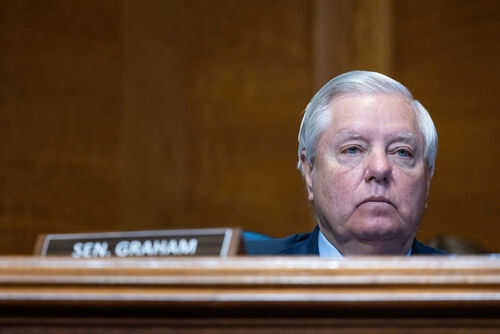
President Donald Trump’s public tribute to Senator Lindsey Graham turns a sudden loss into a clear reminder of what loyal, pro-America leadership looks like — and what is at stake if that voice is gone.
Story Snapshot
- Trump calls Lindsey Graham “one of the greatest people and senators” he has ever known, praising him as a “true American patriot.”
- Graham, a longtime Republican from South Carolina and close Trump ally, dies at 71 after a brief and sudden illness.
- World leaders and establishment media honor Graham’s foreign policy record, while Trump’s base remembers his strong support for national defense and Israel.
- Graham’s death opens a major fight over his Senate seat, with control of key issues like border security and judicial nominees hanging in the balance.
Trump’s Tribute To A Loyal Republican Ally
President Donald Trump responded quickly after news broke that United States Senator Lindsey Graham had died from a brief and sudden illness at the age of 71. In a Truth Social message shared widely by reporters, Trump called Graham “one of the greatest people and senators” he has ever known and praised him as a “true American patriot” who was “always working.” Trump also described Graham as a longtime Republican ally, making clear that he saw the senator not just as a colleague, but as a trusted partner in key battles over judges, national security, and support for America’s allies.
Lindsey Graham’s journey to becoming one of Trump’s closest Senate allies was not simple or automatic. Early in Trump’s first campaign, Graham spoke against him and warned about outsider politics, but he later shifted and embraced Trump’s agenda, backing conservative judges, stronger border enforcement, and a tougher line on terrorism and hostile regimes. That change turned Graham into a regular defender of Trump on television and in hearings, and the two men built a relationship that mattered for every major fight over the Supreme Court, immigration, and foreign policy during Trump’s presidencies.
A Sudden Death That Shocks Republican Voters
Graham’s office announced that the senator died after a “brief and sudden illness,” shocking voters in South Carolina and Washington insiders who had expected him to appear on Sunday political shows. Reports say emergency crews responded quickly, but the illness moved faster than doctors could stop it, underscoring how fragile leadership can be in tense times. The senator had just returned from Kyiv, where he met with Ukraine’s president and visited defense facilities, showing he was still deeply engaged in global security right up until his final days.
South Carolina Republicans must now move fast to pick a new nominee for Graham’s Senate seat, with a special primary expected under state election law. That makes his passing not only a personal and national loss, but also a real political crisis for a party already fighting the left over border control, energy costs, and runaway spending. For conservative voters, the worry is simple: will the next senator back Trump’s agenda with the same focus on national defense, strong alliances, and judges who respect the Constitution, or will party insiders try to push a “safer” moderate who caves to Washington pressure?
Graham’s Record: Strong On Defense, Sometimes Split On Culture Fights
Across the world, leaders praised Graham as a hawk on foreign policy and a tireless defender of NATO, Ukraine, and Israel. He built his career pushing for a strong military and close ties with allies, and he backed many measures that helped American forces and partner nations face threats from Iran, Russia, and terror groups. For many conservatives, that record fits well with Trump’s push to rebuild the military and stand firmly with Israel, even when global elites complained.
Inside Lindsey Graham and Donald Trump’s Complicated Relationship Over the Years as Trump Pays Tribute to ‘True American Patriot’ https://t.co/UuTTOe1sTL
— People (@people) July 12, 2026
At the same time, many grassroots Republicans remember moments when Graham frustrated them by backing bipartisan deals or talking up globalist positions on trade and immigration. His support for intervention overseas sometimes clashed with voters’ anger over open borders at home and endless wars abroad. Yet his late-in-life loyalty to Trump, his strong defense of conservative judicial picks, and his close work with the president on national security earned him respect across much of the Trump movement. Trump’s tribute highlights that final chapter, framing Graham as a patriot who, whatever his past breaks with the base, chose in the end to stand with America First policies instead of Beltway groupthink.
What Graham’s Death Means For Trump-Era Priorities
Trump’s decision to speak of Graham in such personal, elevated terms fits a wider pattern of how he talks about allies who die in service to causes he shares. He often uses these moments to honor loyalty and stress that the fight for secure borders, fair trade, strong families, and respect for faith does not stop when one leader falls. In this case, his words about Graham as “one of the greatest people” send a signal to Republicans in Congress and in South Carolina: the next senator must match that level of commitment, not drift back to the old, weak Republican Party that cut deals while the left pushed woke policies, open borders, and tax hikes.
For conservative readers, Graham’s death and Trump’s tribute are a reminder that personnel is policy. The people who sit in those Senate seats decide whether gun rights stay strong, whether judges defend the Constitution, and whether America bows to global bodies or stands up for its own citizens. Trump chose to honor Graham as a true patriot, making clear that, in this second term, he expects Republicans to follow that example — not to cave to the same elites who gave us inflation, energy pain, and endless wars.
Sources:
instagram.com, cbsnews.com, facebook.com, bbc.com, youtube.com, edition.cnn.com, aol.com, cas.lehigh.edu