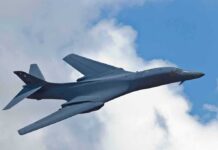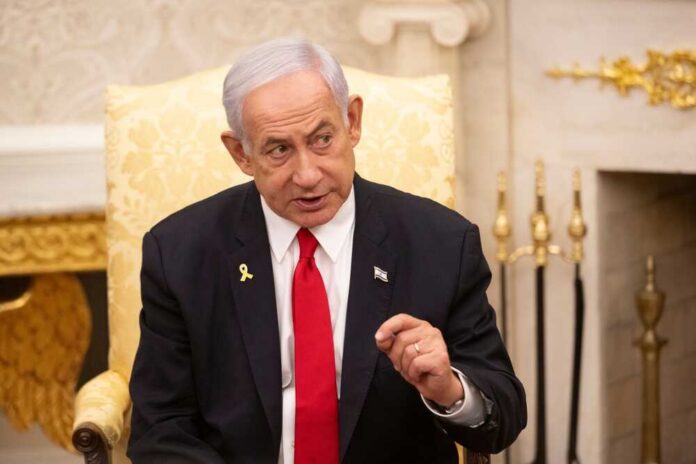
As President Trump weighs selling America’s most advanced F‑35 jets to Turkey, Israeli Prime Minister Benjamin Netanyahu is urgently warning Washington that putting stealth fighters next to Russian missiles could hand Moscow our secrets and shatter the Middle East balance of power.
Story Snapshot
- Netanyahu is lobbying Secretary of State Marco Rubio to stop any F‑35 sale to Turkey.
- Turkey was kicked out of the F‑35 program in 2019 after buying Russian S‑400 air defenses.
- U.S. law now bans F‑35 transfers to Turkey until it fully gets rid of its S‑400 systems.
- Trump is signaling he may revive the deal if Turkey makes its Russian system “inoperable,” worrying Israel and Congress.
Netanyahu presses Rubio and Trump over Turkey’s F‑35 ambitions
Israeli Prime Minister Benjamin Netanyahu has made the Turkish F‑35 issue a personal mission, pressing top Americans as the Trump administration reopens talks with Ankara. Multiple reports say Netanyahu raised the jet sale in a series of calls with Secretary of State Marco Rubio in March and April, urging him to block the deal. A third source confirmed he also planned to lean on President Trump directly, warning that advanced U.S. jets in Turkish hands could be used from bases in Syria against Israel and its allies.
Netanyahu’s push did not stop with private calls. Israeli and Greek officials both argue that letting Turkey buy the stealth fighters will erode their technological edge and change the region’s power balance. Social media statements and interviews show the Israeli leader publicly telling Trump the United States “shouldn’t give Turkey F‑35 jets” because it would upset the balance of power in the Middle East and strip Israel of its air advantage. Israeli diplomats add that Turkey’s increasingly hostile behavior in the region makes such a sale “undesirable” and dangerous for long‑term stability.
Turkey’s S‑400 deal, U.S. law, and the Russian intelligence risk
The fight over F‑35s cannot be understood without Turkey’s decision to buy Russia’s S‑400 air and missile defense system, which targets the very stealth features that make the F‑35 valuable. After Ankara went ahead with the S‑400 purchase despite warnings, Washington expelled Turkey from the joint F‑35 program in 2019 and imposed sanctions under the Countering America’s Adversaries Through Sanctions Act. Congress then drew a bright red line: no F‑35 aircraft, parts, or support can go to Turkey while it still possesses the S‑400s or similar Russian systems that could compromise the jet.
Security experts warn that putting American stealth jets alongside Russian radar and technicians would be an intelligence gift to Moscow. The S‑400 is built to detect and track advanced fighters, and Turkey’s contract reportedly includes ongoing support from Russian specialists, deepening exposure risks. This is why U.S. law now requires the secretaries of State and Defense to certify in writing that Turkey has removed all S‑400 equipment and personnel, pledged never to reacquire it, and avoided any comparable Russian systems before any F‑35 transfer can happen. For constitutional conservatives, that legal safeguard is exactly the kind of congressional check on foreign entanglements that must be defended.
Trump’s signals, defense industry pressure, and Israel’s qualitative edge
Despite Israel’s pressure and the clear law, Trump and his team are testing ways to reopen the door for Ankara. Recent reporting says Trump is considering lifting some sanctions, moving ahead with a $700 million jet engine sale for Turkey’s home‑grown KAAN fighter, and even exploring a framework that could let Turkey “finally obtain” long‑shelved F‑35 jets if its S‑400 is rendered “inoperable.” Defense industry voices argue that bringing back Turkey, with its thousands of defense firms, would expand markets and tie Ankara closer to Washington through lucrative contracts.
Israel sees the stakes very differently. For years, U.S. policy has been built around Israel’s “qualitative military edge,” a promise that America will keep Israel the strongest military power in the Middle East. Israel was the first country to buy the F‑35 through the U.S. foreign military sales process and even received a unique F‑35I “Adir” variant with its own sensors and systems. Israeli officials now fear that if Turkey gets similar jets, their edge vanishes, especially when Turkish forces are active in Syria and host leaders of groups like Hamas. For U.S. conservatives who value strong allies and clear lines against terrorism, handing such tools to an unstable partner looks less like smart strategy and more like wishful thinking.
Congressional pushback and lessons for U.S. conservatives
Members of Congress from both parties are already pushing back, with figures like Representative Dina Titus working to build opposition to any F‑35 deal with Turkey. Policy briefs aimed at lawmakers stress that the current law is not a loose guideline but a binding requirement: without the mandated certification that Turkey has removed its S‑400s, any transfer would be a clear violation. Analysts argue Washington should hold to a simple standard: no F‑35s for Turkey until it permanently scraps Russian systems, normalizes ties with Israel, and stops threatening neighbors like Greece and Cyprus.
Netanyahu urges US not to sell F-35 fighter jets to Turkey https://t.co/dEGmESUgi0
— Turkish Minute (@TurkishMinuteTM) July 6, 2026
For American conservatives, this episode is a warning about how fast “allies” can turn and why the United States must guard advanced technology, protect dependable partners like Israel, and resist pressure from globalist defense lobbies. Selling cutting‑edge stealth jets to an increasingly authoritarian government that bought Russian missiles against U.S. advice is not common sense; it is a risk to U.S. pilots, taxpayers, and our most faithful ally in the region. As Netanyahu sounds the alarm, the Trump administration and Congress face a choice that goes far beyond Turkey: will America’s leaders keep their word on law, security, and alliance loyalty, or bend to short‑term deals that could arm tomorrow’s adversaries?
Sources:
middleeasteye.net, ynetnews.com, youtube.com, x.com, thehill.com, facebook.com, turkishminute.com, reddit.com, fddaction.org, behindthefront.substack.com, jinsa.org, reuters.com, al-monitor.com, globalr2p.org, airuniversity.af.edu