
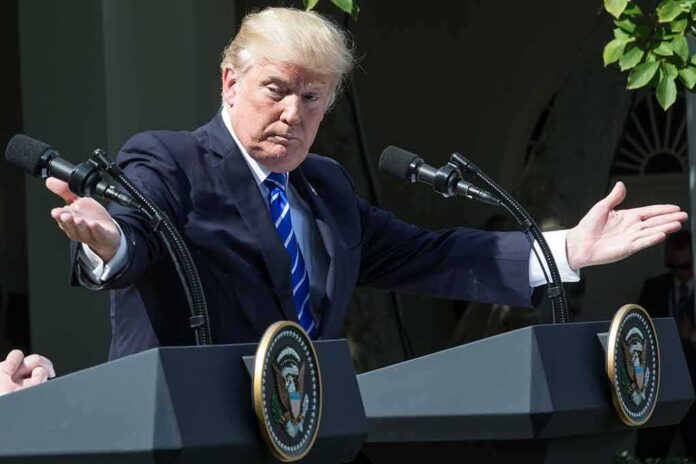
President Trump warned that a recessed Senate is “killing our country” by blocking action while key work piles up.
Story Highlights
- Trump said the Senate is a “roadblock” and “nothing is getting through.”
- The Senate was in formal recess when Trump made his remarks.
- Trump has urged senators to stay in session and move nominations and bills.
- Senate rules allow minority delays through the filibuster, slowing votes.
Trump Slams Senate Inaction During Florida Remarks
President Trump told reporters at the Kennedy Space Center in Cape Canaveral on November 6, 2026, that the United States Senate is “getting nothing passed,” calling it a “roadblock” and saying the stalemate is “killing our country.” He spoke after an appearance focused on space policy and then took questions. His comments tied the chamber’s slow pace to stalled priorities on spending, border security, and nominations that the White House wants advanced without more delay.
Trump’s criticism came while the Senate was in a formal recess, underscoring a calendar that left major items waiting. Reporting noted the upper chamber had been out for more than a month at the time of his remarks. The timing sharpened Trump’s point that Washington cannot fix big problems if senators are away from the Capitol. He framed the pause as part of a larger pattern of delay that blocks votes and keeps needed action off the floor.
Push To Keep Senators In Town And Move The Backlog
Trump has pressed senators before to skip breaks and finish work, including confirming a long list of nominees. He has called out leaders to keep the chamber in session and clear a “backlog” of appointments, warning that unfinished business weakens the government’s ability to deliver. He has also urged senators not to leave town during standoffs and to reach deals or change rules so that votes can happen and funding and policy bills can pass without endless stalls.
Trump has argued that conservatives win when Congress shows urgency and resolves fights instead of punting. He has tied delay to real costs for families, like higher prices, energy strain, and border chaos, and has linked action to core values like security, law and order, and fiscal restraint. By spotlighting the Senate schedule, he placed direct pressure on senators in both parties to signal when they will return, take up bills, and clear nominees so executive agencies can function at full strength.
Why Senate Rules Invite Gridlock And How It Can Change
Senate rules allow extended debate and other tactics that delay or block a final vote. This is commonly known as a filibuster. Ending extended debate usually requires a supermajority vote for cloture. As a result, a determined minority can slow the agenda even when a simple majority supports moving ahead. These procedures give each senator leverage but also make it harder to deliver quick results on spending, security, and nominations when time is short.
Presidents from both parties have run into these roadblocks over the years. Trump has floated ending the filibuster to break stalemates. Supporters of change say faster votes would restore accountability and let majorities govern. Critics warn that rule changes cut minority rights and could backfire later. The tradeoff is clear: protect extended debate or speed up action. Trump’s stance places priority on action now and argues that voters expect visible results, not gridlock.
What It Means For Border, Spending, And Family Budgets
Every week of delay leaves urgent issues hanging. A Senate on recess cannot pass border security measures, confirm enforcement leaders, or send spending bills to the President’s desk. Agencies then run on stopgaps or sit with acting officials. Families feel the squeeze when Congress stalls on policies that could help lower energy costs, cut waste, and restore order at the border. Trump’s message was simple: show up, vote, and move the agenda the people elected you to carry out.
Trump’s pressure campaign aims to restart a culture of work in Washington. He wants senators back in the chamber, floor votes scheduled, and nominees confirmed so the executive branch can do its job. He ties this push to constitutional duty: the Senate advises and consents, not delays and disappears. The next step is on Senate leaders. Will they reconvene, set a real calendar, and deliver, or keep the pause that has left key action on hold while the country waits for results?
Sources:
mediaite.com, ropercenter.cornell.edu