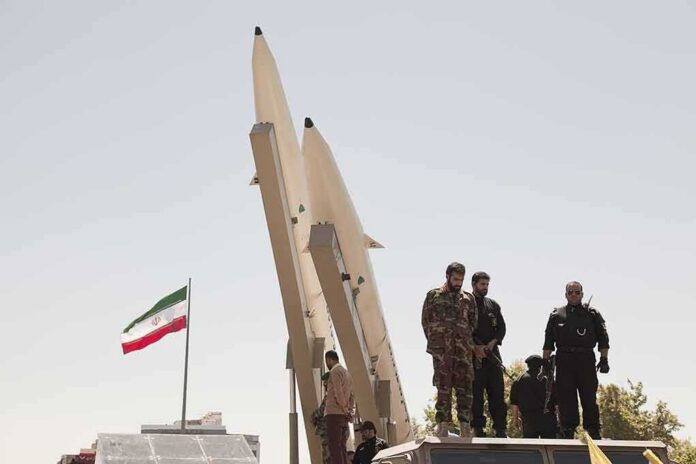
Iran’s supreme leader ordered an immediate, “maximum” military response to any new U.S. or Israeli attack, with no geographic limits, raising direct threats to Americans and allies abroad.
Story Highlights
- Ayatollah Khamenei told Iran’s top commanders to hit back “without geographical limitations.”
- The directive includes expanding target lists to reach U.S. and Israeli assets worldwide.
- Iran’s state-linked outlets echoed the same language on rapid, unrestricted retaliation.
- Bloomberg says the order went to the heads of the Guard, Army, and General Staff.
Khamenei’s Order: Immediate, Unrestricted Retaliation
Axios reported that Ayatollah Ali Khamenei directed Iran’s military to deliver an “immediate and effective response, without geographical limitations” if the United States or Israel strikes again. The language sets no regional boundary and signals plans to reach targets far from Iran’s borders. Khamenei framed the goal as “maximum deterrence” that puts American and Israeli assets at risk worldwide. He also asserted that Iran would decide when any fight ends, not its adversaries, if new attacks occur.
Bloomberg said the order was delivered to Iran’s three most senior military chiefs: the commanders of the Islamic Revolutionary Guard Corps, the national Army, and the General Staff of the Armed Forces. That makes it more than a public warning. It is a tasking to the chain of command. The same reporting noted the push to broaden retaliation plans, showing a shift from threats to concrete military preparation. The audience for the message was the officers who write and execute war plans.
Target Bank Expansion Aims Beyond the Battlefield
Axios detailed a key piece of the directive: update the military’s “target bank” so that all types of “American-Zionist” material and non-material assets are within reach. In plain terms, Iran wants more targets on the list, across more places, including economic and digital nodes tied to the United States and Israel. That instruction suggests planners should prepare options beyond the usual regional sites. It points to cyber, logistics, and commercial choke points that can raise costs fast.
Iranian state-linked outlets echoed the core phrases. Newsweek reported that the official Islamic Republic News Agency repeated the “immediate” response to “any kind and level of threat,” while the Guard-affiliated Tasnim used the “without geographical limitations” wording. The repetition across aligned media means the regime wants this message heard outside Iran. It also tells proxies and partners what tone to match. This is standard for Tehran’s deterrence playbook when it feels pressure.
Deterrence Pattern and What It Means for Americans
The Congressional Research Service has described how Iranian leaders have climbed the “escalation ladder” after strikes by the United States or Israel, often hitting what they view as similar targets abroad. That history matters now. Khamenei is not inventing a new script. He is reviving a known pattern: threaten wide retaliation to raise the price of any new hit. That includes asymmetric moves that avoid direct jet-on-jet fights and instead stress missiles, drones, and proxy actions.
Associated Press coverage highlighted the “no geographic limits” line and placed it in the same series of warnings. The message lands at a time when talks and tensions both run hot. Iran’s diplomats hint at deals, while its commanders talk deterrence. That twin track can confuse onlookers, but it fits Tehran’s habit of pairing negotiations with threats. For Americans, the risk picture is clear. U.S. facilities, ships, and businesses could face pressure well outside the Middle East.
How the Trump Administration Should Read the Signal
President Trump’s team now carries the duty to shield Americans, deter attacks, and keep faith with allies. Clear red lines, tight force protection, and energy resilience all matter. Ports, pipelines, and global shipping lanes must be hardened. The administration should press partners to share threat data and close gaps in air and missile defense. It should also keep sanctions pressure on Tehran’s revenue streams that fund drones, missiles, and proxy groups that strike soft targets.
Iran’s order is sweeping, but the reports do not list forces, weapons, or timelines. That means the threat is broad, while its exact shape is hidden. Commanders often do this to keep options open. The right U.S. answer is readiness, not panic. Raise protection where Americans live, work, sail, and fly. Make clear that any strike on our people, embassies, bases, or commerce will bring a fast, direct cost. Peace through strength works when our enemies see and believe it.
Sources:
axios.com, nilepost.co.ug, bloomberg.com, bttn.org.pk