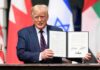
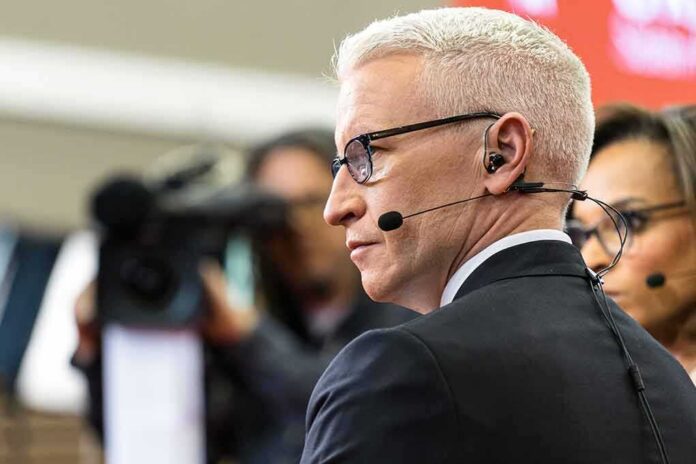
CNN host Anderson Cooper aired a mocking montage of President Trump’s rally remarks, turning a campaign stump line into late-night style ridicule.
Story Highlights
- Anderson Cooper played a supercut of Trump praising men’s physiques and cracked a polling joke about Jon Husted.
- Trump described looking at Ohio Senator Jon Husted’s body at multiple rallies, calling his backside “a pile of muscle”.
- Reports list other times Trump praised men’s looks, from athletes to candidates, during public events.
- The coverage framed the moment as satire, not a policy issue, drawing laughs and partisan heat.
What Cooper Aired And Why It Drew Fire
On October 21, CNN’s Anderson Cooper aired a montage of President Trump’s rally comments about men’s bodies and closed with a joke that Husted’s “ass may be hard, but his polling is soft.” The segment packaged several clips into a fast highlight reel and framed the remarks as punchlines. Coverage described the bit as cheeky satire aimed at embarrassing Trump, rather than a deep policy critique or a legal claim.
Media write-ups said the montage pulled examples in which Trump called several men handsome or strong at public events. The list included a congressman, a Senate hopeful, a college quarterback, and an NFL kicker. The on-air effect leaned on repetition to suggest a trend, even as the content itself was rally banter and compliments. The framing emphasized humor and ratings moments more than public costs or government action tied to the quotes.
What Trump Actually Said At The Rallies
Local television and national outlets documented that Trump described looking at Ohio Senator Jon Husted’s physique in detail. He said Husted’s backside was “a pile of muscle,” and spoke about studying his build. He repeated the theme at more than one rally, including Kentucky and Greenville, North Carolina, according to multiple reports that compared his language across stops. The coverage focuses on his colorful word choice and the crowd reaction, not on any complaint or claim of harm.
Reports also cite Trump praising other men’s looks and athletic frames, sometimes adding that he is not personally into men. The comments matched his long-time habit of hyping toughness, size, and presence at rallies. Supporters often read it as showman praise for allies and athletes. Critics, including Cooper, presented it as awkward and ripe for satire. The record here centers on public words that were plain to hear at the events.
The Media-Satire Cycle And Why It Matters
This episode fits a familiar pattern: a rally quip becomes a cable comedy moment, which then becomes online clips and more stories. Satire can drive engagement and shape how casual viewers remember a candidate. In this case, the CNN bit offered an easy laugh line, not a study of policy, spending, borders, or energy. For voters who care about the border crisis, inflation, and government overreach, this punchline-first framing can feel like a distraction from real stakes.
Nothing in the reports shows a formal complaint, rule violation, or action against Trump tied to the remarks. The focus is showmanship and optics, not governance. Conservatives see this as legacy media choosing mockery over substance. They want coverage on issues like illegal immigration, lower energy costs, and safer streets. When prime-time cable leans on nicknames and body jokes, it tells viewers what that network thinks is newsworthy—and what it prefers to ignore during a heated campaign season.
How Conservatives Can Read This Moment
Viewers should separate style from substance. Cooper’s montage used cuts and jokes to score partisan points. The underlying facts are simple: Trump praised Husted’s strength in vivid terms, repeated the bit, and often praises male toughness at rallies. The rest is spin. Voters should judge leaders on results: border enforcement, prices, paychecks, schools, faith, and freedom. That is where elections are won, not in late-night punchlines or cable-news zingers.
Sources:
mediaite.com, ibtimes.co.uk, newsweek.com