
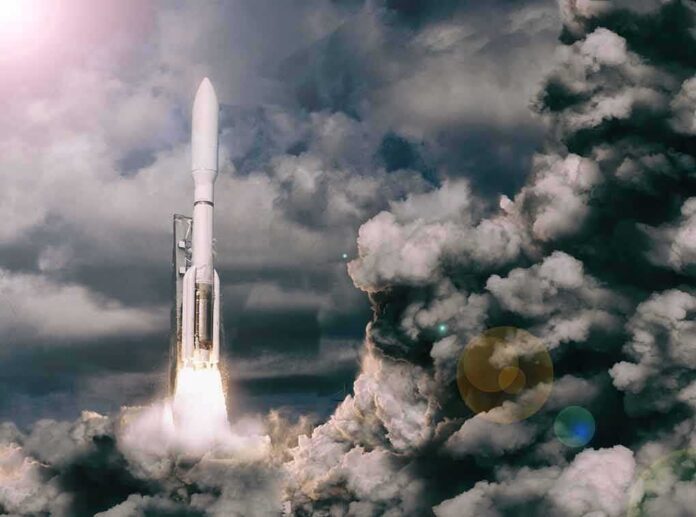
United Launch Alliance admitted its new Vulcan rocket failed to place 40 Amazon satellites in orbit after a mid-flight anomaly, prompting a pause on U.S. national-security missions that rely on a diversified launch base.
Story Snapshot
- United Launch Alliance said Vulcan suffered an anomaly about 10 minutes after liftoff and missed orbit.
- All 40 Amazon internet satellites on board were lost, according to contemporaneous reporting.
- The United States Space Force paused national-security launches on Vulcan pending fixes.
- United Launch Alliance pledged a formal investigation and corrective actions before returning to flight.
Launch Failure Confirmed By Company And Independent Reporting
United Launch Alliance stated that its Vulcan rocket lifted off from Space Launch Complex 41 and then suffered an anomaly about 10 minutes into flight, failing to deliver the Amazon mission to orbit. The company accepted responsibility and said it did not meet its mission-success standard. Reporting the same day said all 40 Amazon satellites were lost after the vehicle failed to reach orbit, aligning with the company’s statement on the outcome. United Launch Alliance said it would share updates as facts are confirmed.
United Launch Alliance said it will work with its customer and the proper organizations to find the cause, identify corrective actions, and return to flight as soon as possible. The company did not identify a failed part or subsystem in its initial update. That keeps the focus on the confirmed outcome: the mission did not reach orbit. The loss underscores how a single flight can carry major stakes for commercial customers and defense planners who depend on steady access to space.
Space Force Pauses Vulcan For National-Security Missions
Reporting indicates the United States Space Force paused national-security launches on Vulcan until United Launch Alliance resolves the problem and satisfies the government’s launch assurance process. That step reflects standard practice after a mishap. It also touches a key policy goal: keep more than one certified launch provider available for critical payloads. The pause does not state how many missions shift or slip. The cited reporting does not specify schedule impacts or replacements.
Launch diversity became a priority after earlier eras showed the risk of relying on too few rockets. Government reviews have long tied assured access to space with having multiple qualified options. The Government Accountability Office has reported on the competitive structure that now includes several providers across program lanes under the National Security Space Launch effort. That framework helps leaders manage risk when one system stands down for review and repair.
What We Know, What We Do Not Know Yet
Facts confirmed so far are straightforward: launch from Space Launch Complex 41, anomaly at about 10 minutes, and a failed orbital delivery for Amazon’s satellites. United Launch Alliance has not publicly named the failed stage or mechanism. The company’s statement made clear the data review had just begun. Without a named cause, the appropriate next step is the formal investigation United Launch Alliance promised with its customer and relevant authorities to clear the path to a safe return.
The record also does not show how the pause changes the broader timeline for national-security launches. The reporting cited does not include a count of affected missions, adjusted dates, or which alternative vehicles could cover them. That means readers should track the investigation results and a Space Force decision on when Vulcan can rejoin the national-security manifest. Until then, the diversified launch plan is designed to cushion short-term shock while protecting mission needs.
Why This Matters For Security, Cost, And Reliability
National-security payloads protect communications, navigation, surveillance, and missile warning. These systems support troops, borders, and homeland defense. A pause on one rocket matters because each delay can push back capabilities that help keep Americans safe. That is why the government maintains more than one provider and certifies them through a strict process. United Launch Alliance’s pledge to find the cause and fix it sits within that process, which is built to catch errors and raise reliability over time.
Vulcan Rocket Failure Destroys 40 Amazon Satellites
United Launch Alliance had its first total mission failure in 20 years when its rocket lost Amazon Leo satellites shortly after Sunday liftoff.
Read: https://t.co/NiyJU606Or pic.twitter.com/2686E6fg3K
— Real Truth Media (@RealTruth) November 18, 2026
For taxpayers and consumers, reliability and competition matter. When rockets work, the nation saves time and money and keeps an edge over rivals. When one system fails, strong oversight and a clear path to fly again protect both national missions and the market. United Launch Alliance’s statement accepts responsibility and commits to corrective action. The Space Force pause shows the system doing its job: ground the vehicle, solve the problem, and only then fly the next crucial payload.
Sources:
noozhawk.com, financialexpress.com, space.com