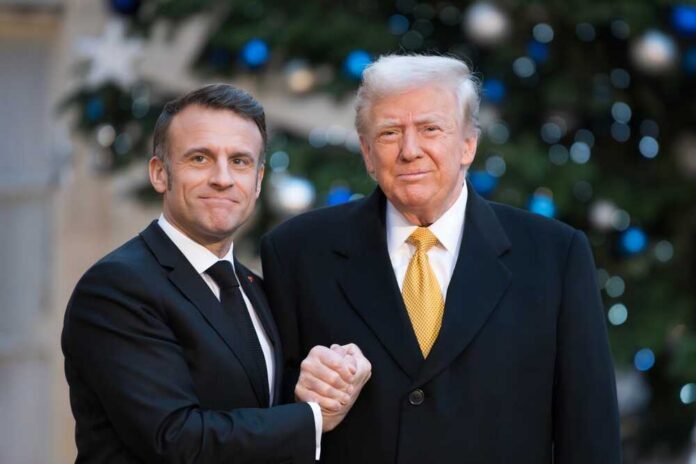
G7 leaders used the summit to push a familiar message: tighter economic cooperation, not reckless globalism, is the path to stability.
Quick Take
- President Donald Trump, French President Emmanuel Macron, Prime Minister Narendra Modi, and other leaders met in Evian to discuss growth and trade.
- The summit agenda centered on economic stability, supply chains, energy, and international cooperation.
- Official G7 documents again tied growth to resilience, fair trade, and resistance to economic coercion.
- Critics still question whether the G7 can deliver real results, not just polished language.
Leaders Put Growth and Trade at the Center
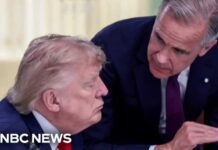
World leaders gathered at the G7 summit in Evian, France, with the economy at the top of the agenda. Coverage of the working session showed President Donald Trump, Macron, Modi, and other leaders focused on global growth, trade, and stability. The meeting also included outreach partners, which reflects how the G7 now pulls in more countries when it wants to project strength and manage global pressure.[3][7]
That focus fits the G7’s own history. Official materials describe the group as a forum for economic coordination, and Canada’s 2024 leaders’ statement repeated that the bloc is committed to free and fair trade, resilient supply chains, and stronger international cooperation. The same statement said the members would reduce critical dependencies and vulnerabilities, which shows the summit was not just symbolic theater. It was another attempt to shape the world economy from the top down.[1][14][15]
Trump, Modi, and Macron Showed the Political Stakes
Modi’s role drew special attention because his front-row placement beside Trump and Macron underlined India’s rising weight in world affairs. Summit coverage said the leaders were also expected to discuss trade, energy, security, and wider geopolitical tensions. One report noted that Trump’s bilateral agenda included fair and reciprocal trade talks, which fits his long-running push to make allies stop taking advantage of the United States.[5][2]
Modi also used the moment to make a broader point about trust. In summit coverage, he said the world does not suffer from a shortage of resources, but from a shortage of trust. That message lined up with the G7’s own language on partnerships and economic security, but it also exposed the central problem behind these summits: leaders can talk about trust and cooperation, yet markets still need real action, not slogans.[3][1]
Why the G7 Keeps Returning to Economic Security
The G7’s current economic agenda is shaped by supply-chain risk, economic coercion, and the pressure created by China and Russia. The group’s 2024 statement said members would strengthen resilience, invest in industrial capacity, and launch cooperation to counter coercive economic measures. Earlier G7 documents used similar language about resilience to economic coercion, showing that this is now a standing priority rather than a one-time reaction.[2][5]
Still, analysts continue to question how much the G7 can really deliver. The Council on Foreign Relations says the group has coordinated global policy for decades, but experts increasingly question its relevance because of internal divisions and the rise of broader forums like the Group of Twenty. That matters for American readers who are tired of elite meetings that produce polished communiqués while families face high prices, weak growth, and the fallout from years of bad policy.[4]
The historical record shows why the G7 keeps trying. Treasury material says the group was built around multilateral surveillance and policy coordination, and the Venice declaration said coordinated economic policy should make national policies more consistent and mutually compatible. In plain terms, the G7 believes joint action can steady markets and support growth. Whether it still has the power to do that in 2026 is the real question hanging over every summit photo and every carefully scripted handshake.[14][15][17]
Sources:
[1] YouTube – G7 summit: Trump, Macron, Modi and other world leaders discuss economy
[2] Web – G7 Leaders’ Statement | Prime Minister of Canada
[3] Web – [PDF] G7 Leaders’ Statement on Economic Resilience and Economic …
[4] YouTube – G7 Summit: PM Modi Flags Trust Deficit, Holds Key Bilaterals Ahead …
[5] Web – What Does the G7 Do? | Council on Foreign Relations
[7] Web – Canada and the G7 – Global Affairs Canada
[14] Web – From strategy to doctrine: the next steps for European economic …
[15] Web – G7-B7: Business response to the challenges of advanced economies
[17] Web – [PDF] The Evolution of the G-7 and Economic Policy Coordination