France is pouring over $12 billion into a massive 78,000-ton nuclear supercarrier that won’t be ready until 2038, raising serious questions about whether this massive investment makes sense when modern warfare is moving toward drones, hypersonic missiles, and asymmetric threats that could render such floating behemoths obsolete.
Story Snapshot
- France green-lit construction of the PANG nuclear aircraft carrier in December 2025, with a staggering €10.25 billion price tag and 2038 service entry
- The 78,000-ton supercarrier faces a 15-year construction timeline while modern threats like hypersonic missiles and drones evolve rapidly
- Cost estimates have already ballooned from an initial €6 billion to over €10 billion, with analysts predicting further overruns
- France claims “strategic autonomy” as justification, but the project creates dependency on U.S. technology for critical launch systems
Massive Price Tag for Uncertain Returns
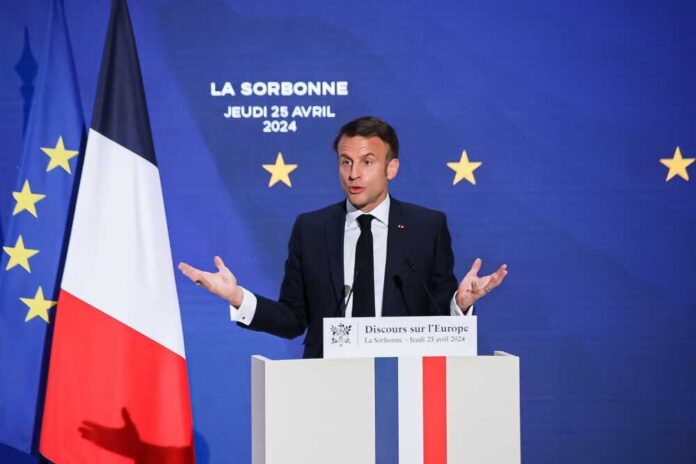
President Emmanuel Macron announced from Abu Dhabi in December 2025 that France would proceed with the Porte-Avions de Nouvelle Génération program, committing €10.25 billion to replace the aging Charles de Gaulle carrier. The massive vessel will displace 75,000 to 78,000 tons and feature dual K22 nuclear reactors providing 220 megawatts each. Construction began in 2026 at Saint-Nazaire, involving Naval Group and Chantiers de l’Atlantique with 800 suppliers, but full assembly won’t start until 2031 or 2032. For perspective, that’s a decade-plus timeline in a rapidly changing threat environment where yesterday’s innovations become tomorrow’s vulnerabilities.
Strategic Autonomy or Strategic Dependency
French officials tout the carrier as essential for “strategic autonomy,” positioning France as Europe’s only nuclear carrier power. Yet the project relies heavily on American technology, specifically the Electromagnetic Aircraft Launch System and Advanced Arresting Gear purchased through U.S. Foreign Military Sales. This creates an ironic dependency for a nation claiming independence from unreliable allies. The carrier aims to support future sixth-generation FCAS fighters and unmanned combat vehicles, but those programs face their own uncertainties and delays. France’s Military Programming Law allocated modest funding for 2025-2027, ranging from just €68 million to €142 million annually, suggesting budget constraints that could further delay or compromise the project.
Cost Overruns and Capability Gaps
Official estimates initially pegged PANG’s cost at €6 billion, but that figure has already climbed to over €10 billion before construction truly begins. Defense analysts predict typical megaproject cost overruns will push final expenses even higher, straining France’s military budget when resources could address immediate threats. The Charles de Gaulle experienced shaft-line failures between 2009 and 2011, highlighting the massive maintenance costs of nuclear carriers. PANG won’t enter service until 2038, creating a potential 15-year capability gap as the current carrier ages. This timeline assumes no delays in an era when shipbuilding programs routinely miss deadlines and exceed budgets.
Obsolescence in the Age of Asymmetric Warfare
The fundamental question remains whether massive aircraft carriers make sense when adversaries can deploy hypersonic missiles, swarms of drones, and cyber weapons at a fraction of the cost. A 78,000-ton nuclear supercarrier presents an enormous target that concentrates immense resources and personnel in one vulnerable platform. While France emphasizes PANG’s unlimited range from nuclear propulsion and advanced systems, modern conflicts increasingly favor distributed, resilient forces over concentrated power projection. The carrier’s 50-plus year planned service life assumes the strategic environment won’t fundamentally change, a risky bet given how rapidly technology and warfare evolve. French taxpayers deserve answers about whether this represents prudent defense spending or prestige-driven excess.
Sources:
78,000 Tons: France’s New PANG Nuclear Aircraft Carrier Has a Message for the U.S. Navy
France Is Pulling Out All the Stops to Build a New Nuclear Aircraft Carrier
France Construction Aircraft Carrier
France New Nuclear Aircraft Carrier PA-NG
France Formally Green-Lights PA-NG Aircraft Carrier Production
France Willing to Spend Big on PANG Aircraft Carrier for One Good Reason
France to Build New Nuclear Carrier Replacing Flagship Charles de Gaulle