
A U.S.-Israel military operation targeting Iranian government facilities has caused extensive damage to a UNESCO World Heritage Site, raising urgent questions about the protection of cultural treasures in conflict zones and the strategic placement of military targets near irreplaceable historical landmarks.
Story Snapshot
- March 10, 2026 airstrike on Isfahan Governor’s Office damaged UNESCO-listed Chehel Sotoun Palace, built in 1647
- Blast waves shattered windows, cracked 17th-century murals, destroyed khatam inlays, and collapsed decorative ceilings
- Israeli military claims strikes targeted military infrastructure while Iranian officials call it a deliberate attack on cultural heritage
- Multiple Safavid-era landmarks surrounding Naqsh-e Jahan Square sustained collateral damage from the operation
Airstrike Damages 17th-Century Persian Palace
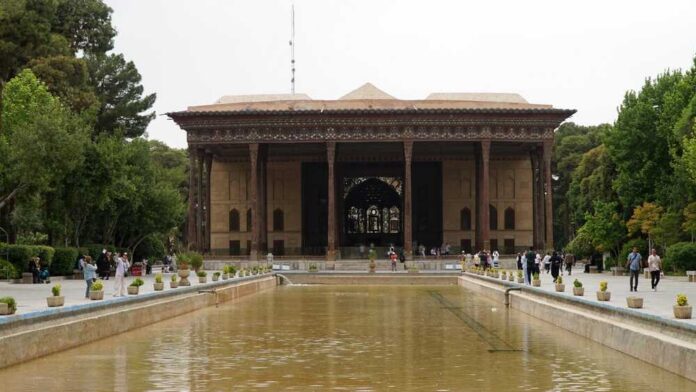
U.S. and Israeli forces conducted a joint airstrike on the Isfahan Governor’s Office on March 10, 2026, causing significant damage to the adjacent Chehel Sotoun Palace, a UNESCO World Heritage Site dating to 1647. The Governor’s Office sits within the palace’s primary protective zone, amplifying the blast wave impact on the historic structure. Deputy Director Seyed Ruhollah Seyedalaskari of Isfahan’s Cultural Heritage Organization documented extensive interior damage including shattered windows in the central pavilion, cracked murals, damaged khatam inlays, and partial ceiling collapses. The palace’s structural integrity remains intact, but centuries-old decorative elements suffered irreversible harm.
Strategic Targets Near Historic Core Raise Concerns
Isfahan serves as a critical hub for Iran’s nuclear and military infrastructure, housing uranium enrichment facilities and Shahed drone production sites. Israeli military officials maintain the strikes specifically targeted airbases, missile installations, and drone manufacturing centers to degrade Iran’s retaliatory capabilities. The operation killed between 20 and 60 people in Isfahan according to varying reports. However, the proximity of military and government facilities to UNESCO-listed sites in Isfahan’s historic core created unavoidable risks to cultural landmarks. This raises serious questions about Iran’s deliberate placement of strategic assets within protected heritage zones, effectively using irreplaceable cultural treasures as human shields.
Multiple Heritage Sites Sustain Collateral Damage
Beyond Chehel Sotoun, blast waves damaged numerous surrounding Safavid-era structures in the Naqsh-e Jahan Square area. Timuri Hall, the Jebe-Khaneh Modern Arts Museum, the Rakib-Khaneh Decorative Arts Museum, Ashraf Hall, and Ali Qapu Palace all suffered broken windows and destroyed decorative elements. The damage mirrors earlier destruction at Tehran’s Golestan Palace from a previous U.S.-Israel strike in early March. Isfahan residents formed human chains around the palace following the attack in a symbolic gesture of protection. Damage assessments continue for additional sites including nearby bazaars, with experts evaluating the full extent of harm to muqarnas ceilings and intricate frescoes that define Safavid architectural achievement.
Chehel Sotoun Palace served as a royal entertainment venue under Shah Abbas II, completed in 1647 for coronations and diplomatic receptions. The name translates to “Forty Columns,” referencing the 20 wooden columns reflecting in the palace’s pool to create the appearance of 40. UNESCO inscribed the site in 2011 as part of the Persian Gardens listing, recognizing its universal cultural value. The palace features elaborate frescoes depicting historical battles and court life, khatam marquetry inlays, and complex muqarnas ceiling work representing the pinnacle of 17th-century Persian craftsmanship. Iranian Foreign Ministry spokesperson Esmaeil Baghaei condemned the strikes as attacks on “humankind’s heritage,” while Middle East historian Assal Rad sarcastically critiqued the notion of “liberating” populations by destroying their cultural identity.
Long-Term Implications for Heritage Preservation
Short-term consequences include tourism shutdowns, restricted site access, and substantial repair costs for specialized restoration of centuries-old decorative work. Long-term implications present graver concerns: potential irreversible loss of original frescoes and muqarnas elements, UNESCO status review risks, and precedent-setting damage that undermines international heritage protections in conflict zones. The incident highlights a troubling pattern where authoritarian regimes exploit cultural sites by embedding military infrastructure within protective zones, gambling that adversaries will either avoid strikes or accept international condemnation for collateral damage. This cynical strategy weaponizes heritage itself, forcing democratic nations into impossible choices between legitimate security objectives and preservation of humanity’s shared cultural legacy.
Sources:
Airstrike Damages Isfahan’s Heritage Sites
US and Israel Strikes Damage 17th-Century Palace in Isfahan
Airstrikes in Isfahan Damage Historic Safavid-Era Landmarks
Israeli Strikes Said to Cause Damage to Iranian Cultural Sites
Damage Chehel Sotoun Palace UNESCO Iran