
President Trump’s largest military buildup in the Middle East since the 2003 Iraq invasion has launched America into another regime change war with Iran—while NATO allies refuse to answer the call, leaving American forces to shoulder the burden alone in the dangerous waters of the Strait of Hormuz.
Story Snapshot
- Trump authorized unprecedented two-carrier deployment and joint US-Israel strikes on Iran starting February 28, 2026, initiating full-scale war
- NATO allies ignored White House entreaties to patrol the Strait of Hormuz, forcing unilateral US action despite alliance commitments
- Administration claims of Iranian nuclear restart and preemptive attack plans contradicted by Pentagon briefings to Congress showing no supporting intelligence
- Trump’s conflicting “easy and successful” war rhetoric clashes with ongoing troop surges and no clear exit strategy, echoing failed Middle East interventions
Unilateral Buildup Signals Alliance Fractures
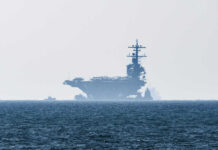
The United States deployed the USS Abraham Lincoln and USS Gerald R. Ford carrier strike groups to the Persian Gulf in late January 2026, marking the largest American military presence in the region since Operation Iraqi Freedom. This unprecedented two-carrier posture came amid claims from the Trump administration that Iran had restarted its nuclear weapons program and was planning preemptive strikes against American interests. Pentagon sources, however, briefed Congress that no credible intelligence supported these administration assertions, raising serious questions about the justification for placing thousands of American service members in harm’s way without allied support or transparent threat assessment.
NATO’s Absence Leaves America Isolated
The White House repeatedly called on NATO allies to contribute naval forces for Strait of Hormuz patrol operations, yet no European partner answered the call. This silence from traditional allies represents a significant departure from past coalition operations in the Gulf and underscores growing transatlantic divisions over American foreign policy priorities. The administration’s “America First” approach, which previously withdrew from multinational agreements and questioned alliance commitments, now finds the United States bearing the full cost and risk of Middle East intervention alone. European nations appear focused on their own security challenges, leaving American taxpayers to fund another open-ended military engagement without burden-sharing from wealthy allies who benefit from Gulf energy security.
Escalation Without Clear Strategy
On February 3, 2026, Iranian Revolutionary Guard Corps Navy forces attempted to board the American-flagged tanker MV Stena Imperative, prompting intervention by the USS McFaul destroyer. This dangerous confrontation in international waters preceded the joint US-Israel airstrikes on Iranian targets launched February 28, officially initiating the 2026 Iran war. President Trump has since characterized the conflict as “easy and successful” over multiple weeks, suggesting the operation could wind down soon. Yet thousands of additional troops continue deploying to the region, contradicting withdrawal rhetoric and signaling no coherent exit plan—a pattern painfully familiar to Americans who witnessed two decades of similar promises in Iraq and Afghanistan.
Constitutional Concerns and Domestic Backlash
The decision to initiate military action against Iran without explicit Congressional authorization raises fundamental constitutional questions about war powers and executive overreach. Conservative voices across the MAGA base have expressed frustration that Trump’s campaign promises to avoid new foreign entanglements have given way to another costly Middle East conflict. The contradiction between intelligence assessments and administration claims echoes the flawed premises that led to previous regime change disasters, undermining trust in government institutions. Oil price volatility threatens to drive energy costs higher for American families already struggling with inflation, while the potential for prolonged conflict risks American lives for unclear strategic gains. This war serves neither American security interests nor the constitutional principle that the people’s representatives must authorize sending troops into combat.
The absence of NATO participation exposes the hollow promise of collective security arrangements that extract American resources while providing minimal support when action is required. Patriots who supported Trump to end endless wars now watch another conflict unfold with dubious intelligence justifications, no allied burden-sharing, and contradictory signals about duration and objectives. The Strait of Hormuz crisis has become yet another example of Washington’s bipartisan foreign policy establishment prioritizing Middle East intervention over American interests, constitutional governance, and the lives of service members deployed without clear mission parameters or honest assessment of threats.