Qatar’s leadership has directly contradicted Iran’s claims that its retaliatory missile strikes targeted only U.S. military installations, exposing Tehran’s reckless disregard for a sovereign Gulf ally and revealing the broader dangers of Iranian aggression in the region.
Story Highlights
- Qatari officials refuted Iran’s narrative, confirming attacks struck civilian areas and Qatari defenses, not just U.S. assets
- Iranian strikes involved over 100 ballistic missiles, dozens of drones, and jets targeting Al Udeid Air Base and Doha itself
- Qatar intercepted the majority of threats and arrested 10 IRGC-linked spies conducting surveillance on military sites
- The attacks followed U.S.-Israeli strikes on Iranian nuclear facilities on February 28, 2026, triggering widespread regional retaliation
Qatar Exposes Iran’s False Claims About Strike Targets
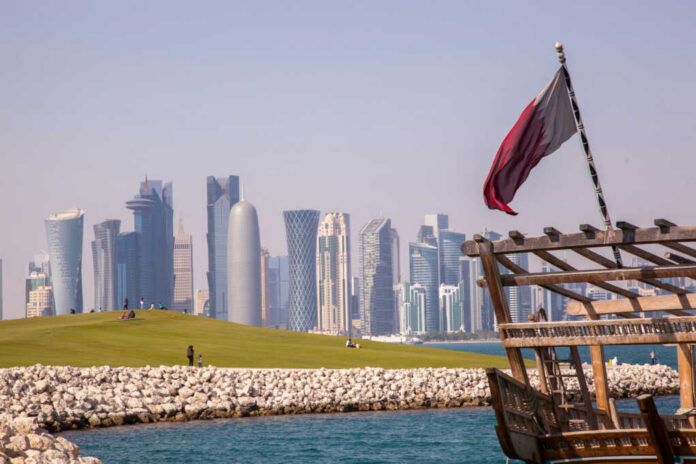
Qatar’s Ministry of Defense publicly rejected Iran’s assertion that its early March 2026 missile and drone strikes targeted exclusively American military assets at Al Udeid Air Base. Officials confirmed that Iranian forces launched 101 ballistic missiles, 39 drones, three cruise missiles, and even sent two SU-24 jets toward Qatari airspace. Explosions rocked Doha as Patriot missile batteries intercepted incoming threats, demonstrating that Iran’s attacks endangered Qatari civilians and infrastructure, not just the roughly 10,000 U.S. troops stationed at the Middle East’s largest American military installation. This refutation underscores a troubling reality: Iran’s regime shows little regard for the sovereignty of nations hosting defensive U.S. forces, prioritizing retaliation over accuracy.
Iranian Retaliation Follows Trump Administration’s Maximum Pressure Campaign
The strikes occurred days after President Trump authorized joint U.S.-Israeli operations on February 28, 2026, targeting Iranian nuclear facilities and leadership sites in response to Tehran’s ongoing nuclear escalation. Trump’s reinstatement of maximum pressure sanctions in February 2025—freezing Iranian oil exports, targeting IRGC funding, and designating officials like Interior Minister Eskandar Momeni—built on his 2018 withdrawal from the flawed JCPOA nuclear deal. Iran’s retaliatory barrage hit not only Qatar but also bases in Bahrain, the UAE, Kuwait, Iraq, Saudi Arabia, and Jordan, while striking civilian airports and closing the Strait of Hormuz. One ballistic missile damaged Al Udeid’s infrastructure, though no American casualties were reported, a testament to defensive systems and readiness.
Espionage Cell Arrests Reveal Hybrid Iranian Threats
Concurrent with the missile strikes, Qatari authorities arrested 10 individuals linked to Iran’s Islamic Revolutionary Guard Corps who were trained in drone operations and conducting reconnaissance on Qatari military sites. This espionage network highlights Iran’s multi-layered aggression: combining overt missile attacks with covert intelligence operations to undermine Gulf security. The arrests signal Qatar’s determination to protect its sovereignty despite its diplomatic balancing act between hosting U.S. forces and maintaining channels with Tehran. For Americans who value allies standing firm against terrorism and espionage, Qatar’s actions demonstrate the necessity of supporting partners who refuse to be intimidated by IRGC tactics, even as they pursue de-escalation.
Gulf Security at Crossroads as Iran Escalates Regional Aggression
The Iranian strikes expose vulnerabilities that echo concerns from 2019 attacks on Gulf oil infrastructure and the troubling 2025 Israeli strike on Hamas in Doha, which raised questions about U.S. base deterrence. Analysts at the Atlantic Council warn that the post-war Gulf security landscape will differ significantly, as host nations reassess the risks of American presence amid Iranian threats. Qatar’s high interception success rate—neutralizing the vast majority of incoming projectiles—stands in contrast to damage elsewhere, such as the tragic death of an 11-year-old Kuwaiti girl from shrapnel and strikes on Saudi Arabia’s Ras Tanura refinery. Yet the broader impact remains severe: oil prices spiked as the Strait of Hormuz closed, threatening global energy supplies and exposing the cost of Iranian belligerence.
BREAKING – Qatari PM refutes Iran's claim it only targeted US assets in Qatar: statement https://t.co/qzmsqa4OCI pic.twitter.com/VvR1XyZFvY
— Insider Paper (@TheInsiderPaper) March 4, 2026
For conservatives who recognize the importance of energy independence and strong alliances, these events validate Trump’s approach of confronting Iran’s nuclear ambitions head-on rather than appeasing a regime that sponsors terrorism, destabilizes neighbors, and threatens freedom of navigation. Qatar’s refutation of Iran’s propaganda serves as a reminder that American leadership and maximum pressure remain essential to countering rogue state aggression and protecting both regional partners and U.S. interests abroad.
Sources:
All the US military assets involved in the massive strike on Iran – The Aviation Geek Club
Bases damaged in Iran attacks – Stars and Stripes
The Gulf that emerges from the Iran war will be very different – Atlantic Council