President Trump is taking America’s biggest corporate power players straight to Beijing—raising the stakes for U.S. jobs, supply chains, and the fight over who sets the rules of global commerce.
Quick Take
- The White House says Trump will travel to China this week for a meeting with Xi Jinping focused on economic and energy matters.
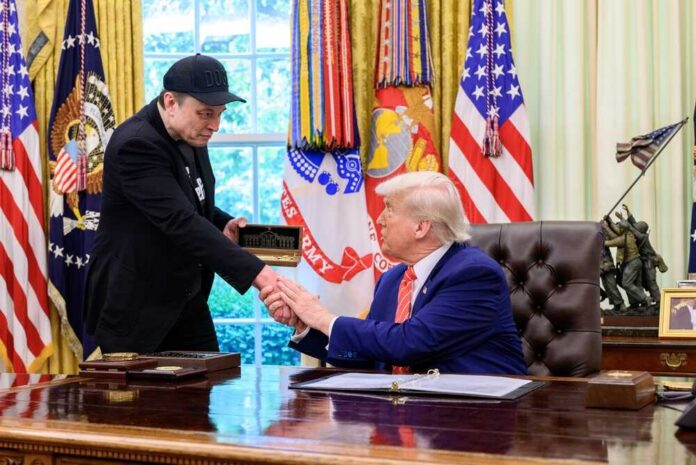
- Executives including Elon Musk and Tim Cook are among those invited to join a large U.S. business delegation spanning tech, finance, aerospace, semiconductors, and agriculture.
- The White House emphasized a key caveat: being invited does not mean a CEO has confirmed participation.
- The trip lands amid wider instability linked to the Iran conflict, with oil and supply-chain uncertainty hanging over global markets.
A Business-Heavy Beijing Trip With High Strategic Stakes
President Trump is preparing for a Beijing visit in the week of May 12, 2026, centered on a bilateral meeting with Chinese President Xi Jinping. The White House announced a U.S. business delegation that reads like a roster of corporate America’s most influential decision-makers. Invitations went to leaders tied to consumer technology, critical manufacturing, finance, and agriculture—sectors where China remains a major market and supply-chain hub for U.S. firms.
White House reporting described the mission as focused on “economic and energy matters,” a framing that matters as much as the guest list. Economic diplomacy can be a tool of national strategy, but it also creates pressure points: CEOs often want predictable access and fewer disruptions, while voters want security, jobs, and leverage against an adversary. Because the trip is imminent and agenda details are limited, most concrete takeaways right now come from who was invited and why.
Who Was Invited—and Why That Mix Matters
The invitation list spans technology, finance, aerospace, semiconductors, agriculture, and payments. The names highlighted in early reporting include Elon Musk (Tesla/SpaceX/X) and Apple CEO Tim Cook, plus major finance leaders such as BlackRock’s Larry Fink and Blackstone’s Stephen Schwarzman. Other executives mentioned in the research include leaders connected to Boeing, GE Aerospace, Qualcomm, Micron, Illumina, Meta, Cisco, Cargill, and card networks like Visa and Mastercard.
That cross-industry blend signals a delegation built around real chokepoints in the modern economy: chips, aircraft, capital flows, logistics, and consumer devices. For Americans frustrated by globalism, the uncomfortable reality is that many U.S. brand-name products still rely on China-linked manufacturing or demand. For those worried about a “deep state” run by elites, the optics of a CEO-heavy delegation can reinforce suspicion that government policy is shaped in rooms ordinary people never enter.
Invitation Versus Confirmation: A Key Detail Often Lost Online
The most important fact check in the reporting is also the simplest: the White House has invited executives, but participation is not necessarily confirmed. That distinction matters because financial markets and partisan media often react as if an attendee list is final. At this stage, there are no public, direct quotes in the provided research from the invited CEOs confirming they will go, or spelling out their demands and red lines.
Limited confirmation also limits conclusions about what policy shifts may follow. A finalized delegation might imply coordinated corporate asks—tariff relief, market access, or regulatory carve-outs—while a smaller turnout could indicate hesitation or reputational risk. The lack of specific trip dates and detailed negotiating items further constrains analysis. Readers should treat early claims about “who’s going” and “what they’re getting” as unproven until confirmed statements and outcomes are released.
Energy, Iran, and the Supply-Chain Reality Americans Live With
The timing intersects with continued global uncertainty tied to the Iran conflict, which has contributed to oil-market volatility and broader supply-chain anxiety. Trump’s emphasis on energy discussions suggests the administration is looking at stability and pricing as national priorities, not just corporate talking points. For households still sensitive to inflation and cost-of-living spikes, energy policy is not an abstract debate—fuel, shipping, and manufacturing costs cascade into grocery bills and monthly budgets.
For conservatives who believe past leaders ceded leverage to international systems and foreign suppliers, the trip raises a practical question: can the administration use a business-first approach to secure better terms for Americans without drifting into dependency? For liberals who fear favoritism toward large corporations, the counter-question is whether ordinary workers benefit when big firms get direct access. The answer will depend on the measurable outcomes—trade terms, supply-chain shifts, and enforcement—rather than the photo ops.
What to Watch Next: Confirmations, Agenda Details, and Any Concrete Deliverables
The next signal to watch is confirmation: which executives actually join the trip and whether any companies publicly explain their goals. The second signal is specificity: whether the administration releases a clearer agenda beyond broad “economic and energy” themes, and whether China signals reciprocity. Finally, the public should look for concrete deliverables that can be evaluated—policy changes, market-access commitments, or enforcement mechanisms—rather than vague promises.
Elon Musk, Tim Cook and other CEOs set to join Trump’s China trip https://t.co/gpOCktccLS pic.twitter.com/EataNE2g9O
— The Independent (@Independent) May 11, 2026
Until those details emerge, the most defensible conclusion is that the White House is betting on business-centered diplomacy to manage a rival relationship under pressure from global conflict and fragile supply chains. That approach could strengthen American leverage if it produces enforceable gains and reduces exposure to hostile chokepoints. If it produces only corporate wins without broader national benefit, it will deepen the bipartisan belief that elites get a different government than everyone else.
Sources:
Elon Musk, Tim Cook and other CEOs among those invited to be in Trump’s China delegation
White House invites Musk, Cook for Trump China trip, Bloomberg reports