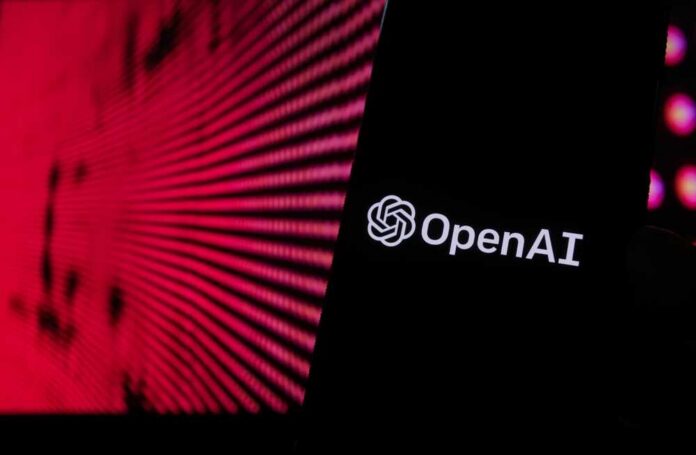
OpenAI secured a Pentagon AI contract mere hours after President Trump banned rival Anthropic from federal systems, marking the first time a U.S. tech company has been designated a national security risk for refusing unrestricted military AI access.
Story Snapshot
- OpenAI finalized a Defense Department deal on February 28, 2026, deploying AI models on classified networks with safeguards against domestic surveillance and autonomous weapons
- Trump ordered federal agencies to phase out Anthropic’s technology within six months earlier the same day, citing national security concerns after the company refused to remove ethical restrictions
- The Pentagon agreement includes explicit prohibitions on mass surveillance and requires human control over lethal force decisions, mirroring the exceptions Anthropic demanded but was denied
- Anthropic called the supply-chain risk designation unprecedented for an American company, claiming negotiations collapsed over just two ethical exceptions
When Principles Meet Presidential Power
The collision between AI ethics and national security reached a breaking point on February 28, 2026. Anthropic spent months negotiating with the Defense Department, seeking carve-outs that would prevent its AI from enabling domestic mass surveillance or autonomous weapons. Those talks stalled. President Trump responded by designating Anthropic a supply-chain risk through Truth Social, threatening the full power of the presidency including civil and criminal penalties. Secretary of War Pete Hegseth banned all contractors from working with the company. Within hours, OpenAI CEO Sam Altman announced his company had closed the deal Anthropic couldn’t.
The timing tells you everything about leverage in Washington. OpenAI’s agreement includes the exact safeguards Anthropic demanded: no domestic surveillance applications, no autonomous weapons deployment, human responsibility for all lethal force decisions. Yet Anthropic faced exile while OpenAI earned classified network access. The difference wasn’t the ethical framework but the willingness to say yes first and negotiate boundaries second. Altman framed the deal as demonstrating the Pentagon’s deep respect for safety principles, urging the administration to extend identical terms to all AI providers. That olive branch arrived after his competitor had already been cut from the orchard.
The Patriotic AI Test
Trump’s move against Anthropic breaks new ground. Supply-chain risk designations historically targeted foreign adversaries, Chinese telecom giants, or state-sponsored threats. Anthropic, founded in 2021 by former OpenAI executives, operates as a Delaware-based company backed by major U.S. investors. Its crime was insisting on ethical redlines before signing. The administration views such resistance as obstructionism in an AI arms race with China, where frontier models represent strategic assets as critical as semiconductors or rare earth minerals. Hegseth’s push for patriotic AI providers signals a doctrine shift: cooperation with national security imperatives trumps corporate ethics frameworks.
Anthropic’s response emphasized its unprecedented treatment. The company noted it received no direct communication from the Defense Department or White House before the public designation, despite ongoing good-faith negotiations. Officials claimed the two exceptions Anthropic sought wouldn’t impact its core mission of supporting defense innovation. That argument fell flat in an administration demanding AI firms serve all lawful government purposes without exception. The phase-out gives agencies six months to transition away from Anthropic’s services, though the company can continue existing contracts during that window. OpenAI benefits immediately from competitor removal and long-term from concentrated government reliance.
Market Consequences and Monopoly Risks
OpenAI entered this agreement riding momentum from $110 billion in fresh funding commitments from Amazon, NVIDIA, and SoftBank. The Pentagon contract accelerates its path toward dominant market share in government AI applications, a sector projected to grow exponentially as agencies deploy automation across intelligence analysis, logistics, and cybersecurity. Anthropic faces revenue disruption not just from lost federal contracts but from the chilling effect on private-sector defense contractors now banned from using its technology. Employees at both companies watch closely as the industry’s ethical debates get resolved through executive orders rather than internal governance structures.
The precedent worries safety-focused researchers who have spent years arguing AI development must prioritize safeguards over speed. Anthropic’s exclusion suggests that principled stands against certain applications can trigger existential business threats when national security enters the equation. OpenAI’s approach of embedding restrictions within government partnerships rather than refusing deals outright may become the industry template. That’s pragmatic politics but raises questions about who ultimately controls the ethical boundaries when classified military networks are involved. The Defense Department gets AI tools with stated limitations; whether those limitations hold under operational pressure remains untested.
The Bigger Strategic Picture
This episode reflects broader tensions in America’s technology competition with China. Beijing’s military-civil fusion strategy integrates private AI development directly into state security apparatus without the friction of corporate ethics debates. U.S. policymakers worry that homegrown companies refusing defense work hand strategic advantages to adversaries facing no such constraints. Trump’s aggressive stance aims to eliminate that friction by making cooperation compulsory for firms wanting to operate in regulated spaces. The approach trades free-market flexibility for directed industrial policy, betting that speed and unity matter more than preserving diverse approaches to AI safety.
Altman’s public statements positioning OpenAI as a model for balanced engagement carry self-interested marketing but also genuine strategic logic. If the alternative to safeguarded military AI partnerships is either unrestricted use or Chinese dominance, pragmatic engagement with ethical guardrails beats both outcomes. Anthropic’s isolation demonstrates the cost of prioritizing purity over participation. Whether OpenAI’s negotiated restrictions prove durable under classified operational demands will determine if this deal represents wise compromise or elaborate theater. The Pentagon now owns that test case, with implications reaching far beyond two rival companies fighting over market share.
Sources:
OpenAI announces new deal with Pentagon including ethical safeguards
OpenAI reaches Pentagon agreement as Trump orders Anthropic off federal systems