As Americans pay the price of another Middle East war, the world’s “security” body is looking less like a peacekeeper and more like a bystander with a veto stamp.
Quick Take
- The phrase “Security Council missing in action” fits the UN Security Council’s 2025 record: only 44 resolutions, the lowest output since 1991, alongside falling unanimity.
- Major conflicts kept burning while the P5 powers blocked one another, including U.S. vetoes on Gaza-related drafts and China/Russia resistance on Myanmar.
- In 2026, the U.S. holds the Security Council presidency in March while Trump’s National Defense Strategy emphasizes homeland and border security over global policing.
- Iran-related sanctions dynamics and “snapback” disputes are back on the Council’s plate as war pressures U.S. politics and fractures parts of the MAGA coalition.
Why the UN Security Council Looks “Absent” as War Pressures the U.S.
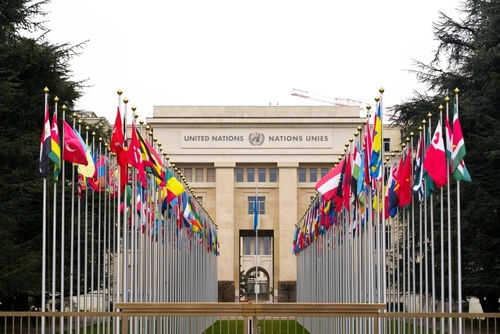
The United Nations Security Council isn’t literally missing, but its 2025 performance supports the critique. Security Council reporting shows the body adopted 44 resolutions in 2025, its lowest total since 1991, with unanimity dropping to 61.4%. Russia, China, and the United States all used leverage that limited action across multiple hotspots, leaving the Council more reactive than decisive while major conflicts stayed unresolved.
For American voters watching the Iran war expand and energy costs bite, that paralysis matters because it narrows diplomatic off-ramps and increases the odds Washington carries more of the load. The Council’s structure gives five permanent members veto power, so the institution often reflects great-power rivalry more than it restrains it. In practice, the UNSC can become a stage for statements rather than a tool for enforcement.
2025’s Record: Fewer Resolutions, More Veto Politics
The 2025 file list reads like a map of stalled international order: Ukraine, Sudan, Myanmar, Gaza, and Haiti all strained the system. Security Council Report notes that the Council produced only one Ukraine resolution in 2025 (2774) and struggled to generate formal products on Sudan and Myanmar beyond limited mechanisms such as panels or press elements. That gap between crisis scale and Council output is a key driver behind the “missing” critique.
Gaza exposed the veto reality even more clearly. Elected members reportedly coordinated on drafts, but the United States vetoed two Gaza texts advanced by elected members, while other permanent members also held firm on their own priorities in other theaters. The result was not just fewer resolutions, but fewer moments of broad agreement—exactly the kind of consensus the UNSC needs to shape behavior instead of simply narrating breakdowns.
Iran “Snapback” and the Problem of Enforcement Without Unity
Iran is a central stress test for the Council because nonproliferation requires enforcement and unity, not just speeches. Security Council reporting highlights renewed friction around Iran-related sanctions dynamics, including the E3 (France, Germany, UK) pursuing “snapback” actions tied to resolution 2231. Even when legal mechanisms exist on paper, the Council’s credibility depends on whether major powers treat outcomes as legitimate and whether implementation can survive geopolitical retaliation.
That dynamic lands inside U.S. politics at the worst possible moment. In 2026, Americans are already divided over war aims, burdens, and alliances, and the research provided notes MAGA supporters are split about deeper involvement and even questioning support for Israel. The more the UNSC appears unable to contain escalation, the more pressure falls on U.S. decision-makers—raising the familiar fear of open-ended commitments without clear constitutional accountability.
Trump’s 2026 Defense Strategy Prioritizes Homeland—But Events Keep Pulling Abroad
The Trump administration’s 2026 National Defense Strategy emphasizes homeland and hemisphere security, explicitly elevating border security as a core national security priority and reducing emphasis on global counterterrorism and some overseas commitments. Think-tank analysis characterizes the strategy as shifting responsibility for Russia deterrence more toward European allies and focusing U.S. attention on nearer threats. That’s consistent with a voter mandate shaped by years of frustration over globalism and overspending.
War with Iran complicates that “America First” promise in real time. The research set signals a tension: strategy documents may downplay Middle East entanglements, yet security crises can force engagement, creating the exact credibility gap that angers the conservative base—especially voters who supported Trump expecting fewer new wars. When foreign commitments expand while inflation and energy costs remain household issues, skepticism grows about whether Washington is governing with disciplined priorities.
What March 2026’s U.S. Security Council Presidency Can (and Can’t) Do
The United States holds the Security Council presidency in March 2026, giving U.S. diplomats agenda-setting power on meetings and messaging, but not the ability to rewrite the veto system. Security Council Report’s outlook underscores that 2026 priorities include oversight on Gaza and Haiti-related files and major UN governance matters, including the upcoming Secretary-General selection process. Those levers can shape attention, but they cannot force consensus from Russia or China.
"The National Security Council is missing in action"https://t.co/Zeh77Q6jcY
— Ville Kostian (@Kostian_V) March 25, 2026
For Americans who want peace without surrendering national interests, the realistic takeaway is sobering: the UNSC can amplify diplomacy when major powers align, but it cannot substitute for U.S. constitutional decision-making or clear war aims. With the UN facing a liquidity crunch affecting peace operations, even successful resolutions can be harder to implement. The “missing in action” label captures a real trend—less output, less unity, and fewer enforceable results when stakes are highest.
Sources:
In Hindsight: The Security Council in 2025 and the Year Ahead
2026 National Defense Strategy: Numbers, radical changes, moderate changes, and some
Stay relevant: In 2026, the UN must look outward
2026 NATIONAL DEFENSE STRATEGY (PDF)
CNAS Insights: Eight Things to Watch For in 2026
Scowcroft Strategy Scorecard: Grading Trump’s second National Defense Strategy
The 2026 National Defense Strategy: Foreign Policy Goals
U.S. Presidency of the United Nations Security Council
Unpacking Trump’s Twist on the National Security Strategy