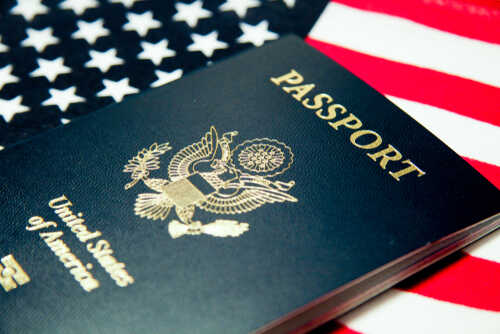
The federal government is stripping thousands of Americans of their passports in an aggressive crackdown on unpaid child support, targeting those who owe as little as $2,500 and potentially stranding some citizens abroad with limited recourse.
Story Snapshot
- State Department revokes passports of 2,700 parents owing over $100,000 in child support, with plans to expand to all owing $2,500 or more
- Revocation is permanent even after debt repayment; restoration requires minimum 2-3 weeks and extensive bureaucratic coordination
- Americans abroad at time of revocation face emergency return procedures with limited-validity passports
- Enforcement represents shift from passive denial of new applications to proactive revocation of existing passports through real-time federal-state data sharing
Federal Enforcement Escalation Catches Thousands Off Guard
The State Department launched systematic passport revocations in late February 2026, initially targeting 2,700 Americans owing $100,000 or more in past-due child support. The Department of Health and Human Services certified these cases through enhanced coordination with state child support enforcement agencies, marking a fundamental shift in federal enforcement strategy. Unlike previous policies that simply denied new passport applications, this initiative actively cancels valid passports already in circulation. Tens of thousands more could face revocation as HHS completes data collection from all 50 states for anyone owing above the $2,500 statutory threshold established in the 1996 Welfare Reform Act.
Permanent Revocation Creates Bureaucratic Maze for Compliance
State Department officials confirm that passport revocation remains permanent even after obligors satisfy their child support debts, requiring individuals to navigate a complex multi-agency restoration process. Those affected must first contact their state child support enforcement agency to arrange full payment or an approved payment plan, then wait a minimum of 2-3 weeks for HHS to update federal records verifying non-delinquent status. Only after HHS certification can individuals apply for a new passport through standard State Department procedures. This permanent revocation policy raises questions about proportionality and whether the government is using passport restrictions as punishment rather than purely as compliance leverage.
International Travelers Face Immediate Restrictions and Emergency Procedures
Americans abroad when their passports are revoked confront particularly harsh consequences, with limited options for resolution. These individuals must contact their state child support agency from overseas and visit a U.S. embassy or consulate to address passport issues. The State Department offers only limited-validity emergency passports strictly for direct return to the United States, effectively stranding business travelers and those with family abroad. The policy creates significant hardship for professionals whose livelihoods depend on international travel, forcing immediate disruption of business relationships and contractual obligations regardless of individual circumstances or ability to pay.
Enforcement Tool Raises Due Process and Equity Concerns
The passport revocation program disproportionately impacts lower-income obligors who may lack resources to quickly satisfy large arrears and minority communities overrepresented in the child support enforcement system. Civil rights advocates question whether notification procedures provide adequate due process, particularly given variations in state agency practices and potential data accuracy issues in multi-state coordination. While child support enforcement serves the legitimate purpose of protecting vulnerable children and custodial parents, the permanent nature of revocation and lack of individualized hardship assessment suggest the policy may prioritize bureaucratic efficiency over fairness. The framework also establishes precedent for expanding similar enforcement mechanisms to other federal debts like student loans or taxes.
The State Department will begin revoking the U.S. passports of thousands of parents who owe a significant amount of unpaid child support.
— WBZ NewsRadio (@wbznewsradio) May 7, 2026
Legislative Framework Enables Aggressive Federal Action
Congress granted passport enforcement authority through the 1996 Welfare Reform Act, creating the $2,500 arrears threshold that triggers federal action. Earlier legislation including the 1992 Child Support Recovery Act and 1998 Deadbeat Parents Act established criminal penalties for interstate flight to avoid child support obligations, reflecting decades of federal involvement in what was traditionally a state matter. Studies demonstrate that passport denial threats prompt rapid payment responses, particularly among employed, mobile populations with means to satisfy debts. However, the effectiveness diminishes for obligors with genuine financial hardship, raising concerns that the policy functions more as a blunt instrument than a targeted solution addressing the complex realities behind unpaid support obligations.
Sources:
Congressional Hearing on Child Support Enforcement – GovInfo