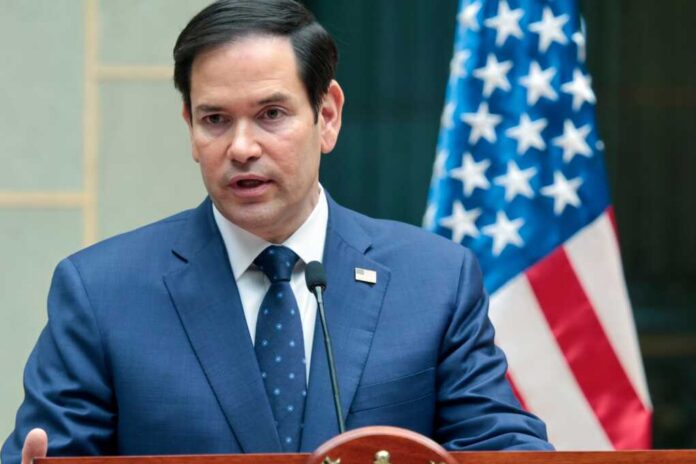
Secretary of State Marco Rubio promises the Iran war will end in “weeks, not months” while American troops continue taking casualties, oil prices soar past $112 per barrel, and the Pentagon burns through Tomahawk missiles at nine times the normal rate—raising serious questions about whether this administration’s latest Middle East entanglement was worth breaking the promise to keep America out of new wars.
Story Snapshot
- Rubio claims Iran operations will conclude within weeks without ground troops, despite 13 Americans killed and 12 wounded in recent strikes
- US has fired over 850 Tomahawk missiles in one month—nine times the annual Pentagon average—while Iran retains two-thirds of its missile arsenal
- Oil prices hit $112 per barrel as conflict disrupts 20 million barrels per day through Strait of Hormuz, hammering American consumers at the pump
- Iran denies direct negotiations while Trump claims they’re “begging” for a deal, exposing contradictions in the administration’s rosy timeline
- Over 1,900 Iranians reported dead as Gulf states absorb Iranian retaliatory strikes, with UAE civilians killed and Saudi bases damaged
Rubio’s Optimistic Timeline Contradicts Ground Reality
Marco Rubio addressed G7 foreign ministers in France on March 27, 2026, declaring US military operations against Iran would wrap up in “weeks, not months” without deploying ground forces. The Secretary of State insisted America remains “on or ahead of schedule” despite the conflict entering its second month since February 28 airstrikes. Rubio’s assurance comes as the administration awaits Iran’s response to a 15-point proposal demanding nuclear and missile program dismantlement. Yet analysts describe the situation as a stalemate, with Iranian leadership flatly denying direct negotiations and accusing Washington of “negotiating with themselves.”
The disconnect between Rubio’s confident rhetoric and battlefield facts raises concerns familiar to conservatives who watched previous administrations promise quick victories in endless Middle East conflicts. Thirteen Americans have been killed and at least 12 wounded in Iranian retaliatory strikes on bases in Saudi Arabia and across the Gulf region. Iranian missiles and drones hit Prince Sultan airbase just days before Rubio’s statement, damaging equipment and injuring personnel. Meanwhile, the UAE has absorbed more Iranian strikes than even Israel, with two civilians killed and three injured in recent attacks. These casualties mount while Trump extends deadlines and claims Iran is “eager and begging” for peace—a narrative contradicted by Tehran’s continued military operations.
Missile Expenditure and Resource Depletion Concerns
The Pentagon has expended over 850 Tomahawk cruise missiles in approximately one month of operations, representing nine times the annual purchase rate and exceeding three times annual production capacity. This unprecedented munitions consumption targets Iranian nuclear facilities, weapons stockpiles, and industrial infrastructure across the country, with fresh strikes reported as recently as March 28. Despite this massive firepower, US intelligence assessments indicate only one-third of Iran’s missile arsenal has been destroyed, leaving approximately two-thirds intact and operational. The staggering munitions burn rate mirrors the unsustainable spending patterns conservatives have criticized in past foreign interventions, raising questions about long-term readiness and fiscal responsibility.
The conflict originated when Trump set ultimatums for Iran to abandon nuclear operations and reopen the Strait of Hormuz, the critical chokepoint for 20 million barrels of oil per day. When Iran refused, coordinated US-Israeli airstrikes commenced on February 28, targeting yellowcake uranium facilities and weapons sites. The IAEA confirmed no radiation leaks from nuclear strikes, but Iran responded with thousands of regional strikes disrupting shipping lanes and threatening Gulf allies. Trump’s negotiating tactics include extending a nuclear deadline by 10 days in exchange for allowing 10 ships through the Strait—the kind of back-and-forth deal-making that fails to produce decisive results while American resources drain and energy prices spike.
Economic Fallout Hits American Families Hardest
Brent crude oil surged to $112 per barrel as of March 28, directly impacting American consumers already struggling with inflation from years of fiscal mismanagement. The Strait of Hormuz disruption threatens global energy markets, with potential tolls on shipping adding further costs that will inevitably pass to families filling tanks and paying utility bills. This economic pain compounds the frustration of Trump’s base, who supported his 2024 campaign partly on promises to avoid new wars and reduce energy costs through domestic production and stability. Instead, Americans face higher prices while the administration pursues regime change objectives that previous Republican and Democrat administrations failed to achieve without endless commitments.
Gulf states including the UAE and Saudi Arabia have labeled Iran a “terrorist nation” following attacks on civilian areas and military installations, demanding missile and drone curbs in any final agreement. These allies host US forces and infrastructure, making them frontline targets for Iranian retaliation while Washington debates diplomatic proposals. The humanitarian toll includes over 1,900 reported Iranian deaths from US airstrikes, raising questions about proportionality and mission creep. For conservatives who prioritize American sovereignty and limited government intervention abroad, this conflict represents exactly the kind of entanglement that erodes constitutional principles of congressional war powers and drains resources needed for domestic priorities like border security and infrastructure.
Sources:
War to end in weeks, not months: Rubio says no need to send ground troops to Iran
US expects operation in Iran to conclude in weeks, not months, Rubio says