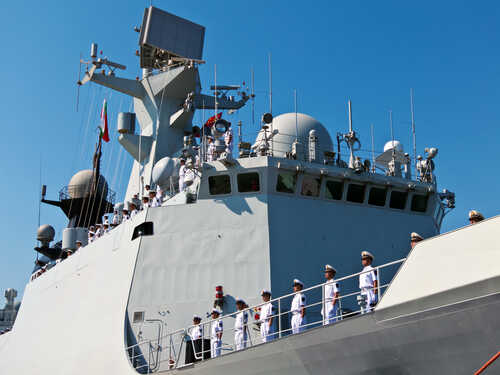
A collision between a navy destroyer and a coast-guard cutter near a disputed shoal is likely to trigger internal investigations, quiet command accountability, and targeted reassignments rather than visible public punishment.
At a Glance
- Past naval accidents have led to senior dismissals under command-responsibility rules.
- The coast-guard now falls under a military chain of command, tightening discipline pathways.
- Recent ramming incidents drew no public penalties, suggesting outcomes will be handled internally.
- Updated discipline regulations allow swift, nonpublic sanctions.
- Training refreshers and procedural reviews typically follow high-profile mishaps.
What Precedent Shows
Modern precedent indicates that authorities apply command responsibility when mishaps draw national or international scrutiny. After a deadly submarine accident in 2003 that killed the entire crew of a conventional attack boat, senior naval leaders—including a fleet commander and top political officers—were removed. The case remains the clearest example of accountability reaching well beyond a single ship’s watch team. It demonstrated that, when an incident embarrasses the force or undermines deterrence, consequences can extend up the chain, even if official messaging emphasizes professionalism and operational necessity.
By contrast, in high-tempo sovereignty operations where collisions or “dangerous maneuvers” are disputed, past practice shows little evidence of public disciplinary action. During the 2014 oil-rig standoff, multiple ramming episodes were documented at sea, but there was no open reporting of punishments for crews involved. More recently, bumping and water-cannon incidents against foreign resupply missions produced strong diplomatic reactions but no acknowledged penalties for the personnel on scene. The pattern suggests that, absent loss of life or undeniable negligence, authorities prefer to shield operators carrying out politically directed missions.
How Discipline Works Now
The institutional framework has tightened in recent years. The coast-guard was reorganized in 2018 under an armed-police structure that answers to the top military leadership, aligning operational guidance, political oversight, and disciplinary authority. That shift reduced bureaucratic seams and clarified who reviews on-scene conduct after contentious encounters. In parallel, revised discipline regulations for the armed forces spell out expedited timelines for handling violations and explicitly differentiate among peacetime, wartime, and “non-war” operations such as maritime law-enforcement and sovereignty patrols. Together, these changes make it easier to administer internal sanctions—reprimands, demerits, removals from post—without public disclosure.
Watch now: Chinese ships collide in South China Sea · YouTube
Practically, incident reviews focus on seamanship, adherence to navigation rules, compliance with engagement guidance, and preservation of force readiness. Investigators reconstruct tracks and voice logs, compare actions to standing orders, and assess whether maneuvering decisions risked blue-on-blue harm. Where errors are found, penalties typically concentrate on the commanding officer, executive officer, officer of the deck, and navigation/operations watch. Administrative outcomes range from written warnings to relief for cause. When findings implicate broader command climate or training shortfalls, remedial steps often include simulator workups, close-quarters maneuvering drills, and updated intercept procedures.
Likely Outcomes This Time
Given available reporting—visible damage, contested narratives, and no confirmed fatalities—the most probable outcome is quiet discipline for the immediate watch teams and potentially for the ship captains, coupled with reassignments to less prominent billets. If investigators judge that standing guidance or formation deconfliction contributed to the mishap, accountability could also extend to the formation commander or sector leadership, though this would almost certainly occur without public announcement.
Concurrently, units operating in contested waters should expect a round of refresher training on ship-handling at close quarters, coordinated intercepts, and deconfliction between law-enforcement and naval hulls. Messaging will emphasize professionalism and rights-protection mandates, while internal reviews seek to prevent a repeat incident that could jeopardize larger operational aims. Only if later evidence shows serious injury, gross negligence, or systemic disregard of procedures would authorities consider more sweeping removals or visible penalties. Absent that, career impact rather than criminal sanction remains the baseline expectation for the personnel involved.
Sources
CSIS Asia Maritime Transparency Initiative