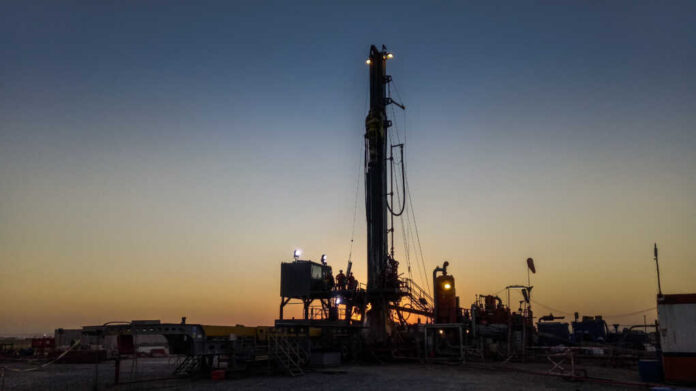
A Trump administration energy official just put Iran’s oil at the center of a blunt counterterrorism message—keeping “vast oil reserves” out of terrorist hands as war jitters rattle global prices.
Quick Take
- White House energy official Jarrod Agen said the administration’s goal is to keep Iran’s oil from being controlled by terrorists.
- The comments came during a Fox Business appearance as the Iran conflict fuels higher oil prices and market instability.
- The administration announced a $20 billion reinsurance program aimed at keeping tankers moving through risky waters and stabilizing supply.
- Qatar warned the conflict could halt Gulf energy exports, spotlighting the Strait of Hormuz as a major global chokepoint.
Agen’s Comment Puts “Energy Dominance” Back in the Driver’s Seat
Jarrod Agen, executive director of the National Energy Dominance Council, addressed the Iran conflict and rising oil prices during a March 7, 2026, segment on Fox Business’s “The Bottom Line.” Agen said the administration wants to ensure “Iran’s vast oil reserves are not in the hands of terrorists,” adding, “we’re going to get all of the oil out of the hands of terrorists.” The available reporting frames the message as counterterrorism rather than territorial acquisition.
That distinction matters because the public debate often turns on whether Washington is pursuing security goals or broader geopolitical leverage. Agen’s remarks are presented as a national security argument tied to energy stability. What is not spelled out is the operational meaning of “control” and which specific tools—military, sanctions, diplomacy, or a mix—would be used to achieve the stated objective.
Oil Shock Reality Check: Hormuz Risk and Qatar’s Export Warning
Energy markets are reacting to the conflict with renewed price volatility, and the Strait of Hormuz remains a central vulnerability for global supply. Asian countries and Indian refineries, in particular, rely heavily on oil transiting that passage. Qatar’s energy minister warned the Iran conflict could force the Gulf to halt exports entirely, which would quickly cascade into broader supply shortages, shipping disruptions, and higher costs for consumers.
It also indicates oil prices continued surging even after new stabilization efforts, underscoring how quickly fear can overwhelm financial fixes when shipping lanes feel threatened. For Americans already tired of “crisis economics” and the inflationary whiplash of the mid-2020s, this is a reminder that foreign instability can hit household budgets fast—especially when markets doubt that sea lanes will remain open and insurable.
What the White House Is Doing: Reinsurance, Escorts, and Refinery Supply Options
The Trump administration response includes a $20 billion reinsurance program designed to keep oil tankers and maritime traffic moving through contested waters. The idea is straightforward: if insurers and shippers won’t bear the risk, the government backstop reduces the chance that energy flow freezes up for financial reasons. Military escorts for tankers navigating the Strait of Hormuz.
In addition, it references efforts to unlock Russian oil access for U.S. refineries through sanctions waivers, a detail that signals a pragmatic focus on refinery inputs and domestic fuel availability amid disruptions elsewhere. It notes a strategic emphasis on ensuring U.S. access to oil and gas reserves within American territory, consistent with an “energy dominance” framework that prioritizes domestic strength over dependence.
Constitutional and Governance Lens: Clarity, Limits, and Accountability
For conservative readers who watched prior years bring expensive overseas commitments and blurred authorities, the key question is what legal and strategic boundaries will govern any push to “secure” oil. It confirms the statements and several policy steps, but it does not provide detailed independent analysis or a clear explanation of mechanisms. That limitation makes congressional oversight, transparent objectives, and defined end-states especially important.
White House Official Jarrod Agen Reveals Administration’s Plan to “Get All of the Oil Out of the Hands of Terrorists” (VIDEO) https://t.co/N4kUyeq6nt
— The Gateway Pundit (@gatewaypundit) March 8, 2026
At the same time, the administration’s framing—preventing terrorists from controlling strategic resources—fits a core national security rationale that many Americans view as legitimate when it is narrowly tailored and clearly explained. With energy prices already sensitive, voters will likely judge outcomes by whether these measures reduce volatility without sliding into open-ended commitments or bureaucratic mission creep that expands government power without measurable results.
Sources:
https://news.am/eng/news/934778.html
https://goldtadise.com/?p=691621