
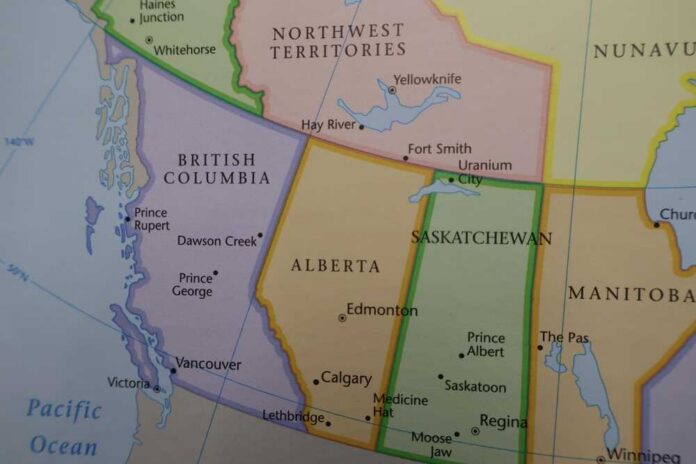
Alberta’s secession movement has surpassed the signature threshold for a 2026 referendum, raising questions about whether Trump’s administration welcomed foreign separatists to undermine a key ally while promising America First.
Story Snapshot
- Alberta separatists exceeded 177,732 signatures needed for a provincial referendum on independence, securing a spot on the 2026 ballot ahead of the May 2 deadline
- Trump administration officials met with Alberta Prosperity Project leaders three times and expressed support for Alberta as a “natural partner,” fueling accusations of meddling in Canadian sovereignty
- The movement emerged from decades of frustration over federal energy policies that transferred an estimated $218 billion from Alberta to other provinces, mirroring conservative anger over DC’s control
- Constitutional experts confirm separation is illegal without federal consent, yet Premier Danielle Smith pledged not to block the citizen-led vote
- Polling shows 65-70% of Albertans oppose secession, down from 80%, while Trump’s involvement raises concerns among MAGA voters about entangling America in foreign conflicts
Petition Drive Succeeds Despite Legal Barriers
Alberta’s “Stay Free Alberta” petition campaign reached the required 177,732 valid signatures in early April 2026, well ahead of the May 2 deadline. Activists braved January snowstorms to gather support, demonstrating grassroots enthusiasm for a referendum on separating from Canada. Premier Danielle Smith committed in summer 2025 not to obstruct a citizen-initiated vote if organizers met the threshold. The referendum, potentially scheduled for October 19, 2026, will proceed despite Canadian constitutional experts declaring separation illegal without federal government consent. This mirrors frustrations many Americans feel when elites ignore constitutional limits on federal power.
Trump Administration’s Controversial Engagement
The Alberta Prosperity Project, leading the secession push, confirmed meeting U.S. State Department officials three times in 2025 to discuss trade and energy cooperation. Treasury Secretary Scott Bessent publicly welcomed Alberta as a “natural partner” for oil pipeline development, while reports suggest the administration explored extending $500 billion in credit post-referendum. APP co-founder Dennis Modry denied seeking U.S. statehood, insisting the goal is full independence, yet Trump’s rhetoric about Canada becoming a state fueled suspicions. British Columbia Premier David Eby accused separatists of treason, while opposition leader Mark Carney weaponized “51st state” fears politically. For conservatives who voted to end regime change wars and prioritize American interests, the administration’s active engagement with foreign separatists raises troubling questions about overreach.
Economic Grievances Mirror American Frustrations
Alberta’s separatist anger stems from the 1980 National Energy Program, which imposed federal price controls and taxes that transferred approximately $218 billion (adjusted) from Alberta’s oil wealth to subsidize other provinces. Current equalization payments funnel roughly $15 billion annually to Quebec while strangling Alberta’s energy sector through regulatory overreach. This economic exploitation by a distant capital echoes conservative complaints about Washington’s bureaucratic stranglehold on productive states. The movement’s focus on resource control and economic autonomy, rather than emotional nationalism like Quebec’s past referendums, resonates with limited-government principles. However, experts note landlocked Alberta would face unsustainable isolation, and First Nations groups oppose separation due to treaty concerns, complicating any path forward.
Uncertain Future Tests Conservative Principles
Polling reveals a majority of Albertans still oppose secession, though support has grown from 20% to 29% as frustration mounts. Constitutional and international law experts at the Institute for Research on Public Policy confirmed separation cannot proceed legally without Ottawa’s consent, creating a potential standoff. The Center for Strategic and International Studies warned that U.S. encouragement of Alberta separatism harms bilateral relations and risks destabilizing a critical ally. University of British Columbia professor Maxwell Cameron cautioned that American intervention could trigger broader Canadian fragmentation, potentially pulling provinces like Saskatchewan and Quebec into similar movements. For Trump supporters exhausted by globalist interventions and broken promises to avoid new conflicts, the administration’s role in fueling foreign separatism contradicts the America First mandate that won their votes in the first place.
The Alberta referendum represents a test of whether principles of self-determination and economic freedom apply equally when they complicate American strategic interests. While sympathy for Albertans’ grievances against federal overreach is understandable, the Trump administration’s active involvement raises uncomfortable parallels to the nation-building and foreign meddling conservatives have long opposed. Whether this movement gains momentum or collapses under constitutional reality, it exposes tensions between non-interventionist rhetoric and opportunistic geopolitics that many in the MAGA base are increasingly unwilling to ignore.
Sources:
Trump Canada separatists Alberta Carney – The Independent
Will Alberta Become the 51st State? – The Spectator
Alberta Separatism Would Harm Both Canada and the United States – CSIS
Alberta Separation Illegal – IRPP Policy Options