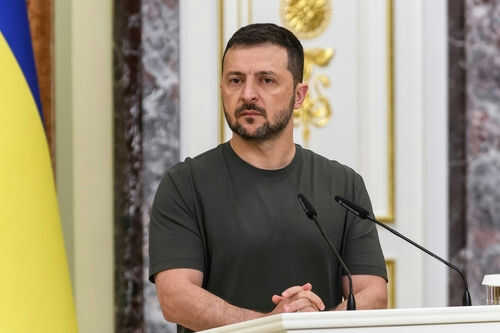
A former insider just shattered the carefully curated image of Ukraine’s wartime president, claiming widespread knowledge of cocaine use while Western media outlets maintain their protective silence.
Story Snapshot
- Yulia Mendel, Zelensky’s press secretary from 2019-2021, alleges his cocaine use is an “open secret” among Ukrainian officials
- Mendel claims multiple sources confirmed witnessing drug use in clubs, though she never personally observed it
- Ukrainian authorities retaliated by adding her to the Mirotvorets database for “spreading Russian propaganda”
- Mainstream Western media remains largely silent while alternative outlets amplify the allegations
- The claims echo disputed 2019 campaign allegations involving controversial drug test results
The Insider’s Explosive Allegations
Yulia Mendel served as Volodymyr Zelensky’s official press secretary for two years, giving her direct access to Ukraine’s presidential inner circle. Her May 12 appearance on the Tucker Carlson Show dropped allegations that challenge the heroic wartime leader narrative Western media has cultivated since 2022. Mendel stated she interviewed numerous individuals while writing her memoir who reported witnessing Zelensky using cocaine in various venues. She described behavioral patterns including fifteen-minute bathroom visits before public appearances followed by dramatic personality transformations. The former spokesperson even alleged knowledge of a cocaine supplier connected to Kvartal 95 Studio, Zelensky’s former entertainment company.
The Credibility Question Nobody Wants to Answer
Mendel admits she never personally witnessed drug use, relying instead on secondhand accounts from people she describes as twenty to twenty-five year acquaintances of the president. This creates a verification problem that both supporters and critics can exploit. Her critics point to potential grievances from a disgruntled former employee seeking attention for her upcoming book. Her supporters note the specific details, her willingness to go on record, and consistency with 2019 campaign-era allegations that mainstream outlets dismissed. The Ukrainian government’s response speaks volumes: rather than issuing detailed denials, authorities added Mendel to the notorious Mirotvorets database, a move widely interpreted as intimidation.
The 2019 Allegations That Never Went Away
These aren’t new whispers appearing from nowhere. During the 2019 presidential campaign, drug use allegations emerged as Zelensky challenged incumbent Petro Poroshenko to mutual drug testing. Both candidates underwent tests, but controversy erupted over result dating and authenticity. Western media largely buried these concerns as Zelensky swept to victory. Mendel’s current allegations resurrect questions that powerful interests thought they’d successfully suppressed. The pattern reveals something troubling about information gatekeeping: allegations dismissed as campaign smears in 2019 now receive corroboration from an insider with direct access, yet mainstream outlets continue their protective silence.
Propaganda Tactics and Image Obsession
Beyond drug allegations, Mendel described Zelensky’s obsession with image management and propaganda techniques. She claims he demanded “Goebbels propaganda” and “thousands of talking heads” to control public perception. This characterization aligns with observed media dynamics since 2022, where Western outlets adopted remarkably uniform, uncritical coverage of Zelensky’s wartime leadership. Questions about corruption, governance failures, or personal conduct face immediate dismissal as Russian disinformation. Mendel’s account suggests this protective media posture didn’t emerge organically but resulted from deliberate image management efforts. The irony is stark: allegations of propaganda tactics get suppressed through what increasingly resembles coordinated narrative control.
The Media Fracture Nobody Acknowledges
Coverage patterns reveal a fundamental split in information ecosystems. Russian state media RT provided prominent coverage, as did alternative Western outlets like Gateway Pundit. Tucker Carlson’s platform amplified the story to millions. Mainstream Western media outlets? Virtual silence. This divergence raises uncomfortable questions about journalistic standards and geopolitical influence. Either Western mainstream outlets possess information disproving these allegations and refuse to share it, or they’re suppressing a legitimate story because it threatens preferred narratives. Neither explanation inspires confidence. The claim that ignoring allegations protects Ukrainian war efforts essentially argues that truth should be subordinated to propaganda objectives, a position fundamentally incompatible with journalistic integrity.
The Retaliation That Confirms the Pattern
Ukraine’s Mirotvorets database functions as a digital hit list, identifying alleged traitors and propagandists. Critics have documented its use for intimidation and worse. Adding Mendel to this database after her Tucker Carlson appearance sent a clear message to other potential whistleblowers: speak against the approved narrative and face consequences. This response is particularly revealing because it avoids substantive engagement with her claims. No detailed denial, no alternative explanation for described behaviors, no rebuttal of specific allegations. Just character assassination through database listing and accusations of spreading Russian propaganda. Authoritarian regimes typically respond to whistleblowers with retaliation rather than refutation. Democratic governments with nothing to hide welcome scrutiny.
AN OPEN SECRET: Zelensky’s Former Spokeswoman Opens up About His Alleged Cocaine Use, as Even MSM Start Reporting That Corruption Investigations Are Closing in on Him (VIDEOS) https://t.co/SItKBitX9N
— Warren Hultquist (@whultquist) May 13, 2026
The Corruption Investigations Nobody Can Confirm
Sources reference corruption investigations “closing in” on Zelensky, yet specific details remain elusive. No official Ukrainian or international bodies have confirmed formal investigations in available reporting. This ambiguity creates information fog where allegations circulate without verification or refutation. Ukraine’s historical corruption problems provide context for such claims, but context isn’t evidence. The lack of transparency serves everyone poorly. If investigations exist, why the secrecy? If they don’t, why allow speculation to fester? The answer likely involves geopolitical calculations where Western governments avoid scrutinizing a wartime ally they’ve invested billions supporting. Accountability gets sacrificed to strategic considerations.
What American Taxpayers Deserve to Know
American taxpayers have provided over one hundred billion dollars in aid to Ukraine since 2022. This massive investment demands accountability and transparency regarding leadership character and governance. Dismissing legitimate questions as Russian propaganda insults citizen intelligence and violates democratic principles. Whether Mendel’s allegations prove true or false, they deserve serious investigation rather than reflexive suppression. The protective media posture around Zelensky has created an information environment where inconvenient facts face censorship while approved narratives receive amplification. This dynamic betrays both journalistic duty and citizen right to informed decision-making about foreign policy and aid allocation. Transparency and accountability aren’t optional luxuries during wartime; they’re essential safeguards against corruption and mismanagement of public resources.
Sources:
Zelensky’s alleged cocaine use ‘an open secret’ – former spokeswoman
Yulia Mendel: Zelensky uses cocaine
AN OPEN SECRET: Zelensky’s Former Spokeswoman Opens up About His Alleged Cocaine Use
Zelensky’s Press Secretary Reveals All: Cocaine, Cover-ups, and the Only Obstacle Preventing Peace