
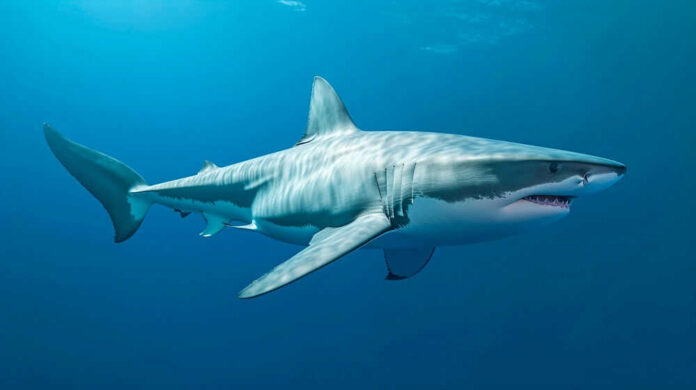
As great white sharks vanish from South Africa’s coast, scientists say a mix of human mismanagement and natural upheaval is dismantling a once‑stable marine powerhouse.
Story Snapshot
- Long-running monitoring in False Bay shows great white sharks going from stable numbers to complete disappearance by 2018.
- Researchers warn a deadly mix of shark nets, longline fishing, and orca predation is driving a collapse of a key apex predator.
- The loss of great whites is triggering cascading damage to South Africa’s marine ecosystem and local tourism economy.
- Scientists argue government regulators ignored warning signs for years, echoing broader failures of global environmental governance.
Great White Hotspot Turns Into A Silent Bay
For two decades, scientists monitored great white sharks in South Africa’s False Bay, once one of the world’s premier hotspots for these apex predators.[2] Their standardized boat-based surveys showed shark numbers holding relatively steady for about fifteen years before dropping sharply after 2015.[2] By mid‑2018, great whites had completely disappeared from those surveys, an unprecedented collapse at a site where they were once a daily presence.[2] Local operators who previously saw hundreds a year now report virtually none.[3][5]
The disappearance is not just about empty cage‑diving boats; it is reshaping the entire food web.[2] After great whites vanished from False Bay, cape fur seal numbers climbed and sevengill sharks became more common.[2] Those mid‑level predators are now putting increased pressure on fish stocks and smaller shark species, exactly the sort of cascading effect scientists expect when a top predator is removed.[2][4] Researchers describe the change as a live experiment in what happens when humans and nature together knock out an apex guardian of the coastline.[2][4]
Human Policies Create A “Perfect Ecological Storm”
Marine biologists reviewing South Africa’s great white population say human activity is a major driver behind the decline.[1] A scientific review estimated that only about 500 to 1,000 great whites remain in South African waters, with lethal pressures taking out roughly 5 to 10 percent of that population every year.[1] South Africa’s KwaZulu‑Natal Sharks Board uses nets and drumlines to protect swimmers, killing an average of twenty‑eight great whites annually between 1978 and 2018.[1][3][5] On top of that, demersal shark longline fisheries catch great whites as bycatch and heavily target the smaller sharks that make up their main prey.[1][3][5]
Photographers and scientists working off the Cape say these longline boats lay miles of hooks on the ocean floor, removing the very shark species great whites depend on when they are not hunting seals.[3][5] Those smaller sharks are exported overseas for cheap fish and chips, while South Africa is left with an emptied food chain.[3][5] Researchers describe this combination of prey removal, bycatch, and shark nets as a “perfect ecological storm” that has displaced great whites from traditional refuges and exposed them to even more threats in open water.[4][5] They argue that government regulators failed to adjust old policies even as warning signs mounted.[1][3][4][5]
Orcas Complicate The Mystery, But Humans Still Loom Large
The suddenness of the local disappearance led many observers to point to a dramatic new suspect: orcas, also known as killer whales.[2][3][5] Around the time sightings of great whites crashed, carcasses began washing ashore with large, precise incisions and missing livers, a signature of orca predation.[3][5] Necropsies confirmed that orcas had been feeding on great whites off the South African coast.[3][5] In response, many sharks appear to have fled the traditional bays and moved further up the coast, one of the few survival strategies available when a top predator suddenly becomes prey.[3][4][5]
Yet several experts stress that orcas are only part of the story and cannot explain the long‑term population stress.[1][2][3][4] In interviews and scientific reviews, researchers note that great white numbers had already been falling before the orca attacks drew headlines.[1][3][5] They see orca predation as an added pressure layered onto years of human‑driven mortality through shark nets, longline bycatch, and prey depletion.[1][3][4][5] This pattern fits a broader trend where dramatic natural events become convenient cover for deeper policy failures in fisheries management and coastal protection.[1][2][3]
Local Collapse, National Warning, And Why It Matters For Americans
Scientists emphasize that the documented disappearance is clearest around False Bay and other Western Cape aggregation sites, not yet a confirmed nationwide extinction.[2][3][4] However, losing sharks from their historic strongholds is still a serious warning signal.[1][2][4] Researchers argue that if current trends continue, South Africa could face a local extinction of great whites, with knock‑on effects for tourism, fisheries, and broader ocean health.[1][2][4] Tour operators who once relied on predictable shark sightings now struggle, while coastal communities watch a pillar of their marine identity slip away.[2][3][5]
For American readers worried about heavy‑handed regulators at home, this story highlights a different but related danger: unaccountable bureaucracies that do too little, too late, while hiding behind “nature” as an excuse.[1][3][4] South African scientists explicitly call on their government to reduce human‑caused shark deaths and reform fishery guidelines to protect great whites and other endangered species.[1] Their message is simple and familiar: when officials ignore data, powerful interests strip‑mine shared resources, and ordinary citizens and local communities are left to live with the long‑term damage.[1][2][3][4][5]
Sources:
[1] YouTube – Great White Sharks Vanish From South Africa’s Coast, Alarming …
[2] Web – Disappearance of the Great White Sharks – Cape Shark Adventures
[3] Web – When great white sharks vanished from False Bay, it triggered …
[4] Web – Great white sharks have suddenly disappeared from one of their …
[5] Web – Vanishing Great white shark impacts South African marine health