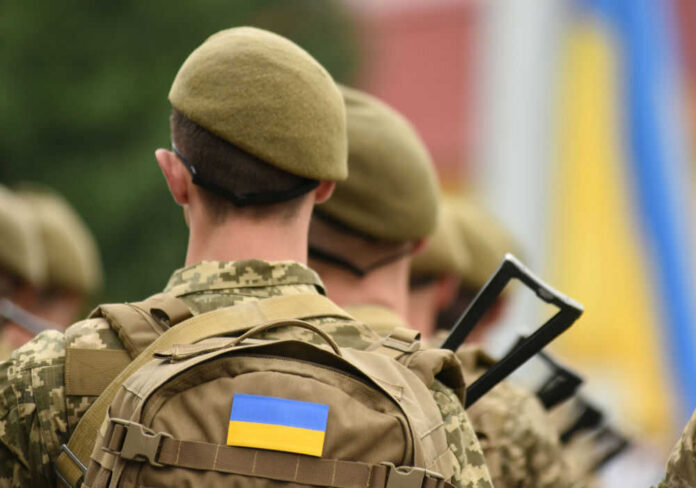
Ukraine’s military is blurring the line between war and entertainment by turning real-life lethal FPV drone training into a video-game-style experience that is now spreading to civilian gamers worldwide.
Story Snapshot
- Ukrainian forces now use structured FPV drone “schools” that rely heavily on simulators and game-like training to prepare operators for lethal missions.
- A Ukrainian military drone trainer has been commercialized as a home video game, promising players the “rush of modern FPV warfare.”
- Gamers are openly courted as ideal recruits, raising serious ethical concerns about desensitizing young people to killing through virtual practice.
- The program shows how quickly wartime innovations can normalize remote, joystick-driven combat with little public debate over the moral cost.
Ukraine’s FPV Drone Schools Turn Combat into a Structured “Gaming” Pipeline
Ukraine has built a formal pipeline for first-person-view drone pilots that looks less like ad hoc wartime improvisation and more like an institutionalized training system anchored in simulation. The FPV Drone Pilot School launched in May 2024 offers a four-week course that includes 30 hours of theory, 30 hours on simulators, 60 hours of live FPV flight, and almost 30 hours on repair and maintenance, all free for active military and security personnel.[1] After classroom exams, trainees move directly into simulator sessions before being cleared to fly real unmanned aircraft.[1]
Dronarium Academy, one of many private and semi-official training centers, openly markets its unmanned courses as built on combat experience and designed to replicate real operational conditions.[3][9] Its programs take students through a full cycle: understanding drone types, learning piloting skills, practicing tactics in realistic electronic warfare environments, and finishing with a formal assessment tied to recommendations for service with the Ukrainian Ministry of Defense.[3] Other schools, such as engineering-focused FPV courses in Khmelnytskyi, teach assembly, repair, and configuration for free to military personnel while charging civilians, further expanding the ecosystem beyond front-line units.[2]
From Classroom to “Fight Drone Simulator”: When Training Becomes a Game
The most striking development for many observers is how directly Ukraine has embraced video-game-style tools to train, recruit, and even entertain. A leading example is the “Ukrainian Fight Drone Simulator,” promoted as the top FPV training software in the country, where pilots practice control, maneuvering, and emergency procedures in a fully virtual environment before touching a real drone.[5] This simulator uses physics and piloting controls designed to mimic actual front-line flight, letting trainees “crash for free” while building muscle memory for lethal missions.[5]
Reporting from Western media confirms that this is not just an internal military tool but a bridge between combat and consumer gaming. A version of the Ukrainian Fight Drone Simulator has been turned into a commercial video game sold to the public for about thirty dollars, using the same ultra-realistic physics and control schemes that teach Ukrainian pilots how to hunt and destroy Russian tanks, missile systems, and infantry.[6] Its creators advertise it as a “public adaptation” of a front-line trainer, promising players a chance to “learn to fly like a front-line pilot” and feel the “rush of modern FPV warfare” through scenarios modeled on real missions.[6]
Gaming Culture, Recruitment, and the Ethics of Remote Killing
The gamified framing is not accidental; it has become part of Ukraine’s public messaging around drones. Business Insider reports that Ukraine’s defense ministry pushed Grand Theft Auto–styled content and asked, “Are there any GTA fans here?”, while explaining that some pilots do in fact train in Grand Theft Auto V as part of their preparation.[4] Instructors and simulator developers repeatedly claim that the “best drone pilots are often gamers,” highlighting how hand–eye coordination and familiarity with virtual worlds feed directly into battlefield performance.[5][6]
At the same time, Ukraine’s drone “advantage” is being credited not just to airframes, but to pilot training and scale. Kyiv Post estimates that roughly 80,000 personnel are involved in Ukraine’s broader drone program, emphasizing the importance of training pipelines in producing large numbers of capable operators.[7] Centers such as KRUK’s Unmanned Aerial Vehicle Operator Training Center run two-week FPV courses on advanced piloting, electronic warfare conditions, and combat use, reinforcing how normalized this high-intensity, screen-based warfare has become inside Ukraine’s defense institutions.[8] Free training for military personnel, recognized certifications, and multiple overlapping schools together show that this is now a system, not a side project.[1][3][8]
Where Evidence Stops: Effectiveness Claims Versus Moral Questions
Supporters of this approach argue that simulation-heavy training saves lives and accelerates readiness by letting operators master complex controls before risking expensive equipment or their own forces. The structured sequence at Ukraine’s FPV school—moving from theory to simulators to live flights and tactical target practice—clearly aims to shorten the path from novice to combat-capable pilot.[1] Private academies repeat the same logic, touting short-course formats that turn volunteers, reservists, and civilians into operators for reconnaissance, strike, and interception roles under battlefield conditions.[2][3][9]
However, the available public record does not yet provide hard data that would satisfy a careful skeptic. None of the cited programs has released controlled studies comparing simulator-heavy cohorts to traditionally trained groups in terms of hit rates, crash frequency, or time to proficiency.[1][3][7][9] Claims that gamers make superior pilots remain practitioner observations rather than statistically validated findings, and there are no longitudinal psychological studies showing whether repeated exposure to “ultra-realistic” virtual killing desensitizes operators or affects their moral injury later in life.[4][6][9] For conservatives wary of how popular culture can erode traditional ethics, that lack of transparency and independent oversight is a red flag that demands closer scrutiny before this model spreads further.
Sources:
[1] Web – “Ukraine Turns Real-Life Kills into Video Game Thrills for Drone …
[2] Web – FPV Drone Pilot School for Ukrainian Forces and Civilians
[3] Web – Training Drone Operators in Wartime Ukraine: Dronarium Academy
[4] Web – Join FPV Drone Courses in Kyiv and Lviv – Dronarium Academy
[5] Web – Ukraine Drone Pilots Train in ‘Grand Theft Auto V’ – Business Insider
[6] YouTube – Ukrainian Drone Pilots Are Using This Simulator To Learn to Fly
[7] Web – So Where Does Ukraine Get So Many ‘Ace’ Drone Pilots From?
[8] Web – Online Course Military FPV Drone Operator
[9] Web – KRUK UAV OPERATOR TRAINING CENTER