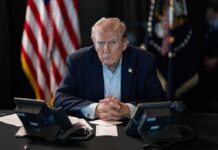
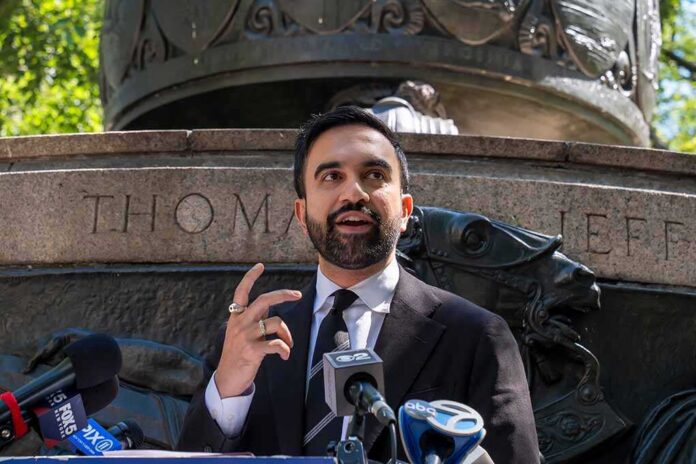
New York City Mayor Zohran Mamdani again labeled President Trump a “fascist” even after multiple cordial meetings at the White House and high-profile public events.
Story Highlights
- Mamdani reaffirmed calling Trump a “fascist” in several on-camera moments after friendly meetings.
- An Oval Office exchange showed Trump brushing off the jab as banter while Mamdani stood by it.
- Mamdani cited policy rifts on immigration, Iran, and domestic issues but offered little detailed evidence.
- Scholars and analysts argue Trump fits right-wing or authoritarian populism, not fascism.
Mamdani Repeats “Fascist” Label After Friendly Meetings
Media reporting shows Zohran Mamdani telling journalists he still thinks President Trump is a “fascist,” even after what outlets called “chummy” sit-downs. A November 2025 Meet the Press clip quoted Mamdani saying, “I’ve said it in the past, I say it today.” Coverage of his Oval Office appearance the same month recorded the same stance. These accounts underline that his remark was not a one-off campaign jab but a repeated claim in official settings.
During the Oval Office spray, a reporter pressed the term again. President Trump replied with humor, telling Mamdani, “That’s OK, you can just say yes.” Mamdani then agreed. The moment framed the charge as a quick back-and-forth line, rather than a detailed case. The exchange drew viral attention and made the dispute feel more like a sound bite than a serious debate over facts or law, which helps no one who wants clarity.
Policy Disputes Named, Evidence Thin
At the 2026 New York Times DealBook Summit, Mamdani pointed to immigration enforcement, the war in Iran, and domestic policy as reasons for his view. He said leaders should be honest about where they disagree. But the reports do not quote him listing specific orders, statutes, or incidents to prove the label. That gap leaves the term as rhetoric, not a mapped analysis tied to recognized criteria from history or political science.
This matters for voters who care about accuracy and the Constitution. Words like “fascist” carry heavy meaning. If a mayor claims it, he should show how Trump’s actions meet a clear definition. Several scholars say Trump is better described as a right-wing or authoritarian populist, which is serious but not the same as fascism. That view stresses that the evidence does not match classic fascist economics, structure, and ideology from the twentieth century.
How The Label Lands With Voters On Both Sides
Some conservative commentators blasted the optics of friendly meetings paired with harsh labels, while others said the banter undercut the charge. A CNN transcript from the White House day captured the “you can just say yes” moment that many shared online. The quick exchange risks turning real policy debate into team sport. It also distracts from bread-and-butter concerns like border security, energy prices, crime, and school standards that families watch closely.
For conservatives, the lesson is simple. Name-calling cannot replace proof. If an elected leader claims fascism, he should bring a dated list of actions and match them to known benchmarks. If he cannot, the label looks like a scare tactic. President Trump has flatly rejected the term and called it false. Independent voices have also argued that “authoritarian populist” is the more accurate, if still debated, category for current politics, not fascism.
Bottom Line For Constitutional Conservatives
Americans deserve precise language, not political heat. The Constitution protects tough speech, and that includes sharp criticism. But words this strong must rest on facts the public can test. Right now, coverage shows Mamdani repeating the label and naming general disputes. It does not show him making a step-by-step case. Until leaders present real evidence, voters should keep focus on policies that affect daily life and guard against any effort that erodes liberty and due process.