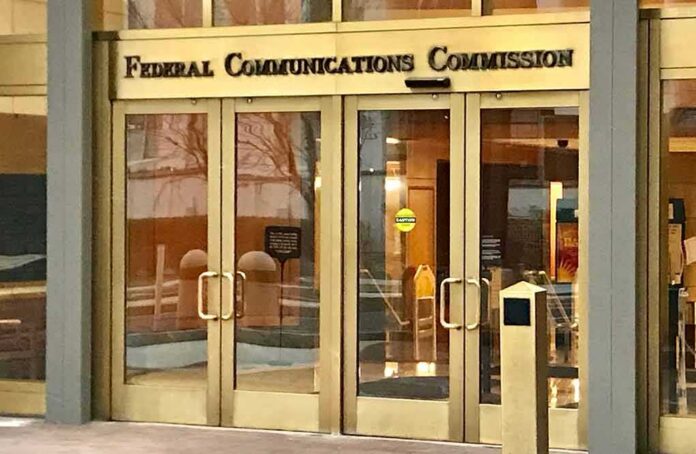
A federal judge halted the Federal Communications Commission’s special push against ABC’s broadcast licenses, calling it “not a close case.”
Story Snapshot
- A judge blocked the Federal Communications Commission from continuing early reviews of eight ABC station licenses.
- The court said Disney and ABC are likely to win on their First Amendment retaliation claim and used “not a close case” language.
- The order described the agency’s early action as unusual compared with normal practice.
- The Federal Communications Commission says the ruling is wrong and it was enforcing public-interest duties, not punishing speech.
Judge Stops Early License Action Against ABC’s Stations
On November 25, a federal district judge issued a preliminary injunction that blocks the Federal Communications Commission from taking more steps in its early license renewal proceedings against Disney’s eight ABC-owned stations. The court barred further action, including any hearing-designation order, while the case moves forward. The judge stressed that this relief is temporary, not a final win, but it shields the stations from immediate regulatory escalation while the dispute is litigated.
The court said Disney and ABC are likely to succeed on their core claim that the Federal Communications Commission acted in retaliation for unfavorable speech about President Trump and the Republican Party. The opinion used firm language, stating, “This is not a close case,” when weighing likelihood of success. The ruling framed the dispute as one where the government’s licensing power cannot be used to chill speech, even through process and pressure rather than outright license loss.
Why The Timing And Process Raised First Amendment Flags
The lawsuit targeted a break from the agency’s normal routine. Reports and filings described the early renewal move as out of the ordinary, which supported the claim that the process was pretext rather than a routine check. The court discussed how timing and circumstances linked the action to speech the government disliked, making it plausible retaliation. That connection, plus the unusual procedure, helped the court find a strong chance of a First Amendment violation.
The injunction also rejected the Federal Communications Commission’s push to end the case outright at this stage. The court denied the government’s motion to dismiss, keeping the retaliation claim alive and under court review. Still, the judge issued narrower relief than Disney asked for. The order blocks further steps in the specific early-review track but does not ban every possible Federal Communications Commission contact with the broadcaster going forward.
How The Federal Communications Commission Defends Its Actions
The Federal Communications Commission argues it was enforcing broadcasters’ duty to serve the public interest, not punishing critical content. Chairman Brendan Carr and a spokesperson said the suit lacked merit and that the decision granting relief was wrong on the facts and the law, pointing to Supreme Court precedent. The agency also said it was examining possible rule and Communications Act violations, including unlawful discrimination, within its standard oversight role.
A federal judge blocked the FCC's early review of ABC's broadcast licenses, finding ABC likely to win its retaliation claim. "This is not a close case," she wrote. A license is not a lever for punishing coverage. That should hold no matter who runs the FCC.
— The Continental Party (@TheContParty) November 27, 2026
The judge’s order is preliminary, so the case now moves into deeper fact-finding. The record shown so far leans heavily on the court’s assessment of timing, context, and deviations from usual practice. The publicly available materials do not yet reveal a full chain of internal emails or sworn statements proving intent. That is common at this stage, and both sides will test their claims through discovery and further briefing before any final judgment.
What This Means For Free Speech And Government Power
This fight matters beyond ABC. Broadcasters need federal licenses, but the First Amendment limits how the government can use that power. Courts have long warned that pressure, investigations, or threatened actions can chill speech even when no final penalty is imposed. The judge underscored that point by pausing an unusual process that could deter ordinary speakers. The message is simple: government process cannot become punishment for protected viewpoints.
Conservatives know the dangers when federal power leans on media, churches, gun owners, or parents. Today’s ruling does not settle every question, and appeals may follow. But it reminds every agency that the Constitution comes first, even when officials claim to act for the “public interest.” Process is not neutral when it punishes speech. The courtroom door remains open to anyone willing to defend their rights, loudly and early.
Sources:
mediaite.com, courtlistener.com, nbcnews.com, upi.com