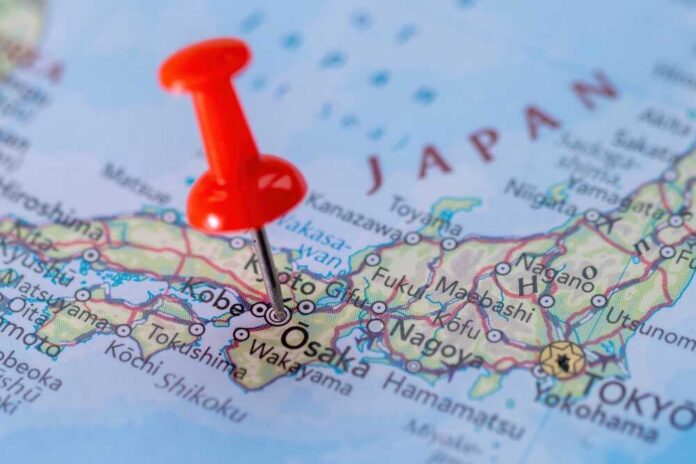
A young American’s disappearance in Japan after a family fight over artificial intelligence has become a chilling reminder of how fragile our freedoms – and our safety abroad – can be when we are dependent on foreign systems and distant bureaucracies.
Story Snapshot
- Twenty-year-old Auburn student James “Weston” Higginbotham vanished in Kyoto after a family trip argument and a silent digital trail.
- His location on a family tracking app went dark, and “haunting” final messages from a best friend were never answered.[1]
- Japanese police mounted a short, intense search, then suspended operations, leaving his parents to fund private rescue teams.[1][2]
- Cross-border red tape, language barriers, and limited transparency echo broader concerns about Americans’ security under foreign authorities.[1][2]
Young American Vanishes After Family Trip Turns Tragic
James “Weston” Higginbotham, a 20-year-old engineering student at Auburn University, disappeared on May 29 while on a family vacation in Kyoto, Japan, after choosing to go off alone following an argument, including tension over his mother’s use of ChatGPT.[1] That afternoon he opted not to join his parents and brother at a nearby temple and later appeared to travel by train toward the outskirts of the city.[1] His family has not heard his voice since that day, and every unanswered message deepens their concern.[1]
According to his parents, a family location-tracking app showed Weston moving away from central Kyoto that evening, but when they texted him, he never responded, and his location suddenly stopped updating.[1] Reports indicate the phone’s location function appears to have been switched off before the signal went “completely dark,” leaving only a narrow window of confirmed movement.[2] Closed-circuit security footage reportedly captured him leaving Kyoto’s Yamashina train station wearing a distinctive “Save the Bees” T-shirt and lavender pants, but no verified sighting exists after that moment.[1][2]
Family Hope Collides With Foreign Police Limits
Japanese authorities launched a concentrated three-day search around wooded foothills near Kyoto, deploying around one hundred officers, helicopters, and search dogs in terrain later battered by a typhoon, but they reported finding no trace of Weston in the targeted area.[1][2] Police have since told the family that their official search of that zone is complete and suspended further operations there, despite the absence of a body, clothing, or phone.[1] The family, unconvinced that the trail ends where the paperwork does, has pressed onward on their own.[1][2]
Weston’s parents, Nancy and James Higginbotham, describe him as an avid hiker, triathlete, and experienced outdoorsman who completed demanding treks such as the El Camino de Santiago, fueling their hope he could survive if injured or lost rather than deceased.[1][2] Their fear, expressed through multiple interviews, is that he may be hurt and “stuck” somewhere, rather than having walked away from his life voluntarily.[1] Acting on that conviction, they are hiring a private search and rescue team in Japan, a decision expected to cost more than one hundred thousand dollars, a heavy burden they accept because official efforts ended too soon for a family still without answers.[1]
Digital Trail, Final Messages, and a Culture Clash Over AI
Coverage has highlighted the emotional detail that just before he disappeared, Weston’s mother and son relationship was strained by disagreements over her frequent use of ChatGPT, which she called “a sore subject” between them.[1] She recounted that Japan itself was recommended to her by the artificial intelligence tool, adding a haunting layer of irony that a technology meant to assist planning is now tied, at least in family memory, to their “nightmare” trip.[1] Media reports also emphasize that a close friend’s last messages to Weston went unanswered, underscoring how abruptly his digital presence vanished.
Auburn student Weston Higginbotham remains missing in Japan as his family urges hikers and the public to help search remote mountain trails. https://t.co/fkSAvgRKuy
— Messenger Post Media (@messengerpost) June 6, 2026
Friends and relatives describe Weston as someone who often sought solitude in nature when stressed, leading his family to suspect he may have headed onto hiking trails after leaving the station.[1] That theory remains unproven, however, because no direct witness has placed him on a specific trail, and Japanese authorities have not released full surveillance footage or detailed transit logs that might show whether he took additional trains away from the area.[1][2] A rumored lookalike sighting in Seoul was relayed to the Federal Bureau of Investigation (FBI) but has not been verified, illustrating how speculative leads can complicate the search without bringing the family closer to the truth.
What This Case Reveals About Americans Abroad
This unresolved disappearance exposes a broader problem conservatives have warned about for years: American families are often at the mercy of foreign law enforcement systems that are not transparent, not accountable to United States voters, and not obliged to match our expectations of urgency.[1][2] Japanese police have shared only limited information publicly, leaving the narrative driven by emotional interviews rather than clear, documented timelines and evidence.[1][2] Cross-border coordination involving the United States Embassy, the FBI, and local officers introduces language and bureaucratic barriers that slow communication when every hour could matter.[2]
For readers who worry about government overreach at home and lax protection abroad, Weston’s case raises tough questions about how much support ordinary Americans can truly rely on when tragedy strikes in another country.[2] His parents, not Washington, are the ones paying six-figure sums for private rescuers to continue work that foreign authorities deemed complete, even though no definitive evidence explains what happened to their son.[1] Until Japanese officials release fuller records—search logs, security footage, and digital forensic results—Weston’s family is left in limbo, sustained by faith, grit, and a determination that their child will not become just another unsolved file in an overseas bureaucracy.[1][2]
Sources:
[1] Web – Best friend’s haunting final messages sent to student missing in Japan …
[2] YouTube – Parents of Auburn student missing in Japan speak out