A three-line CBP note saying “FBI New York requested we do not stop the subject” shut down a planned airport inspection of Peter Daszak.
Story Snapshot
- Senator Rand Paul released internal files showing the FBI asked border agents not to question Peter Daszak at JFK.
- Customs and Border Protection flagged Daszak as a high-priority subject tied to Wuhan Institute of Virology.
- Congressional investigators have accused Daszak of misleading the government about his Wuhan ties.
- Federal health agencies later suspended or barred funding tied to EcoHealth Alliance and Daszak.
What The Files Show And Why It Matters
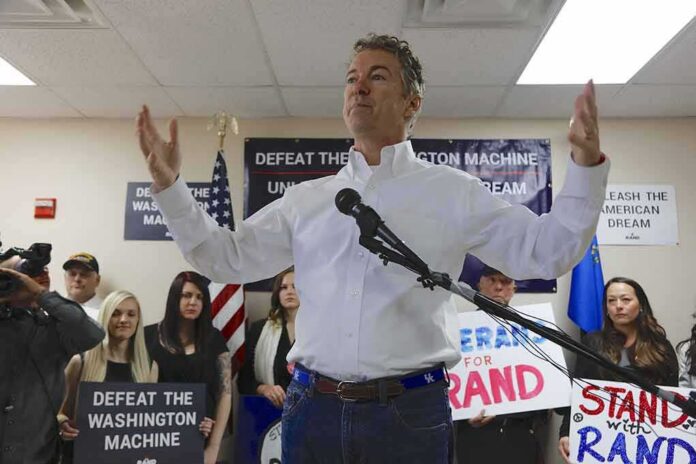
Senator Rand Paul published internal Customs and Border Protection records about a planned stop of virologist Peter Daszak on February 5, 2021, at John F. Kennedy International Airport. The National Targeting Center had prepared questions about his work with the Wuhan Institute of Virology and the handling of biological samples. Three days before the flight, an email logged the instruction: “FBI New York requested we do not stop the subject below.” The stop was canceled, according to the report.
The Customs and Border Protection targeting memo labeled Daszak a “high person of interest” based on years of collaboration with Wuhan researchers and his role on federal grants. The files included itinerary details and proposed lines of questioning on sample transport and funding chains. The intervention by the Federal Bureau of Investigation (FBI) redirected a normal border screening tool that often checks devices and documents under the border search exception to the Fourth Amendment, which allows warrantless searches at entry points.
The Players, The Timeline, And The Paper Trail
Peter Daszak, then president of EcoHealth Alliance, worked with Chinese labs for over a decade and advised early probes into COVID-19’s origin. House investigators later said his sworn testimony downplayed the depth of his Wuhan Institute ties. Their summary used terms like “repeatedly misled” to describe his statements, a claim that tracks with other findings about reporting lapses, though some lawmakers said they found no proof U.S. money created the virus.
The Biden administration in May 2024 paused active National Institutes of Health grants to EcoHealth Alliance, citing oversight and risk concerns. Health officials later moved to suspend and, according to several reports, bar related funding streams tied to Daszak. The sequence shows a tightening posture by health agencies after years of warnings over safety and disclosure, even as the exact origin of the pandemic remains disputed.
Border Power, FBI Leverage, And The Gray Zone With Scientists
The Department of Homeland Security and Customs and Border Protection use expansive border search powers to inspect luggage and digital devices without a warrant. Courts have recognized this authority while also pushing for reasonableness with electronics. The FBI often coordinates with border personnel, both to flag people for extra screening and, at times, to steer clear when the bureau has its own aims. Civil liberties groups have documented cases where this border leverage finds dual use for intelligence tasks.
BREAKING: Sen. Rand Paul says newly released internal federal documents show the FBI asked Customs and Border Protection not to stop, search, or question EcoHealth Alliance President Peter Daszak when he returned from China through JFK Airport in 2021 during the WHO’s COVID-19. pic.twitter.com/bnTkn4NrGc
— Erick Trump (fan_page) (@erick_fan_page) July 21, 2026
Paul’s disclosure fits that pattern: a routine secondary inspection tool was poised to ask pointed questions about research, money, and samples, and the FBI told Customs and Border Protection to stand down. The bureau has not publicly explained the request. A charitable read is that agents wanted to protect a parallel inquiry. A harsher read is that they blocked frontline accountability that Americans expect when public funds and sensitive research intersect.
Accountability, Transparency, And The Public Interest
Congressional pressure has pushed agencies to reopen old files, call new witnesses, and reassess grant oversight. Lawmakers have cited the need for full transparency on foreign lab partners, data access, and sample custody. That demand dovetails with conservative priorities: secure borders, independent checks on federal power, and respect for whistleblowers who surface inconvenient facts. The Customs and Border Protection email may be brief, but it exposes a bigger oversight gap that invites abuse if left unchecked.
Clear rules solve two problems at once. First, agents at ports need bright lines on when to proceed or pause, with a record that senior leaders must sign. Second, the FBI should log and later justify any request that halts a lawful inspection. Sunlight protects fair science and national security. The public paid for much of this work and deserves straight answers about samples, data, and who calls the shots when the stakes are high.
What Comes Next
Expect more subpoenas and more records. House and Senate investigators will likely compare the Customs and Border Protection plan, the FBI email, and EcoHealth Alliance grant files to map who knew what, and when. Health agencies will face questions about why funding continued as concerns rose. The key test is simple: can the government prove that border tools, research grants, and investigative powers serve the public first, not institutional convenience or reputational cover?
Sources:
foxnews.com, oversight.house.gov, nytimes.com, congress.gov, aclu.org, wilmerhale.com