A rare Republican break with Trump’s immigration inner circle is now forcing a blunt question: did the push for “maximum enforcement” get so chaotic that it started damaging the very border legacy it was meant to cement?
Quick Take
- Sen. Thom Tillis (R-NC) publicly urged President Trump to remove White House Deputy Chief of Staff Stephen Miller after criticizing the administration’s handling of immigration enforcement.
- Tillis tied his criticism to two U.S. citizens shot by immigration agents in Minneapolis during “Operation Metro Surge,” arguing the response and messaging were careless.
- Kristi Noem was fired as DHS secretary days before Tillis’s Sunday show appearances; Tillis said leadership “amateurs” were hurting Trump’s border reputation.
- Operation Metro Surge was announced as winding down, while DHS prepared for a leadership transition with Sen. Markwayne Mullin positioned as the incoming secretary.
Tillis escalates to Miller after Minneapolis shootings
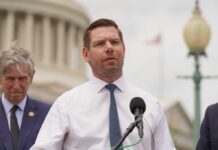
Sen. Thom Tillis used national TV interviews on Feb. 15, 2026—on CBS’s Face the Nation and CNN’s State of the Union—to demand that Stephen Miller be pushed out of his current role shaping immigration enforcement. Tillis framed the dispute around the Minneapolis incidents in which two U.S. citizens, Renee Good and Alex Pretti, were shot by immigration agents during Operation Metro Surge targeting undocumented immigrants.
Tillis argued that the administration’s public messaging after the shootings compounded the damage. Reporting on the dispute highlighted accusations that officials labeled the victims “terrorists” or promoted a claim that Pretti “brandished” a firearm—an assertion described as false in coverage noting he was legally carrying the gun in a holster. Tillis’s critique focused less on the premise of enforcement and more on competence, accuracy, and discipline under pressure.
Noem’s firing and a leadership vacuum inside DHS
Kristi Noem was fired as DHS secretary on the Thursday before the Feb. 15 interviews, after a stretch of heavy political heat that included a contentious Senate Judiciary appearance earlier that week. Coverage described Tillis delivering a lengthy on-camera rebuke and calling Noem incompetent, then expanding the target to Miller as the person with “outsized influence” driving decisions and public lines. The White House did not publicly announce a response from Trump in the material provided.
Operation Metro Surge was also nearing its endpoint, with border czar Tom Homan stating the operation would conclude the following week. That timing matters because it suggests an enforcement tempo that was already shifting even as the political fallout was rising. The immediate reality is that DHS faced a transition moment—an unsettled chain of command, a fresh controversy involving citizen deaths, and a spotlight on whether aggressive targets and fast expansion compromised training and operational control.
Why conservatives should care: enforcement strength requires competence
For a conservative audience that wants secure borders, the central tension in this story is straightforward: robust enforcement only holds public support if the government is competent, truthful, and accountable when things go wrong. It points to internal warnings that aggressive arrest targets pressured agencies to scale quickly, including reports that training was cut amid stepped-up operations. When enforcement becomes sloppy, it creates the very opening critics use to attack lawful border control as illegitimate.
Tillis’s comments also show an unusual intra-party accountability dynamic: a Republican senator arguing that mismanagement can erode a political advantage Republicans historically held on immigration. Polling referenced in the reporting said Trump’s approval on immigration had slipped, running about 10 points underwater in an NBC poll around Feb. 15, 2026. Whether or not one agrees with Tillis’s approach, his argument rests on practical politics: chaos and inaccurate claims can turn strength into liability.
Mullin’s expected role and the next test for Trump’s team
Tillis contrasted Miller’s role with his expectations for incoming DHS Secretary Markwayne Mullin, describing him as more data-driven and more willing to operate independently. That contrast matters because the dispute is not just about personality; it is about who sets the rules of the road—Cabinet leadership accountable to Congress, or West Wing staff perceived as driving policy from the center. It does not confirm Mullin’s confirmation status, only that he was positioned as the next secretary.
After Melting Down Over Noem, Thom Tillis Is Now Demanding Trump Fire Stephen Miller
https://t.co/Vw3BSMzjuv— Townhall Updates (@TownhallUpdates) March 9, 2026
The unresolved issue is what President Trump decides to do with Miller, and whether DHS will implement tighter controls that prevent another Minneapolis-type crisis. The provided sources do not document any presidential decision after Tillis’s demand, and they do not include a full official accounting of the shootings beyond the reported dispute over the public narrative. What is clear is the political risk: border enforcement can be both necessary and constitutionally bounded, but it collapses into scandal when leadership appears reckless with facts.