Southern California’s transit agencies are celebrating a rare victory as skyrocketing gas prices force commuters onto trains and buses, yet the triumph masks a troubling reality: service cuts loom even as ridership finally rebounds.
At a Glance
- LA Metro ridership jumped 8.6% in March 2026 compared to March 2024, with Metrolink recording a 4% surge as gas prices exceeded $6.20 per gallon.
- The Iran war disrupted Middle East oil supplies, driving a 30% year-to-date price increase that made driving “cost prohibitive” for Southern California commuters.
- Despite the ridership gains, transit agencies face chronic underfunding and budget deficits exceeding $2 billion, threatening announced service cuts for summer 2026.
- Experts warn the surge may prove temporary unless prices remain elevated above $6 per gallon, and note that lower-income residents are most vulnerable to service reductions.
- The contradiction reveals how government mismanagement and geopolitical chaos force ordinary Americans to choose between unaffordable driving and potentially disappearing transit options.
Gas Crisis Drives Commuters to Rails
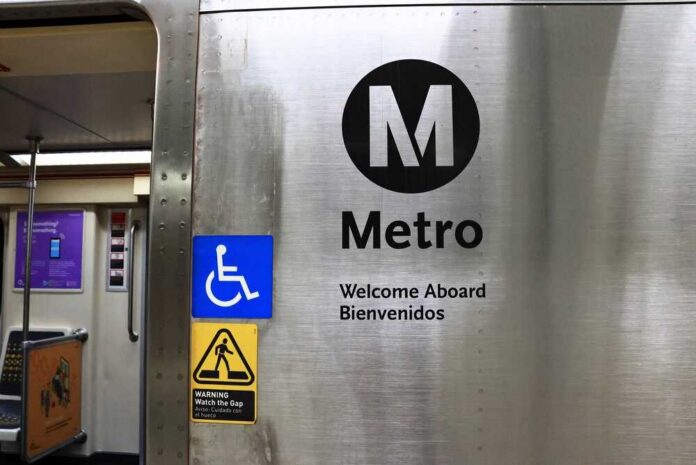
Los Angeles Metro reported an 8.6% increase in weekday ridership during March 2026 compared to the same month in 2024, signaling a meaningful shift in commuter behavior. Metrolink, the region’s commuter rail system, recorded a 4% ridership jump as fuel costs climbed past $6.20 per gallon. The Bay Area’s BART system saw even steeper gains, with ridership reaching 5.4 million in March 2026, up from 4.5 million in March 2025. These numbers reflect an immediate response from cost-conscious drivers facing distances of 20 to 50 miles in sprawling Southern California.
Metrolink Director Meredith Yeoman confirmed the surge was “almost immediate” as fuel prices spiked, with commuters describing the cost of driving as “prohibitive.” The timing aligns precisely with geopolitical disruptions: the Iran war tightened Middle East oil supplies by an estimated 5-10%, pushing Los Angeles average gas prices from $4.67 in February to $5.93 in March 2026—a 30% year-to-date increase that made transit economically rational for millions of Southern Californians accustomed to car dependency.
The Underfunding Trap: Gains Meet Cuts
The ridership surge offers agencies a crucial funding justification at a moment when they desperately need it. LA County Metropolitan Transportation Authority and Metrolink have long struggled with chronic underfunding, facing deficits exceeding $2 billion. The March numbers provided welcome evidence that investment in transit yields results. Yet this victory arrives amid announced service cuts scheduled for summer 2026, creating a perverse contradiction: as more commuters finally embrace transit, the agencies preparing to reduce service capacity.
LA Metro’s average ridership of approximately 20 million monthly passengers remains significantly below pre-COVID peaks of 10 million-plus daily riders. The agency’s inability to restore service to historical levels despite the recent surge underscores a fundamental problem: government agencies responsible for public transportation lack the sustained funding necessary to meet demand. Commuters who shifted from cars to trains and buses now face the prospect of reduced schedules and longer wait times, potentially driving them back to expensive gasoline.
Who Bears the Cost of Government Failure
Experts including Ethan Elkind of UC Berkeley’s Center for Law, Energy and the Environment note that transportation habit shifts typically begin with lower-income individuals and families—those with the least financial cushion. These residents depend most heavily on reliable transit systems to access employment, healthcare, and education. Michael Manville, a transportation analyst, cautioned that even when people feel the financial pinch of high gas prices, they often reduce other spending rather than permanently changing travel behavior, suggesting the current surge may prove temporary unless prices remain elevated.
The contradiction reveals a pattern familiar to Americans across the political spectrum: government agencies fail to plan adequately during stable times, then respond to crises with service reductions that harm those least able to absorb the impact. Whether commuters blame federal energy policy, state mismanagement, or geopolitical instability, the result is identical—ordinary working people forced to navigate an increasingly unreliable system.
Subway ridership surges as gas prices cripple SoCal but service cuts are coming https://t.co/ML3NGj3IbU pic.twitter.com/gejDgqK0zu
— California Post (@californiapost) May 11, 2026
A Temporary Fix, Not a Solution
The ridership surge, while genuine, may offer only temporary relief. Historical precedent suggests that transit gains tied to fuel price spikes frequently reverse when prices normalize. The 2022 Ukraine war drove prices to $6.40 per gallon and yielded 5-10% transit gains that largely disappeared as supply stabilized. Bus ridership in both Los Angeles and San Francisco showed only modest increases or remained flat compared to rail systems, indicating that the shift may reflect desperation rather than a fundamental change in commuting preferences for the region’s car-dependent population.
If the Iran conflict resolves or oil supplies normalize, prices could fall back toward $4-5 per gallon within months, eroding the financial incentive that currently motivates transit use. Commuters who reluctantly switched to overcrowded trains and buses may return to personal vehicles if affordability permits. Meanwhile, the service cuts already in planning stages suggest that transit agencies will have squandered this window of opportunity to build sustainable ridership and infrastructure improvements.
Sources:
Metrolink sees surge in ridership as soaring gas prices push SoCal commuters to public transit
California’s rail systems need more riders. High gas prices could be fueling new surge