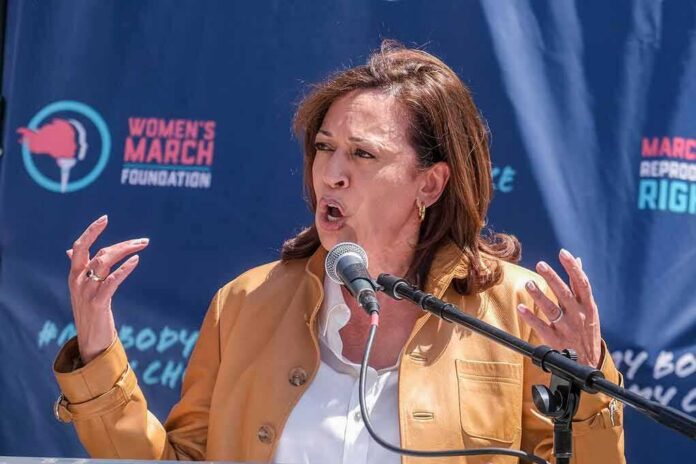
A top Democratic mega-donor says Kamala Harris should sit out 2028 and that Democrats must move on from the Biden era.
Story Highlights
- Florida donor John Morgan urged Democrats to skip a Harris 2028 run and “move on” from Biden ties.
- Morgan warned Harris and Gavin Newsom would drain the same California donor pool.
- Harris has not decided on 2028 and says she is “thinking about it”.
- Polling shows Harris leads nationally but lags in early New Hampshire contests.
Major Democratic Donor Urges Party To Move Past Biden Era
John Morgan, a Florida trial lawyer and longtime Democratic fundraiser, publicly urged Democrats to seek “a fresh start” and not back Kamala Harris in 2028. Morgan told Vox he does not want Harris to run and argued that the party should put Biden-era baggage aside heading into the next cycle. His comments add on-the-record weight to a brewing donor debate about direction, message, and money after years of policy drift and weak results for working families.
Morgan’s push matters because big-dollar bundlers often set the pace for hiring, ads, and ground game. He said Harris and California Governor Gavin Newsom would chase the same West Coast checkbooks, slowing both of them and starving the field of oxygen. That concern hits the heart of modern primaries, where early media buzz and donor cash feed on each other. When funders hesitate, staff and momentum stall, and voters feel that weakness fast.
Harris Keeps 2028 Option Open As Donor Questions Grow
Kamala Harris has not made a final call on 2028. She has said she might run and that she is “thinking about it,” according to reporting this year. Additional coverage shows the door remains open and no formal decision date is set. That public stance keeps her in the news and in donor conversations. It also lets potential rivals, including Newsom, test messages, court funders, and line up endorsements while she weighs her next step.
For Republicans, the mixed signals tell a simple story: Democrats lack a clear leader after the Biden years. Harris’s brand carries the record of the last administration, which saw high prices and energy strain hit families hard. Donors appear to know this. Morgan’s call for a reset echoes broader fatigue with costly agendas and soft border policies. If Democrats cannot rally behind Harris now, they face a long, messy fight that exposes their splits to voters.
Polling Paints A Split Picture: National Lead, Early-State Trouble
Polling summaries show Harris generally near the top of national Democratic primary tests, yet weak in some early states. The University of Virginia Center for Politics reported she trails Gavin Newsom, Pete Buttigieg, and Alexandria Ocasio-Cortez in New Hampshire, with one June survey putting her at 4 percent among Democrats there. That gap threatens momentum, media coverage, and fundraising, even if national numbers look decent on paper.
National snapshots have also varied. One Emerson College survey listed Jon Ossoff at 17 percent, with Harris at 15.5 percent and Alexandria Ocasio-Cortez at 15.1 percent, while other averages placed Harris closer to 25 percent and first place. These swings reflect method and timing as much as strength. Still, donors read trends, not footnotes. Weak early-state signals can spook money and volunteers. Campaigns that start slow often burn cash trying to fix problems on the fly.
Donor Competition And The California Money Squeeze
Morgan warned that Harris and Newsom would “cannibalize” the same California donor base, limiting both campaigns before they hit key early contests. California money long fuels national Democratic efforts. If two favorites tap the same pool, others may gain room to grow with small donors or fresh messages. That split also delays the coalescing that often gives one contender fast staffing, media bandwidth, and a clean policy pitch to voters.
The broader pattern also cuts against Harris. Former vice presidents often run, but many do not win the presidency later. Since 1933, only a handful have reached the White House after their vice presidential service. That history suggests name recognition is not enough. Voters and donors still demand a clear plan on inflation, crime, the border, and energy costs. So far, the donor class appears unsure Harris can make that case without the drag of Biden-era policies.
Sources:
zerohedge.com, vox.com, detroitnews.com, apnews.com, callthemap.com, og.com, preseen.com