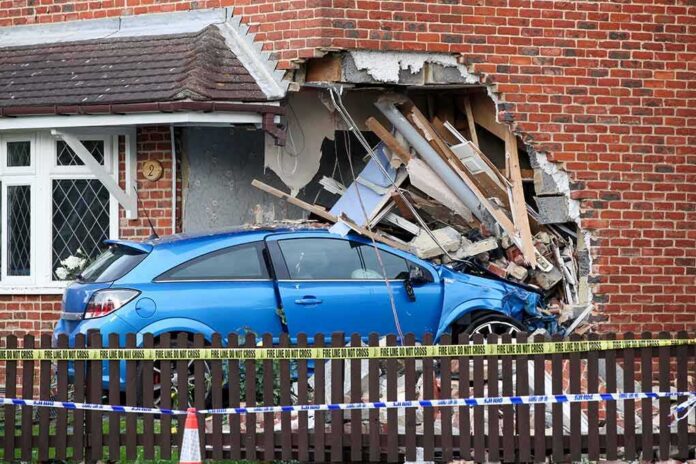
Tesla’s driver-assist claims are back under a harsh spotlight after a Model 3 tore into a Texas home and killed a grandmother.
Quick Take
- Authorities say Michael Butler told deputies the Tesla was operating with an automated driving assistance system engaged.[1][5]
- Investigators said the car left the roadway at a high rate of speed and struck Martha Avila inside the home.[1][5]
- The National Highway Traffic Safety Administration has opened a crash probe, while its broader Tesla Full Self-Driving review remains active.[1][3][15]
- The case again raises the same question conservatives keep asking: who is really responsible when tech promises more than it can deliver?
Crash Scene Raises Familiar Questions
Harris County investigators said the crash happened Friday night in Katy, Texas, when a Tesla Model 3 left a residential street and slammed into a brick home.[1][5] The impact killed 76-year-old Martha Avila, who was inside the house. The sheriff’s office said the driver, Michael Butler, was injured, showed no signs of intoxication, and cooperated with officers. Those facts matter because they narrow the case away from alcohol or obvious impairment.
The sheriff’s statement also said Butler was operating the vehicle with an automated driving assistance system.[1][5] That is the key line driving public attention. At the same time, investigators have not released event data recorder logs or other forensic proof that would confirm the system was active at impact. Until that data is public, the case remains serious but unresolved on the core technical question.
Federal Scrutiny Still Looms Over Tesla
The National Highway Traffic Safety Administration said it is investigating the Katy crash.[1] That probe lands while the agency’s broader review of Tesla Full Self-Driving remains under Engineering Analysis status and covers about 3.2 million vehicles.[15] Reports tied to that separate review say regulators are focused on reduced-visibility crashes, including incidents that led to injury and death.[13][14][15] The Houston-area wreck is not the same case, but it adds fresh pressure.
For years, federal regulators have warned that Tesla’s assisted-driving systems require constant human supervision.[14][18] Tesla’s own guidance says Autopilot and Full Self-Driving do not make the vehicle autonomous.[14] That warning should be simple. Yet Tesla chief Elon Musk has often sold the technology with far more confidence than the product can safely carry. That gap helps fuel confusion, especially in family neighborhoods where drivers may assume the car can do more than it truly can.
Why This Crash Hits a Nerve
Conservative readers know the pattern by now. Big tech sells a polished promise, then shifts blame to the user when things go wrong. If the driver is at fault, he should answer for it. But if Tesla’s system encouraged a false sense of security, the company deserves hard scrutiny too. Federal investigators already found that Autopilot design once failed to keep drivers engaged well enough, and Tesla later recalled more than 2 million vehicles over that issue.[18]
The NHTSA has opened a special crash investigation after a Tesla Model 3 drove into a home in Katy, Texas, killing 76-year-old Martha Avila. The driver, Michael Butler, told authorities he was using Tesla's Full Self-Driving (Supervised) system at the time of the crash. Elon Musk… pic.twitter.com/ZIB1GDcdc0
— Interesting Engineering (@IntEngineering) June 23, 2026
This crash also shows why facts must come before spin. Witness accounts in outside reports suggested high speed, while the sheriff’s office said the vehicle was moving at a high rate of speed when it hit the house.[1][5] That points to possible driver misuse, but it does not end the inquiry. The right answer is a full review of the vehicle data, the steering and braking inputs, and the system status at impact. Families deserve truth, not marketing.
Sources:
[1] Web – Video shows TESLA ‘Autopilot’ crash into home, killing grandmother…
[3] Web – Tesla allegedly in driver-assist mode crashes into Texas house …
[5] Web – Fatal Tesla Crash Into Texas Home Now Under Federal Safety …
[13] Web – FAMILY MOURNS LOSS OF WOMAN KILLED IN TESLA CRASH …
[14] Web – A 76-year-old woman has died after a Tesla, reportedly on autopilot …
[15] Web – Media + News – Harris County Sheriff’s Office
[18] Web – Tesla self-driving crash reports prompt NHTSA investigation