
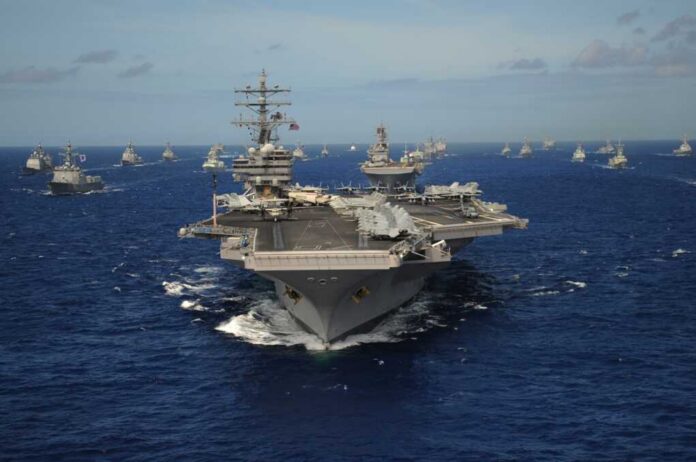
Tariffs meant to protect American steel are now helping slow the very warship buildup our Navy needs to face China, driving up costs and tying the hands of taxpayers and shipyards alike.
Story Snapshot
- Tariffs on steel and aluminum are raising shipbuilding costs and straining the Navy’s budget.
- Lawmakers warn these higher prices will slow destroyers, carriers, and submarines that America urgently needs.
- Studies show protecting steel makers comes at a real cost to the wider defense industry and to taxpayers.
- China’s huge shipbuilding base keeps growing while U.S. yards fight price spikes and supply chain headaches.
Tariffs Collide With Navy’s Shipbuilding Push
President Trump’s reinstated tariffs on steel and aluminum were sold as a way to rebuild U.S. industry and secure critical materials, but they hit just as the Navy is trying to grow from about 300 ships toward a fleet powerful enough to deter China. Heavy warships depend on massive amounts of steel plate and specialized alloys, and when those metal prices jump, the entire cost of a destroyer, carrier, or submarine rises with them. A peer-reviewed study on Trump-era tariffs found that protecting the domestic steel industry “adversely impacts the U.S. defense industry,” because there is almost full pass-through of higher import taxes into U.S. prices, meaning American buyers, including the Pentagon, carry most of the burden. In simple terms, tariffs act like a tax on key inputs, so every ton of steel the yard buys for a hull or deck costs more, and taxpayers must cover the difference instead of buying more ships.
Experts warn this is not a small effect tucked away in the margins of multi-billion-dollar programs; steel and aluminum can make up more than 30 percent of the total production cost of major defense systems like Navy ships and fighter jets. When a material that important spikes, that means fewer hulls for the same budget or stretched schedules while contracts are renegotiated and supply chains are reworked. Forecast analysis of the Virginia-class submarine program already shows it running about $17 billion over its initial budget by 2030, and higher metal prices can push those overruns even higher. That forces Congress and the administration to choose: either accept fewer submarines and surface combatants or pour in more borrowed money, deepening the deficit that conservatives already worry about after years of reckless spending and inflationary policies.
Lawmakers and Analysts Sound Cost and Delay Alarm
Democratic lawmakers who represent major shipyard states, including Virginia and Connecticut, have been blunt about the impact of tariffs on shipbuilding, and their warnings line up with independent economic research. Representative Bobby Scott of Virginia argued that “if you raise the tariffs on steel, steel would be more expensive and the products that use steel, automobiles, ships would be more expensive,” stressing that “it’s all Navy ships” and that taxpayers will simply pay more. Representative Joe Courtney told Congress that threatening tariffs on allies like Canada and Australia is “completely counterproductive to shipbuilding” because these measures raise contract costs and delay commercial work, putting shipyard jobs at risk. Analysts at defense outlets and think tanks back this up, explaining that tariffs on critical metals roil supply chains by driving more buyers toward U.S. mills that cannot fully meet demand, which tightens supply and pushes domestic prices up as well. As a result, shipyards face higher bids from their suppliers, and even when contracts include cost-escalation clauses, there can be months-long gaps where yards carry the extra expense, squeezing already thin margins.
Industry and policy studies give numbers that should concern anyone who cares about stewardship of taxpayer dollars and a strong military. The Tax Foundation estimates that earlier steel tariffs cost about $650,000 for every job created in that industry, a sign that the policy shifts a lot of money from downstream consumers, including the defense sector, into a narrow slice of producers. The PLOS One study on Trump tariffs reports that cost increases ripple through the broader defense industrial base because metals are a core input, not a minor line item, and shipbuilding is among the most metal-heavy businesses in the country. Another analysis notes that steel can account for up to 20 percent of a ship’s total cost, and when tariffs force U.S. yards to pay more than foreign competitors for that steel, American shipbuilding becomes less competitive and more expensive. This undercuts one of the administration’s goals: restoring American maritime dominance while staying fiscally responsible. For conservative readers who demand both a strong Navy and disciplined budgets, that trade-off deserves serious scrutiny.
Strategic Stakes: Competing With China While Protecting Taxpayers
These tariff-driven pressures land at a dangerous time for U.S. sea power. China now controls more than half of the world’s commercial shipbuilding and has fused its merchant and naval yards into a huge industrial base that churns out warships and cargo vessels at scale. American analysts warn that this gives Beijing a long-term advantage in both fleet size and industrial surge capacity, while the U.S. struggles with only a handful of large yards and a shrunken commercial sector. The White House and Trump administration argue that tariffs are needed to protect steel and shipbuilding from unfair foreign practices, including Chinese subsidies and dumping, and they are right to focus on rebuilding the industrial base that globalists allowed to hollow out. But every policy tool must be judged by results, and so far, evidence shows that sweeping import taxes raise input costs for our own Navy faster than they fix the structural problems in American manufacturing.
How Tariffs Are Slowing the US Navy’s Shipbuilding Surge
Trouble obtaining new and spare parts results in thousands of lost operational days for the US Navy. https://t.co/Ukc8jcNi8L via @TheNatlInterest
— Nino Brodin (@Orgetorix) July 16, 2026
Conservatives know that national security and economic strength go hand in hand, and they also know that big government “solutions” often create new problems. Here, the core concern is not the goal of defending domestic industry but the blunt method that punishes downstream defense production and taxpayers. Protectionist tariffs also risk alienating close allies like Canada and Australia, who supply key metals and are vital partners in submarine deals and Pacific security. Some senators have already pushed to lift tariffs on Canadian steel, citing shipbuilding costs, but broader metal tariffs remain in place, keeping pressure on Navy budgets. To truly rebuild U.S. shipbuilding in a way that respects the Constitution, protects property rights, and supports a strong defense, policymakers should look harder at targeted tools: cutting red tape, encouraging competition, opening energy production to lower power costs for mills, and using smart, transparent subsidies instead of hidden taxes that show up as higher prices for every destroyer, carrier, and submarine. That is the kind of common-sense, pro-freedom approach many conservative readers expect from Washington but rarely see.
Sources:
realcleardefense.com, maritime-executive.com, journals.plos.org, insidedefense.com, centerformaritimestrategy.org, naval-technology.com, taxfoundation.org, cato.org