Thirty people walked off a cruise ship healthy enough to travel, and only later learned they might be carrying one of the deadliest respiratory viruses most Americans have never heard of.
Quick Take
- Thirty passengers left the MV Hondius in Saint Helena on April 24 before hantavirus was confirmed onboard.
- Oceanwide Expeditions disclosed the early disembarkations as contact tracers raced to locate those travelers worldwide.
- The voyage has been linked to multiple deaths and several illnesses, with confirmed U.S. cases among those exposed.
- The ship reached Praia, Cape Verde, but authorities revoked permission for passengers to disembark, extending the quarantine standoff.
The Saint Helena exit that turned a contained outbreak into a global chase
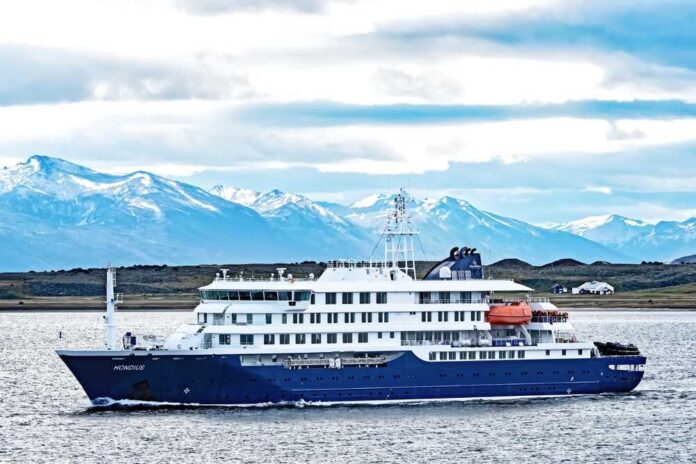
Oceanwide Expeditions’ central problem is timing. The MV Hondius left Ushuaia around April 1 carrying roughly 130 to 150 passengers on an expedition-style itinerary. Illnesses emerged during the voyage, but hantavirus was confirmed only after April 24, the day 30 passengers disembarked in Saint Helena. At least one of those 30 later died. That one logistical detail—people leaving before confirmation—forces a sprawling, country-by-country tracing effort.
Saint Helena is not a normal cruise stop where public health teams can quietly recheck passenger manifests and wave medical staff onto the pier. It is a remote British Overseas Territory in the South Atlantic, far from major hospitals and far from the bureaucratic machinery that can move quickly. That remoteness works like a multiplier: fewer local resources, slower lab confirmation, and more complicated follow-up once travelers scatter to multiple continents.
Hantavirus is not “cruise ship sick,” and that’s why officials took it personally
Most cruise headlines involve norovirus, a miserable but typically short-lived gastrointestinal infection. Hantavirus sits in a different category: a rodent-borne virus family associated with severe disease, including hantavirus pulmonary syndrome, and widely reported fatality rates that can approach 50% in some settings. That contrast matters because it shifts the public-health playbook from “sanitize and isolate” to “find every exposure window,” especially when symptoms can resemble routine flu early on.
Public statements tried to hold two ideas at once. Health authorities described the risk to the general public as extremely low, while still treating the situation as urgent for those who had close contact with infected travelers. That’s coherent, not contradictory. Conservative common sense says not every hazard justifies panic, but credible hazards still justify disciplined tracking. When severe illness and deaths appear in a closed environment, officials cannot guess who shared air, cabins, dining spaces, or medical facilities.
Praia, Cape Verde became the hard border where reputations meet sovereignty
By May 6 the ship reached Praia, Cape Verde, and the practical question became blunt: who controls the next step, the operator or the port state? Cape Verde officials revoked permission for disembarkation, leaving the ship in a kind of modern maritime limbo. Passengers and crew remained onboard, reportedly without symptoms at that moment, while the operator faced a triage of competing obligations—medical care, transparency, and a duty to avoid exporting risk into a host community.
This is where modern travel collides with older realities: nations still own their borders. After COVID-era battles over docking rights, governments have little appetite for being the port that “let it happen.” From a values perspective, it is hard to fault a government for prioritizing its own citizens when faced with uncertainty and limited local medical surge capacity. The operator can argue fairness for paying passengers, but the sovereign’s first job is containment.
What contact tracing really means when the “contacts” are tourists with passports
Contact tracing sounds tidy until you picture it on an expedition ship with dozens of nationalities, changing itineraries, and travelers who may fly home through multiple hubs. The 30 who left at Saint Helena became the critical thread because they exited before confirmation and then likely dispersed. Reports indicated six of those passengers are U.S. citizens, with confirmed cases among Americans, pulling the CDC into a coordination role that requires speed and precision rather than drama.
The slow-burning risk is not that hantavirus suddenly becomes a cruise-borne pandemic; the available reporting stresses low broader public risk. The risk is narrower and more personal: a missed call, a wrong email address, an incomplete passenger record, or a traveler who assumes they merely caught a cold. When a disease can turn severe, early notification matters. That’s why disclosure timing by an operator is not a public-relations footnote—it is the start line for every downstream decision.
The policy lesson: remote itineraries demand stricter basics, not bigger headlines
Expedition cruising sells the romance of distance: Antarctica routes, exotic ports, and a sense of controlled risk. The Hondius situation shows the unromantic part—distance also stretches medical response and complicates evacuation. Reports described airlifts for symptomatic cases and involvement by international health actors. Those are expensive, rare measures, and they underline the need for prevention that sounds boring: rigorous rodent control, careful onboard sanitation, transparent reporting chains, and contingency planning before the first cough.
BREAKING – 30 passengers left hantavirus ship in Saint Helena: cruise operatorhttps://t.co/iqRCgRgiMD
— Insider Paper (@TheInsiderPaper) May 7, 2026
Oceanwide Expeditions now has to prove competence in two arenas that older readers will appreciate: operations and trust. Operators earn forgiveness when they speak plainly, move quickly, and cooperate with authorities; they lose it when disclosures feel late or reactive. Governments, for their part, should resist performative overreach and focus on targeted monitoring of actual exposures. The adults-in-the-room approach is the same one families use at home: identify who is at risk, tell them the truth, and act fast.
Sources:
Officials rushing to trace passengers who left cruise ship before virus detected
30 passengers left hantavirus ship in Saint Helena: cruise operator