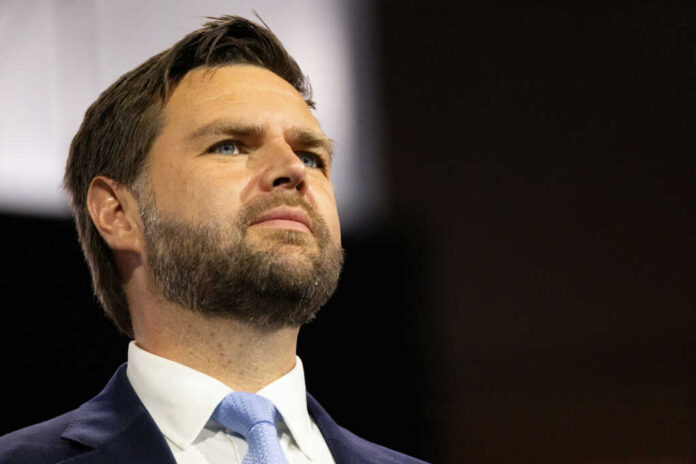
A new Iran deal that ends a shooting war and opens the oil lanes could still blow up J.D. Vance’s future if it looks like America went soft on a terror regime.
Story Snapshot
- The 14-point U.S.–Iran memorandum ends active fighting and reopens the Strait of Hormuz for 60 days of talks.
- Vice President J.D. Vance is the public face of the deal, even more than President Trump, tying his 2028 hopes to its success.
- The agreement front-loads ceasefire and oil waivers while many nuclear and enforcement details are left to later “technical” talks.
- Critics on the right say Vance is being set up as the fall guy if Iran cheats or Israel feels betrayed.
What This Iran Deal Really Does – And Why Vance Is Out Front
The new U.S.–Iran memorandum of understanding is a short, 14-point framework that stops the war now and pushes the hardest fights about nukes and terror backing into a 60-day negotiation window.[3] It declares an “immediate and permanent” end to military action on all fronts, including Lebanon, and orders the U.S. to start lifting its naval blockade and reopen the Strait of Hormuz for commercial traffic.[3][18] That means tankers move, global energy prices ease, and voters at home feel relief at the gas pump fast.
In return, Iran promises once again never to build a nuclear weapon and to allow talks on what happens to its enriched uranium stockpile—what negotiators call “the dust.”[3][2] The deal sets up a $300 billion reconstruction and economic development fund for Iran, funded mainly by freeing Iranian assets and money from Gulf partners, not U.S. taxpayer cash.[18] Sanctions are supposed to be lifted on a schedule only after a final agreement, but interim waivers allow Iran to sell oil during the 60-day window.[6][13]
Why Conservatives Are Nervous About Front-Loaded Gifts and Fuzzy Enforcement
For many patriots, the red flag is timing: Iran gets a ceasefire, reopened sea lanes, and oil waivers right away, while the “real” nuclear and terror rules are postponed to later technical talks.[6][21] The full text leaves key enforcement questions open, like how deep inspectors from the International Atomic Energy Agency can go, what happens if Iran hides enriched uranium, and how fast sanctions “snap back” if Tehran cheats.[3][20] Analysts warn this looks less like a final peace and more like a fragile pause where the enemy still has room to stall and maneuver.[20]
Vice President Vance insists the structure is “performance-based”—Iran only enjoys lasting economic benefits if it changes behavior, opens its program, and gives up the enriched stockpile.[11][12] He has said clearly that the plan is to work with the International Atomic Energy Agency to “get rid of the highly enriched uranium stockpile” and that Iran’s current nuclear capabilities have been destroyed by U.S. strikes during the war.[11] But outside experts point out that until a detailed inspection and dismantlement plan is signed and verified, those promises remain political talking points, not binding triggers backed by clear penalties.[20]
How the Deal Could Make – or Break – J.D. Vance
Politically, this deal is as much about J.D. Vance as it is about Iran. Trump is the president and gets the world-stage signing moment in France, but Vance led the talks and is now the main salesman on television and radio.[10][13] Some conservative commentators note that Trump’s style has always been to keep room to walk away from a bad deal—and to let others carry the blame if it goes sour. That has led some on the right to warn that Vance is being set up as the “fall guy” if Iran cheats or Israel feels sold out.[8]
President Trump signed a 14-point memorandum of understanding (MoU) to end the war between the U. S., Israel and Iran at the Palace of Versailles in France during the G7 summit. pic.twitter.com/PGN8XlMptb
— 𝗸ᴀꪜᴇʀίᒿ.𝟬 (@kaveri717) June 18, 2026
The risk for Vance is clear. If the ceasefire holds, the Strait stays open, Iran’s nuclear work is truly dismantled, and terror funding is cut, he can argue he delivered peace through strength and lower energy costs without a “forever war.”[7][18] That could supercharge his standing as the frontrunner for 2028. But if Iran uses the 60 days to regroup, rearm proxies like Hezbollah, and pocket oil money while dragging out nuclear talks, the same Republicans now biting their tongues will say Vance pushed a soft deal that weakened U.S. leverage and endangered Israel.[5][16]
What Grassroots Conservatives Should Watch in the Next 60 Days
For constitutional conservatives and America First voters, the question is not whether we want the war to end. Most are tired of endless foreign conflicts that drain our troops and our wallets. The question is whether this framework keeps America safe and strong—or trades real leverage for short-term calm. The text promises that sanctions will be fully lifted only as part of a later final deal, and that the United States keeps its tools if Iran fails to comply.[3][4] That sounds tough, but only strict enforcement will prove it.
In the coming weeks, watch three markers. First, whether Iran truly opens the Strait of Hormuz to all flags without games, fees, or harassment.[21][25] Second, whether inspectors get broad access to sites where enriched uranium might be hidden. Third, whether the White House resists pressure to rush into full sanctions relief before verifiable steps are taken. If those lines hold, Vance can argue this is a hard-nosed deal that protects American strength. If they slip, the Iran deal will not just haunt this administration—it could indeed destroy J.D. Vance’s future on the right.
Sources:
[2] Web – The 14-point US-Iran peace plan, annotated | CNN Politics
[3] Web – Key takeaways from the 14-point memorandum of understanding …
[4] Web – US-Iran memorandum of understanding in full – BBC
[5] Web – Read the Full Text of the 14-Point Agreement Between the U.S. and …
[6] Web – Read the 14-Point Draft Memorandum Between the US and Iran
[7] Web – US releases official agreement with Iran. Read the 14-point text | CNN
[8] Web – What the Trump-Iran agreement says about Lebanon, Hormuz and …
[10] Web – Read the 14-Point Draft Memorandum Between the US and Iran
[11] Web – Vance says U.S. and Iran are “very close” to a deal
[12] Web – US-Iran deal requires Tehran to end support for terrorism and regional …
[13] Web – VP JD Vance says Iran gets nothing from MoU without altered behavior
[16] Web – ‘If it doesn’t work out, I’m blaming JD’: Vance’s risky gambit on Iran …
[18] YouTube – Vance Asked To Confirm Reports Of ‘Memorandum Of Understanding’ …
[20] Web – What America Has Lost in the War With Iran
[21] Web – The Fragile U.S.-Iran Ceasefire: Issues to Watch – CSIS
[25] Web – A History of US-Iranian Relations – Middle East Studies Center