A second massive oil slick near Iran’s critical export hub threatens a catastrophic environmental disaster in the world’s most vital oil corridor while Tehran deflects blame onto foreign vessels.
Story Snapshot
- Windward AI detected a second suspected oil slick spanning 12-20 square kilometers near Iran’s Kharg Island on May 11, 2026
- The initial spill covers 65 square kilometers and carries tens of thousands of barrels toward Saudi Arabia, Qatar, and UAE waters
- Iran denies infrastructure failures despite expert warnings of sanctions-induced decay and ongoing regional conflict
- The Strait of Hormuz handles 20-30% of global oil transit, with spills threatening desalination plants and marine ecosystems
Second Slick Compounds Crisis at Critical Chokepoint
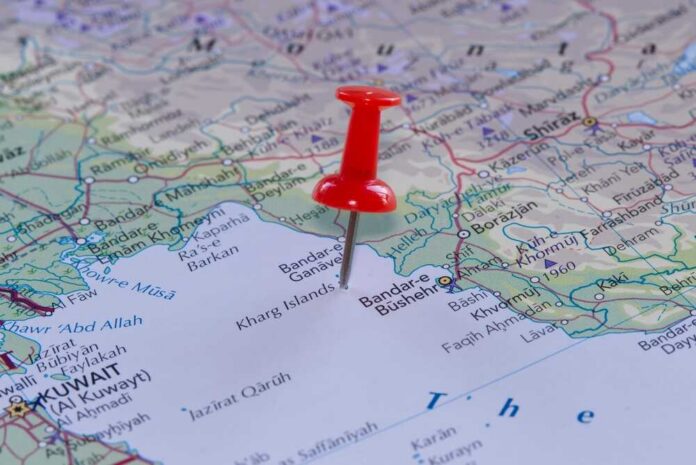
Maritime intelligence firm Windward AI confirmed detection of a second suspected oil slick near Iran’s Kharg Island on May 11, 2026, at 11 a.m. local time. The new slick measures between 12 and 20 square kilometers, adding urgency to an already dire situation in the Persian Gulf. Kharg Island serves as Iran’s primary oil export terminal, handling approximately 90 percent of the nation’s crude oil shipments through the narrow Strait of Hormuz, a 21-mile-wide chokepoint that facilitates 20 to 30 percent of the world’s oil supply.
Infrastructure Decay Threatens Regional Catastrophe
The initial oil slick, first detected between May 6 and May 8 through European Copernicus Sentinel satellites, spans approximately 65 square kilometers according to the United Nations University Institute for Water, Environment and Health. Dr. Kaveh Madani, affiliated with the UN institute, warned that a major accident appears likely due to deteriorating infrastructure caused by international sanctions and ongoing conflict conditions. The initial spill contains crude oil estimated at tens of thousands of barrels and is drifting southwest toward neighboring nations’ waters. Independent experts analyzing satellite imagery confirmed the spill appears visually consistent with crude oil rather than typical ship discharge.
Iran Blames Foreign Vessels Amid Expert Skepticism
Iranian officials categorically rejected responsibility for the oil slicks despite mounting evidence pointing to infrastructure failure at or near Kharg Island facilities. The CEO of Iran’s Oil Terminals Company stated no leaks originated from their facilities or tankers. Iranian lawmaker Jafar Pourkabgani blamed “oil residue from European tankers,” while other officials suggested enemy psychological operations. Windward AI analysts countered these claims, determining the spills unlikely originated from ships but rather from pipeline systems or ship-to-ship transfer operations near the aging export terminal. This pattern of denial raises serious concerns about transparency and accountability.
Regional Impact Timeline Accelerates Threat Level
The oil slick’s trajectory poses imminent threats to neighboring Gulf states. Experts project the spill will reach Qatar’s exclusive economic zone within four days and could make landfall near UAE’s Al Mirfa in approximately 13 days. These nations rely heavily on desalination plants for freshwater, making oil contamination potentially devastating for millions of residents. The Persian Gulf’s slow water circulation exacerbates the situation, as pollutants persist far longer than in open ocean environments. Saudi Arabia, Qatar, and the UAE face risks to fisheries, tourism, and critical infrastructure if containment efforts fail or are delayed.
Second suspected oil slick near Iran raises fears of major disaster in vital global oil corridor https://t.co/Ifq6WkupML pic.twitter.com/mhmZMdTEbg
— World News (@Worldnews_Media) May 11, 2026
The convergence of war, sanctions, and infrastructure neglect exposes how government mismanagement endangers both regional stability and global energy security. American families already struggling with inflation cannot afford oil price spikes triggered by disasters that proper maintenance could have prevented. The situation underscores fundamental failures when authoritarian regimes prioritize blame-shifting over basic operational integrity, leaving ordinary citizens worldwide to bear the consequences through environmental damage and economic disruption at the gas pump.
Sources:
Oil spill detected near Iran’s Kharg Island export hub – The Jerusalem Post
Massive oil slick spotted near Iran’s Kharg Island – Middle East Monitor