The U.S. Air Force has issued an urgent call for industry solutions to defend military convoys hauling nuclear warheads, missiles, and ammunition on American highways against a growing drone threat from terrorists, cartels, and hostile actors exploiting our open society.
Story Snapshot
- Air Force seeks counter-drone systems to protect convoys moving up to 70 mph on public highways transporting sensitive military cargo
- Threats include surveillance and attacks by terrorists, Mexican drug cartels, criminals, and potentially Hezbollah cells operating in the U.S.
- Existing battlefield drone defenses fail in suburban settings due to collateral damage risks, leaving highways vulnerable
- Recent unauthorized drone incursions over Barksdale Air Force Base exposed critical homeland security gaps
Military Convoys Face Unprecedented Vulnerability
The Air Force has published a Small Business Innovation Research solicitation acknowledging a stark reality: America’s highways have become potential combat zones. Military convoys routinely transport missiles, nuclear warheads, tanks, and ammunition on public roads like I-95, exposed to improvised drone attacks that existing defenses cannot counter. The solicitation specifically requests systems capable of protecting convoys traveling at highway speeds up to 70 mph while minimizing risks to civilian bystanders in urban and suburban environments.
Open Society Creates Cover for Hostile Actors
The Air Force explicitly cites America’s freedoms as enabling the threat. Legal civilian drone flights by hobbyists, activists, and enthusiasts provide operational cover for hostile actors to conduct surveillance or launch attacks with anonymity. This asymmetric advantage allows terrorists, Mexican cartel operatives, and criminal networks to blend into legitimate airspace activity. The solicitation warns that adversaries exploit the “open nature” of American society, where traditional battlefield solutions like kinetic intercepts risk turning suburban highways into “free-fire zones” with catastrophic collateral damage.
Cartels and Terrorists Exploit Cheap Technology
Commercial drones have proliferated globally, enabling non-state actors to conduct operations once requiring sophisticated military equipment. Mexican drug cartels already use drones for surveillance, smuggling contraband into prisons, and scouting robbery targets. Hezbollah has deployed small drones in attacks against Israel, and the Air Force’s solicitation raises concerns about potential Hezbollah cells operating within U.S. borders. Criminals can purchase capable drones for minimal cost, weaponizing them with explosives or using them to gather intelligence for ground-based hijackings of military cargo.
Recent Base Incursions Expose Defense Gaps
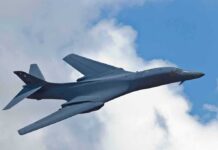
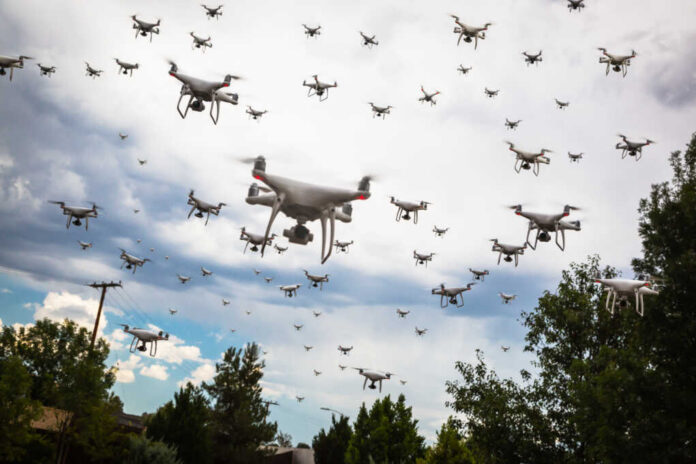
Between March 9-15, Barksdale Air Force Base in Louisiana—home to nuclear command operations and B-52 bombers—experienced multiple unauthorized drone incursions with 12-15 drones per wave over sensitive areas. Base officials confirmed the incidents as significant threats to security and safety, triggering federal criminal investigations. These swarms demonstrated the numerous vulnerabilities in U.S. homeland air defense systems designed for traditional threats, not cheap commercial drones. While Barksdale involved stationary defenses, highway convoys lack even those protections, traveling exposed through civilian areas where detection is complicated by urban clutter.
Layered Defenses Required for Civilian Areas
The Air Force describes the challenge as “very challenging,” seeking layered counter-unmanned aerial systems that prioritize non-kinetic measures like jamming before resorting to kinetic intercepts. This approach aims to neutralize drone threats without shooting projectiles near cars, homes, and businesses lining America’s highways. The solicitation admits no perfect defense exists without accepting risks that could transform public roads into combat zones, highlighting the tension between securing military operations and preserving civilian safety in a free society where constitutional protections limit surveillance and enforcement options.
Government Fails Homeland Security Mission
This situation exposes how federal agencies designed defenses for distant battlefields while neglecting threats evolving at home. Taxpayers fund massive military budgets yet convoys carrying our most dangerous weapons roll unprotected past schools and shopping centers. The Air Force Judge Advocate General acknowledges unmanned aerial systems create an “evolving spider web” of low-cost, maneuverable threats. Rather than proactive strategy, the government reacts with research solicitations after vulnerabilities become obvious. This reactive posture raises questions about whether officials prioritize genuine security or simply checking bureaucratic boxes while hoping bad actors don’t exploit gaps everyone can see.
Sources:
Why the U.S. Air Force Fears Drone Attacks On America’s Highways
Drone Warfare has Come to the United States
Drone Sighting Near Air Force One Triggers Temporary Ground Stop