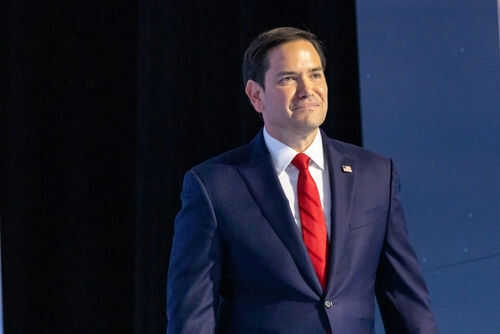
President Trump just endorsed a Cuban-American Secretary of State as the island nation’s next leader, and the world is watching to see if regime change rhetoric transforms into policy action.
Story Snapshot
- Trump reposted a suggestion naming Marco Rubio as Cuba’s future president, adding “Sounds good to me” on Truth Social
- The endorsement follows the US seizure of Venezuelan leader Nicolás Maduro, cutting Cuba’s vital oil lifeline
- Secretary Rubio reportedly blocks diplomatic talks to force regime change while Cuba faces blackouts and rationing
- Supreme Court cases targeting seized American properties signal coordinated legal and political pressure on Havana
- Cuban officials desperately seek dialogue without preconditions as economic collapse accelerates
A Social Media Post That Echoed Through Havana
On January 8, 2026, an obscure conservative X user named Cliff Smith posted a simple message with a laughing emoji: “Marco Rubio will be president of Cuba.” Days later, Trump amplified the post on Truth Social with his trademark brevity. The Cuban Foreign Ministry responded swiftly, denouncing the United States as a “criminal hegemon.” What seemed like casual social media banter revealed a hardening American stance toward the Castro regime’s successor government at its most vulnerable moment in decades.
The Maduro Operation Changed Everything
The calculus shifted dramatically on January 3, 2026, when US forces seized Nicolás Maduro in Caracas, killing Venezuelan and Cuban security personnel in the operation. Cuba had relied on Venezuelan oil for survival through its post-COVID economic crisis. That lifeline vanished overnight. Blackouts now plague Cuban cities. Schools close intermittently. Public transportation operates on skeleton schedules. Trump’s January 29 executive order threatening tariffs on any nation supplying oil to Cuba tightened the noose further, prompting Trump to declare “Cuba is ready to fall.”
Rubio’s Heritage Becomes His Political Weapon
Marco Rubio carries the exile community’s decades-long grievance against the regime that seized his family’s homeland. As Secretary of State, he wields unprecedented power over US-Cuba relations. Five anonymous Cuban and American officials told Drop Site News that Rubio deliberately blocks bilateral talks to paint Havana as intransigent, laying the groundwork for regime change justification. Cuban Deputy Foreign Minister Carlos Fernandez de Cossio confirmed on CNN that despite public Cuban overtures, no dialogue exists. Trump claims otherwise, but multiple sources confirm the State Department gates remain locked.
The Legal Assault Runs Parallel to Political Pressure
The Supreme Court currently weighs cases brought by Exxon and Havana Docks Corporation seeking compensation for properties nationalized after the 1959 revolution. The Helms-Burton Act’s Title III provisions, dormant for decades until Trump activated them in his first term, enable Americans to sue foreign companies using confiscated properties. The Solicitor General backs stripping Cuba of sovereign immunity. Legal analyst Robert Muse calls the Court’s extraordinary focus on these cases a signal of imperial retribution aligning perfectly with Rubio’s hardline vision. Miami exile donors funding Rubio’s political career filed supporting briefs urging maximum enforcement.
Cuba Signals Desperation Through Every Available Channel
On February 1, Cuban Foreign Minister Bruno Rodriguez issued a statement offering “respectful dialogue” on migration, narcotics, and public health cooperation. The Cuban UN representative proposed collaboration on autism research and other humanitarian issues. President Miguel Díaz-Canel emphasized openness to discussions on all topics except sovereignty. These overtures reflect genuine panic. Stratfor’s February 10 analysis predicts Cuba will make economic concessions for regime survival, accepting American terms to prevent total collapse while maintaining political control. The alternative means refugee waves flooding Florida and a catastrophic humanitarian crisis ninety miles from American shores.
The Territorial Governor Fantasy Reveals Real Ambitions
The suggestion of Rubio as Cuba’s president or territorial governor sounds absurd until you examine the coordinated pressure campaign. Trump trademarked “Trump Havana” years ago, signaling business interests beyond ideology. Rubio’s Miami backers, including figures like Garcia-Bengochea, envision a democratic transition with themselves positioned for influence. American corporations eye asset recovery worth billions. The rhetoric may sound like casual social media provocation, but the policy infrastructure supports regime change objectives. Rubio blocks dialogue, not from incompetence, but from a calculated strategy to eliminate alternatives to collapse.
When Hardliners Control the State Department
The tension between Trump’s transactional instincts and Rubio’s ideological commitment creates policy uncertainty. Trump has historically shown a willingness to cut deals with adversaries when personal or political benefit appears. Rubio views any accommodation with Havana as a betrayal of his heritage and Miami constituency. This fundamental disagreement over whether to negotiate or strangle Cuba economically may define Western Hemisphere policy for years. Meanwhile, ordinary Cubans endure energy poverty and economic desperation while Washington debates their future without their participation.
Sources:
Trump Reposts Suggestion Rubio Become Next Cuba Leader – Asharq Al-Awsat
Marco Rubio Is Deliberately Blocking US-Cuba Dialogue – Drop Site News
Cuba Lawfare: Trump and the Supreme Court – Jacobin
Economic Concessions to US Offer Path to Regime Survival in Cuba – Stratfor