
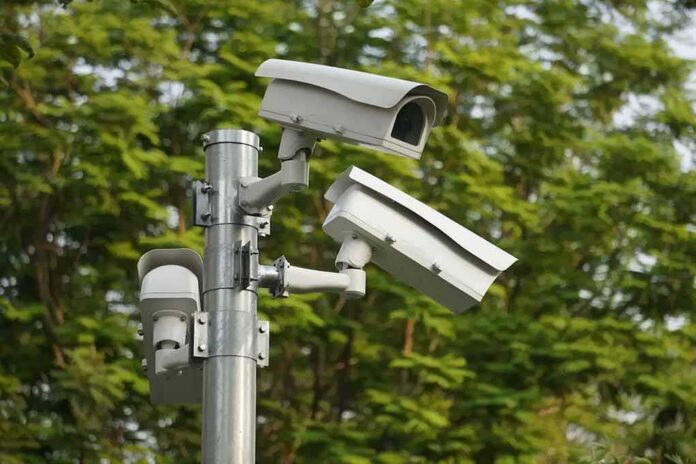
A private company asked to bury a public map after a researcher revealed a 300,000-device surveillance footprint that could track everyday driving across America.
Story Highlights
- A researcher’s map shows about 300,000 Flock-connected devices, far above prior public counts.
- The company’s agent sent a trademark complaint seeking to take the map down, sparking backlash.
- Senators say Flock runs over 120,000 cameras in 49 states and logs about 20 billion scans each month.
- Flock says it does not monitor people, data sharing is opt-in, and all access is logged.
Researcher’s Map Claims a Much Larger Network
Cybersecurity researcher Joshua Michael published a detailed map of Flock Safety’s infrastructure that he says he built using public, unauthenticated endpoints. His dataset identified more than 170,000 cameras and about 130,000 supporting devices, roughly 300,000 total, suggesting a footprint far larger than prior public figures for cameras alone. Reporters reviewed the map and described its scale, but no independent forensic audit has been released to verify every entry as live or unique.
Public outlets reported that the mapped devices include license plate readers and related gear placed across communities nationwide. The map’s stated goal is simple: show people where surveillance tools sit, who uses them, and how far the net reaches. Supporters say this kind of sunlight helps stop quiet expansions of tracking without consent or local debate. They argue that location and density matter because scale can turn brief sightings into long-term movement records.
Trademark Complaint Triggers Transparency Fight
After the map drew attention, Doppel, acting on Flock’s behalf, sent a trademark complaint to the map’s operator. The complaint argued the use of the company’s mark could confuse customers and asked for removal. Earlier, lawyers also sent a cease-and-desist over the DeFlock project’s name, claiming dilution. Civil-liberties advocates pushed back, saying noncommercial criticism and commentary are protected and that the mapping serves the public interest in oversight.
Advocates say trademark law should not be used to hide facts about where government-used technology watches the public. They point to cases where public-interest maps and reporting are the only way citizens learn how many trackers sit on their streets. The push to remove or rename these projects, they argue, chills speech and makes it harder for parents, small businesses, and church groups to know if and how they are being recorded as they move about town.
Capitol Hill Presses for Answers on Scale and Safeguards
Senator Josh Hawley and other lawmakers cited Flock’s reach as a central concern. They said the company operates more than 120,000 cameras in 49 states and logs about 20 billion vehicle images every month, calling it an unprecedented national surveillance network. They pressed for specifics on privacy rules, retention, and who can query the data, reflecting bipartisan unease with a tool that can reconstruct travel over time across jurisdictions.
These questions echo a core constitutional worry. When police or partners can stitch together many scans, the result can resemble location tracking of everyone, not only suspects. Lawmakers asked who gets access, how cross-agency sharing works, and what audit trails exist. They highlighted how a private vendor, linked to many local governments, can create a patchwork that escapes clear, uniform oversight unless Congress or states set firm guardrails.
Flock’s Response and What We Still Do Not Know
Flock says its system does not use facial recognition, does not monitor people, and is “purpose built” for specific investigations. The company states that local agencies control access, all searches are tied to named users, and nothing is shared automatically across jurisdictions. It also says it does not work with Palantir. These claims, if enforced, would set limits on broad browsing and misuse of the data by outsiders or rogue staff.
Key gaps remain. The 300,000-device figure comes from a researcher and press reviews, not a public technical audit. The mapping includes cameras and supporting gear, so not every dot may be an active street-side unit. Flock’s own figures on cameras and monthly images come from statements and hearings, not sworn production of logs in the sources provided here. Until verifiable records are released, the public is left weighing scale, safeguards, and the proper line between safety and constant tracking.
Sources:
gadgetreview.com, thehill.com, news.marionwatch.com, hawley.senate.gov, masslegalresources.com, ground.news, techtimes.com, deflocktheusa.com