
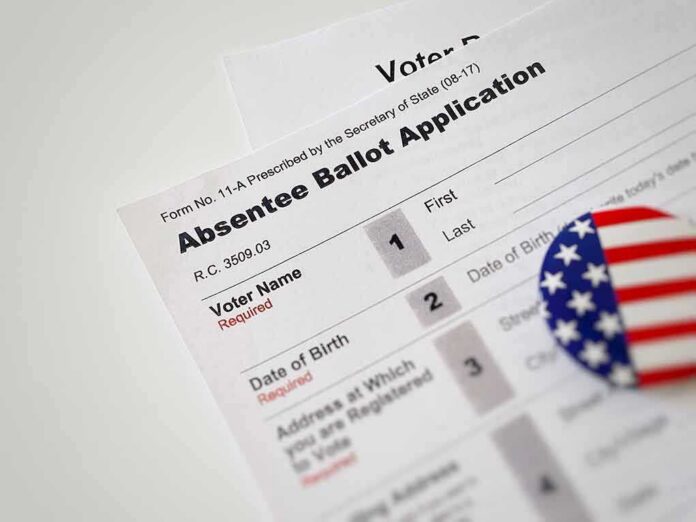
A sharp 30 percent drop in Wisconsin absentee ballot requests signals voters are turning away from mail voting and demanding more trust and clarity in how ballots are handled.
Story Highlights
- Absentee ballot requests through Oct. 12, 2026 are down about 30 percent from 2022.
- State and local officials point to weak confidence in mail delivery and a shift to in-person early voting.
- Officials still expect strong overall turnout above 2.6 million voters despite fewer mail requests.
- A Dane County court ruling allows counting ballots delayed by government error, raising process questions.
What Changed: Hard Numbers Show Fewer Mail Requests
Wisconsin recorded 493,039 absentee ballot requests in 2022. Wisconsin has logged 347,984 requests through October 12, 2026. The difference is 145,055, or roughly 30 percent fewer requests, according to a report summarizing state data. Wisconsin Public Radio also reported a drop in mailed absentee ballots received three weeks before Election Day, from nearly 184,000 in 2022 to about 128,000 this year. The trend is clear in the numbers: fewer voters are choosing to request and return ballots by mail.
Wisconsin Elections Commission officials and local clerks say mail is the weak link. They cite voter doubts about the United States Postal Service and a move toward early in-person voting that lets voters see their ballot accepted right away. The shift tracks with the national pullback from pandemic-era mail voting, as voters rebalance speed, certainty, and convenience. The Wisconsin drop is larger than national drift, but it fits the broader return to in-person habits after 2020.
Why Voters Are Choosing In-Person Options
Wisconsin Elections Commission Administrator Meagan Wolfe said voters want more reassurance that ballots will arrive and be counted on time, which in-person absentee voting can provide. Dane County’s clerk reported more calls about in-person options as trust in mail delivery waned. Madison’s clerk expects higher in-person absentee turnout to offset fewer mailed ballots, showing a method shift rather than a collapse in participation. Voters want control and a clear chain of custody. Early in-person voting offers both.
Process clarity also matters after several publicized glitches. Milwaukee officials faced a download error during an August primary that delayed reporting of absentee totals, even as officials said votes were secure. Events like that erode confidence, even when counts end up accurate. Voters respond by changing how they vote, not whether they vote. Moving from mail to in-person is a common sense hedge against confusion, delay, and doubt about the trip from mailbox to tally.
Turnout Expectations, Legal Rulings, and Administrative Guardrails
Despite the mail decline, Wisconsin officials project more than 2.6 million voters will cast ballots in the general election, showing confidence in total participation. That outlook lines up with what clerks report: people are still voting, but they favor methods that feel safer and more direct. For administrators, that means preparing for heavier early in-person traffic and well-run polling places on Election Day. That is a good stress test of systems, staffing, and training.
A recent Dane County court ruling ordered clerks to count absentee ballots that are in municipal possession by 8 p.m. on Election Day but reach polling places late due to government error. The order protects voters from bureaucratic mistakes. It also adds pressure to document custody, timing, and handling steps. Clear rules and transparent logs help prevent disputes. Conservatives should watch how clerks apply this ruling so it safeguards lawful ballots without opening the door to sloppy practices.
What It Means For Election Integrity And Voter Confidence
The 30 percent drop in requests is not proof of lower turnout; it is proof voters want methods they trust. Officials say more people will vote early and in person, which gives voters a receipt-like assurance and reduces mail risks. That shift can strengthen integrity if sites are well run, signatures are verified, and chain-of-custody is tight from the moment a voter checks in. Strong in-person systems reflect core principles: clear rules, equal treatment, and verifiable results.
Practical steps can lock in trust. Clerks should keep tight logs for every ballot. Voters who still choose mail should request and return ballots early and track status through the state portal. Lawmakers should fund audits, improve postal coordination, and set firm timelines that do not change midstream. President Trump’s administration can help by supporting postal performance metrics and promoting best practices that keep every lawful vote secure, quick to verify, and hard to contest.
Sources:
cnn.com, factcheck.afp.com, wpr.org, elections.wi.gov, myvote.wi.gov