Kremlin insiders used a business forum to float nuclear threats after Ukrainian strikes, a gambit experts call coercive blackmail aimed at chilling Western resolve and testing America’s backbone [2][4].
Story Highlights
- Russian officials tied nuclear use to doctrine while signaling after conventional strikes near St. Petersburg [4].
- Analysts say Moscow’s nuclear talk functions as pressure on the West, not a readiness shift [2][4].
- The forum venue suggests image management targeting foreign investors and diplomats [1][4][6].
Forum Remarks Linked Nuclear Use To Doctrine, Not Orders
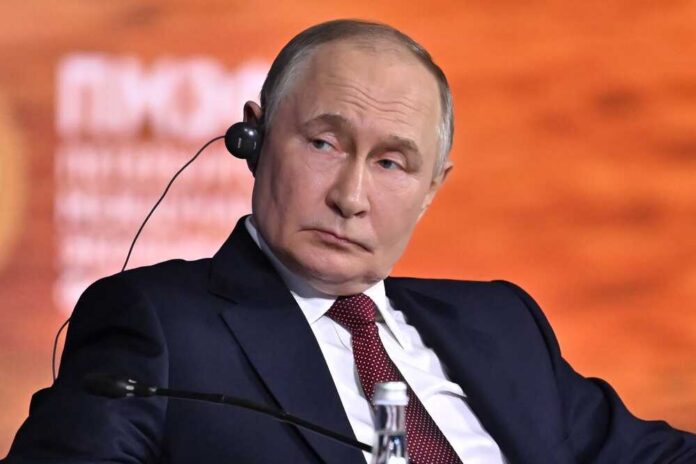
Russian deputy foreign minister Sergei Ryabkov’s comments at the St. Petersburg International Economic Forum tied any potential nuclear use to hypothetical, doctrine-based “worst-case” conditions rather than announcing new readiness or operational steps. The phrasing tracked established Russian nuclear doctrine and made no specific claim of alert changes, launch preparations, or dispersal. Analysts at the German Institute for International and Security Affairs documented the doctrine-linked language and its conditional framing, consistent with deterrent signaling instead of imminent intent [4].
Reporting around the remarks noted they followed Ukrainian conventional strikes against oil and naval infrastructure in the St. Petersburg area. While damaging and embarrassing for the Kremlin, those incidents did not involve nuclear sites or strategic command-and-control facilities. Expert assessments characterize the nuclear talk as magnifying a conventional setback rather than revealing a breach of Russia’s publicly known nuclear thresholds. The evidence presented to the public did not include force-readiness bulletins or posture data matching a true alert shift [4].
Analysts See Coercive Signaling Aimed At The West
The Stockholm Centre for Eastern European Studies describes Moscow’s nuclear rhetoric as blackmail designed to deter Western support for Ukraine by raising perceived escalation risks. The model relies on repeated, conditional threats that preserve ambiguity while leaning on Western risk aversion. The Peace Research Institute Oslo further argues the Kremlin blends “pacifist” and menacing signals to confuse transatlantic decision-makers and widen United States–Europe divisions, tactics consistent with political messaging rather than transparent operational warnings [2][1].
Across these assessments, the public record shows statements and commentary but not operational indicators: no launch orders, dispersals, or verifiable changes in strategic forces. That absence supports the view that the nuclear language is instrumental communication, not the surface of a hidden deployment. The lack of independently confirmed readiness shifts is material for policymakers who must weigh rhetoric against observable force movements before recalibrating support to Ukraine or altering United States deterrence policy [1][2][4].
Venue And Timing Point To Image Management Objectives
The St. Petersburg International Economic Forum is marketed as a showcase for stability, investment, and Russia’s ties beyond the West. Delivering nuclear-scented warnings in that setting likely served multiple audiences: foreign investors, visiting dignitaries, and domestic spectators. Research notes the forum’s function as a prestige platform, where controlled theatrics can redirect attention from battlefield costs to grand-stakes deterrence narratives. That staging aligns with past cycles where Moscow synchronized strategic messaging around major set-piece events [1][6][4].
For American readers, the policy takeaway is straightforward: treat conditional, doctrine-referencing threats as pressure tests, not faits accomplis. United States leaders should continue measured deterrence, verify through intelligence any claimed posture shifts, and refuse to let scripted brinkmanship dictate aid or strategy. Experts warn that failing to answer nuclear blackmail with calm firmness invites more of it. A steady, evidence-first approach protects American interests, supports allies, and denies propaganda value to theatrics masquerading as strategy [2][1][4].
Sources:
[1] Web – Putin allies wishcast nuclear war, America in crisis, and real-estate …
[2] Web – Putin attempts to shift nuclear brinkmanship
[4] YouTube – Nuclear rhetoric rising: Russia, NATO & Black Sea | Break the Fake
[6] Web – Putin’s preemptive maneuvering around NATO summit is cut off