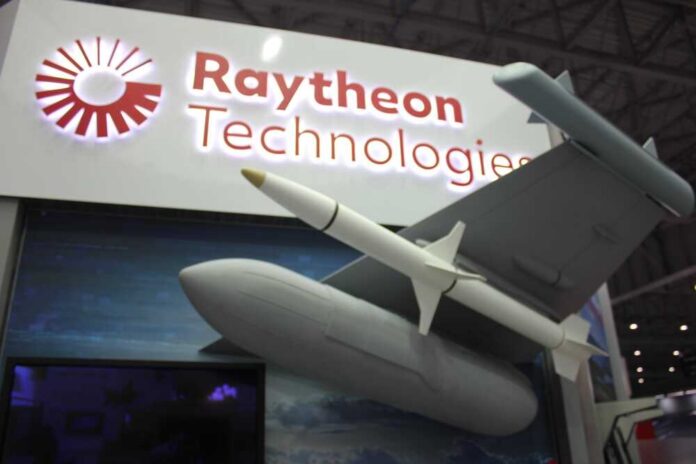
A $100 million expansion at a long-standing Rhode Island defense plant is set to supercharge America’s missile defense testing and production at a moment when our enemies are racing ahead and our allies are counting on U.S. hardware to show up on time.
Story Snapshot
- Raytheon is putting $100 million into its Portsmouth, Rhode Island facility to accelerate testing of a key new air and missile defense radar for the U.S. Army and allies.
- The project is aimed at speeding up work on the Lower Tier Air and Missile Defense Sensor and boosting Patriot interceptor subcomponent production to meet growing global demand.[1][2]
- This expansion follows another major radar investment in Massachusetts, signaling a broader push to rebuild America’s defense industrial base.[1][2]
- Public information confirms the new capacity but does not yet prove how far it will go in eliminating schedule risks or production bottlenecks.[1][2][3]
Raytheon’s $100 Million Bet On Missile Defense Capacity
Raytheon, a business of RTX Corporation, has announced a $100 million investment to expand its Portsmouth, Rhode Island defense facility, which has been operating for more than sixty years and supports undersea technology, combat systems, and radars.[1][2] Company statements say the expansion is specifically designed to accelerate testing of the Lower Tier Air and Missile Defense Sensor by increasing capacity and to boost production of Patriot GEM-T interceptor subcomponents in response to growing global demand.[1][2][3]
Raytheon executives describe this move as a way to strengthen their ability to deliver critical air and missile defense capabilities “to customers around the world,” explicitly linking the project to delivery timelines for the U.S. Army and international partners.[2][4] The Portsmouth expansion comes just eight months after RTX broke ground on a $53 million enlargement of its radar production facility in Andover, Massachusetts, underscoring a coordinated effort to scale up the industrial base for these systems rather than a one-off public relations announcement.[1][2][6]
What LTAMDS And Patriot GEM-T Mean For American Security
The Lower Tier Air and Missile Defense Sensor is a next-generation radar designed to defeat advanced threats, including hypersonic weapons that travel at extreme speeds and challenge older warning systems.[1][5] Raytheon is under contract to provide multiple LTAMDS radars to the U.S. Army and Poland, and the program recently completed its ninth successful flight test, using multiple radar arrays to track and intercept a surrogate target, which indicates growing technical maturity at the same time demand is increasing.[1][3][5]
Alongside LTAMDS, the Portsmouth facility is slated to ramp up subcomponent production for the Patriot GEM-T interceptor, a missile used within the Patriot air and missile defense system that many American allies depend on for protection against ballistic and cruise missiles.[1][2][3] The company and outside coverage both emphasize that this surge in demand is global, reflecting a more dangerous security environment where nations in Europe and elsewhere are looking to the United States for reliable, timely deliveries of advanced air defense equipment.[1][2][3][4]
Capacity, Deadlines, And The Industrial Base Reality Check
Raytheon and RTX present the Portsmouth expansion as a direct answer to schedule pressure, saying that adding test and production capacity will help ensure the U.S. Army and international customers receive these systems “as quickly as possible.”[2][4] This language fits a common pattern in defense industry announcements, where large dollar figures, job creation, and promised acceleration are highlighted, while baseline throughput numbers, specific bottlenecks, and quantified gains in output are rarely disclosed publicly.[1][2][4]
Available public sources at this point do not include independent engineering assessments, Army production audits, or detailed capacity studies that would confirm whether the expansion alone will fully resolve schedule risks or cover all expected demand.[3][4][6] What the record does show is a clear, documented investment, linked to concrete systems that protect American troops and allies, and a broader pattern of related facility expansions suggesting that defense leaders and industry recognize the need to rebuild and harden the U.S. defense industrial base after years of underinvestment and rising threats.[1][2][5][6]
Sources:
[1] Web – Raytheon investing $100M to expand LTAMDS testing capacity at Rhode …
[2] Web – RTX invests $100 million to accelerate radar testing and interceptor …
[3] Web – RTX invests $100M in Rhode Island radar expansion – Stock Titan
[4] Web – RTX’s Raytheon awards TTM Technologies a multi-year contract for …
[5] Web – RTX Invests $100 Million to Expand Radar and Missile Production in …
[6] Web – LTAMDS: Lower Tier Air and Missile Defense Sensor | Raytheon – RTX